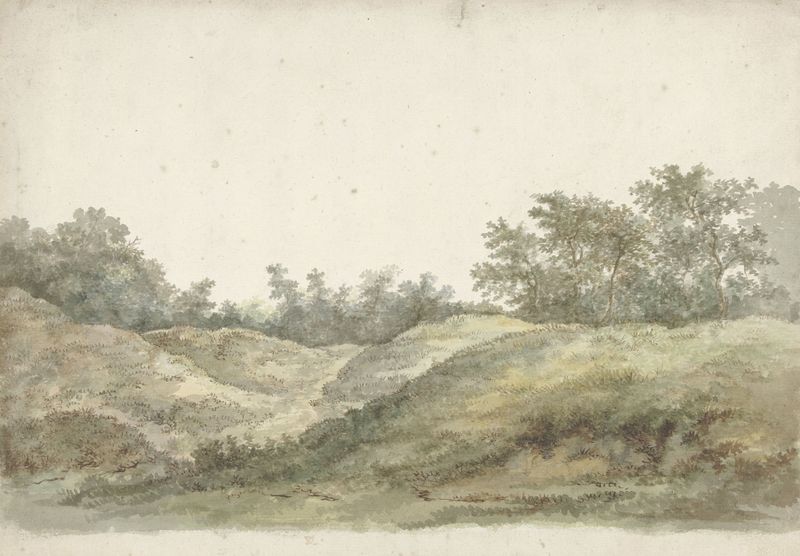
Boerenhuis met bomen te Delden — History & Facts
In the poignant stillness of Boerenhuis met bomen te Delden, longing echoes through the landscape, inviting contemplation of what remains unsaid. This painting speaks to the heart, revealing the ache of yearning that lingers in the quiet spaces of life. Look to the center, where the modest farmhouse stands resolute against a backdrop of gentle trees. Notice how the warm, muted tones of ochre and green intertwine, creating a harmonious balance between structure and nature.
The soft brushwork mirrors the tranquility of the scene, while the light filters delicately through the foliage, casting dappled shadows that dance upon the earth. It guides your gaze, drawing you inward, enveloping you in a sense of home and belonging. Delve deeper into the subtle contrasts within the composition. The sturdy farmhouse evokes security and familiarity, yet its isolation evokes a sense of solitude.
The trees, lush and abundant, symbolize life’s potential but also the barriers that separate us from one another. This duality of connection and isolation resonates powerfully as it captures the tension between earthly existence and the unfulfilled desire for communion. In 1810, Jacob Ernst Marcus was immersed in the serene landscapes of his native Netherlands, a time when Romanticism was emerging as a dominant artistic movement. This period was marked by a deep appreciation for nature, introspection, and emotion.
As he painted this scene, he was likely reflecting on his own experiences and the changing world around him, blending personal longing with a universal sense of place.