Bog in Lapland — History & Facts
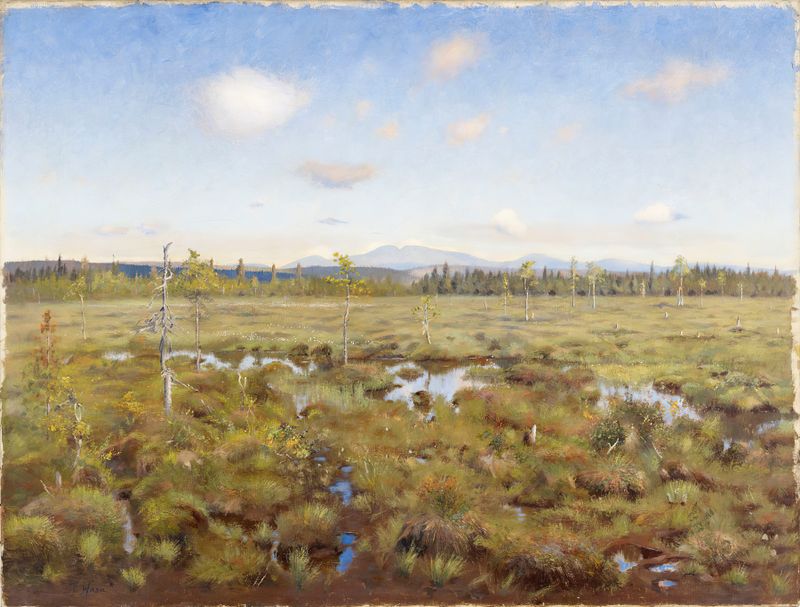
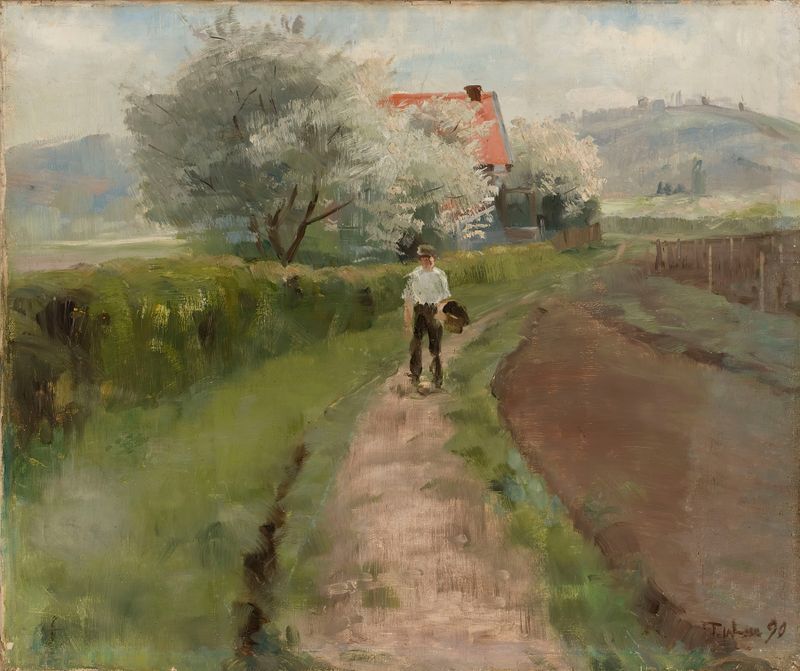
Can beauty exist without sorrow? In Bog in Lapland, the tension between tranquility and desolation speaks of an obsession with nature’s duality. Focus on the expansive marshland, where a palette of muted greens and earthy browns invites a meditative gaze. Notice how the delicate brushstrokes create a textured surface, capturing the stillness of the water that reflects the sky’s soft gray. To the left, a solitary tree stands like a sentinel, its gnarled branches twisting towards an uncertain horizon, drawing your eye upward toward the gentle interplay of light and shadow. Within this serene landscape, the viewer may sense an underlying melancholy.
The stillness of the water suggests a moment frozen in time, yet it is the solitude of the tree that evokes the silent longing for connection. The contrast between the vibrant life of the bog and the heavy, oppressive sky hints at the complexity of existence, where beauty may be tinged with sadness. This duality could reflect the artist's deep connection to the natural world, revealing an emotional landscape as profound as the physical one. In 1892, Wasastjerna painted this work during a period of personal exploration, grappling with his identity as an artist in the developing Swedish art scene.
The late 19th century saw a burgeoning interest in landscapes, influenced by Romantic ideals, yet he sought to forge his own path. This piece reflects not only his fascination with the wild and untamed beauty of Lapland but also his quest to encapsulate both the serenity and the inherent sorrow of nature.