Bosgezicht — History & Facts
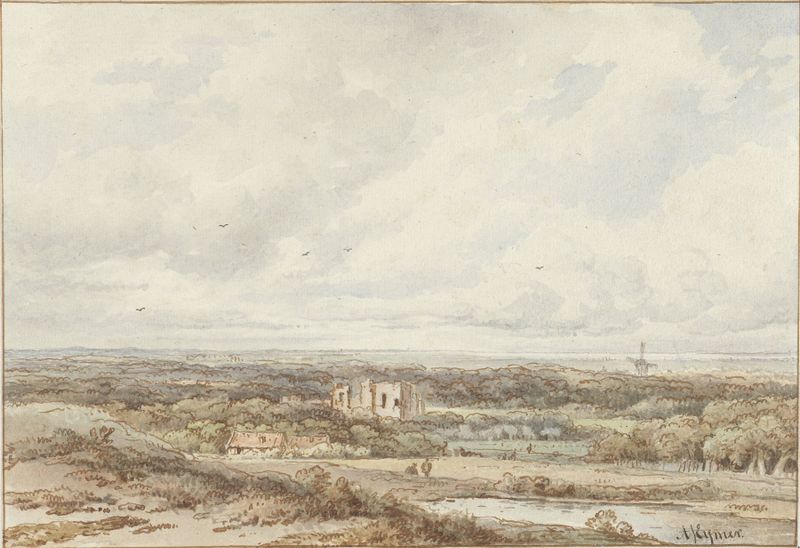
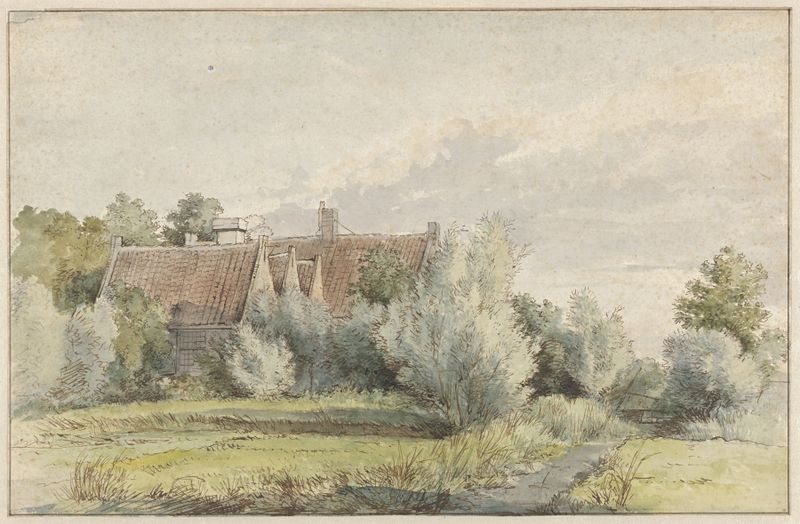
In the realm of art, desire often cloaks itself in captivating forms, revealing the heart's longing through a veil of elegance. Look to the left of the canvas where the rolling hills cradle a tranquil forest, teeming with verdant life under a soft, golden sunlight. Notice the delicate interplay of greens and browns that brings an earthy warmth to the scene, while the sky, a muted azure, creates a serene backdrop. The brushwork evokes both detail and abstraction, inviting the viewer to lose themselves amidst the foliage, as the trees appear to sway gently under the breath of the wind. Yet, there is an undercurrent of yearning present, reflected in the expansive distance that draws the eye toward the horizon.
The intricate leaves whisper of secrets unspoken, and the winding path beckons adventurous souls to explore deeper, hinting at the duality of beauty and isolation. The harmony of light and shadow suggests moments of introspection, capturing the transient nature of desire that can both uplift and ache. During the years between 1813 and 1863, Arnoldus Johannes Eymer painted Bosgezicht amid a burgeoning appreciation for romantic landscapes in Europe. This era, marked by emotional depth and a connection to nature, found Eymer emerging from a period of personal exploration.
He navigated the shifting tides of artistic expression, reflecting the world’s desire for both beauty and truth in his work.