Molen op stadswal — History & Facts
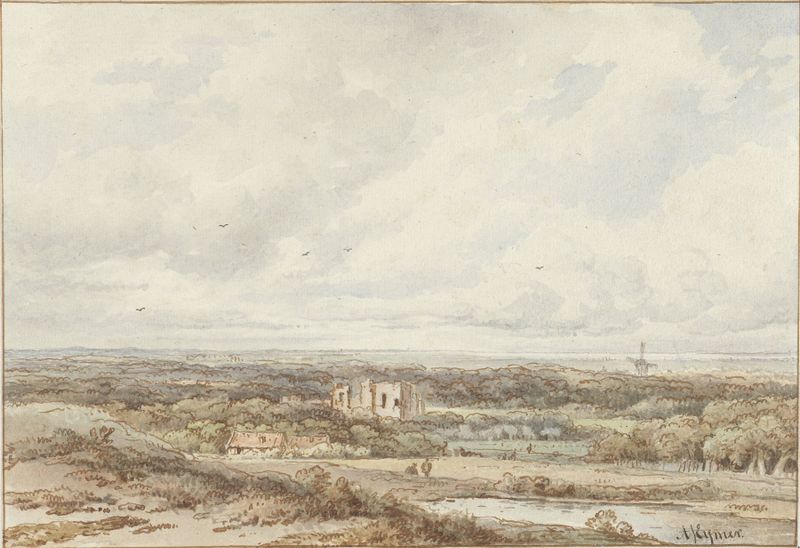
In a world that rushes past, the fragility of moments captured in paint reminds us of life's delicate essence. Look to the left at the serene windmill, its sails frozen in time against the azure sky. The artist employs a gentle palette of greens and browns, blending the earthy tones with a soft touch that evokes tranquility. Notice how the light dances upon the water’s surface, casting ripples that reflect the windmill's silhouette, inviting the viewer to linger and absorb the calm.
The composition is balanced, drawing your eye first to the structure before it moves gracefully across the canvas, exploring the landscape beyond. Beneath the surface, this scene speaks to the transient nature of existence. The windmill, a symbol of tradition and industry, stands resilient yet vulnerable to the elements, representing the passage of time and change. The soft brushstrokes convey a sense of nostalgia, capturing a moment that feels both present and distant.
The water’s shimmering reflection suggests not only beauty but also the ever-present potential for disturbance, hinting at the fragility of peace amid the chaos of life. Created between 1813 and 1863, the work emerged during a period when many artists were exploring the interplay of nature and human endeavor. Eymer painted this piece in the Netherlands, a nation undergoing transformation in the wake of the Industrial Revolution. This backdrop informed his practice, merging the familiar landscapes of his youth with the ever-changing realities of modernity, resulting in a poignant meditation on the delicate balance between past and present.