Boslandschap — History & Facts
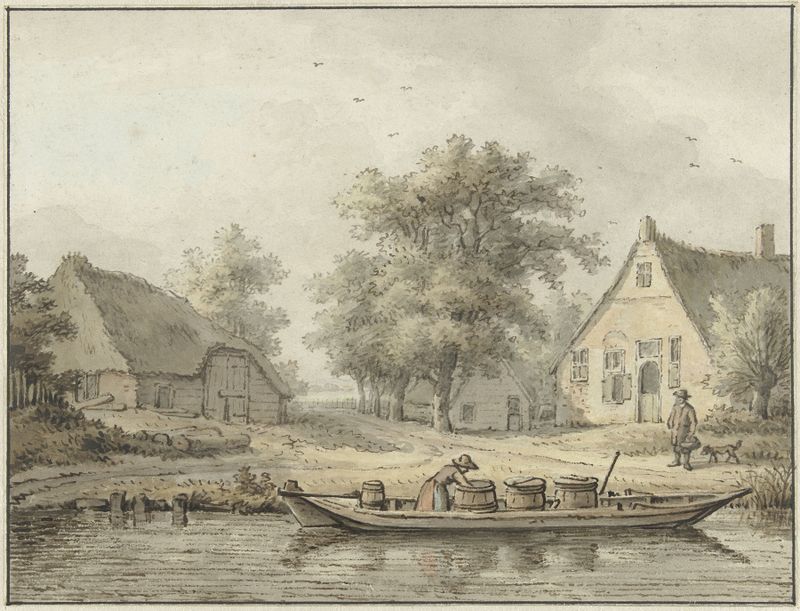
In the stillness of a dream, nature unfolds, inviting the viewer to wander through an ethereal landscape suspended between reality and imagination. First, look towards the horizon where soft, undulating hills rise against a backdrop of gentle, pastel skies. The delicate interplay of muted greens and warm earth tones creates a harmonious balance, guiding your gaze across the canvas. Notice the meticulous brushwork that breathes life into the foliage, capturing the essence of a tranquil woodland.
Each stroke seems imbued with a sense of longing, as if the scene whispers secrets only the heart can decipher. Delve deeper into the artwork's contrasts—the tranquility of the scenery juxtaposed with the subtle tension of shadows that stretch across the ground. The play of light and dark evokes a sense of timelessness, hinting at a world both inviting and elusive. This dichotomy suggests a dreamlike quality, where the beauty of nature coexists with an underlying sense of melancholy, prompting reflections on the fleeting nature of existence. Cornelis Buys painted Boslandschap during the early 19th century, a period marked by a burgeoning Romantic movement in art that sought to express emotions and the sublime beauty of nature.
Living in the Netherlands, Buys was influenced by the surrounding landscapes and the shifting artistic currents that celebrated both the idyllic and the introspective. His work embodies this transitional spirit, capturing a moment where the dreamscape of nature invites contemplation and reverie.