Landschap met boerderijen — History & Facts
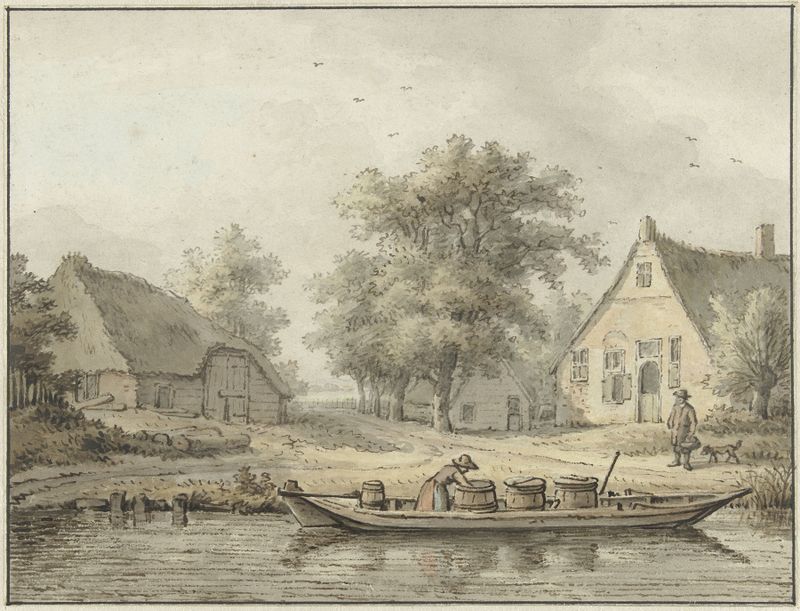
Who listens when art speaks of silence? In the stillness of a pastoral landscape, beauty emerges not just from what is seen, but from the unvoiced whispers of nature. Look to the horizon where lush green fields stretch endlessly, subtly merging with a delicate blue sky. The scattered farmhouses, modest yet sturdy, draw the eye with their warm, earthy tones, blending harmoniously into their surroundings. Notice how the artist employs soft, dappled light to illuminate the scene, casting gentle shadows that breathe life into the architecture and the undulating hills beyond.
Each brushstroke evokes a tranquil rhythm, inviting the viewer to wander through this serene vista. Deeper meanings reveal themselves in the juxtaposition of man and nature. The distant farms, symbols of human perseverance, coexist with the wild beauty of the landscape, suggesting a fragile balance between civilization and the natural world. The gentle color palette creates a sense of peace, yet the isolation of the structures evokes an underlying loneliness, capturing the bittersweet essence of rural life.
The absence of figures within this expansive scene further amplifies this feeling — a quiet reminder of the solitude often found in such beauty. Cornelis Buys painted this work during a period of significant change in the Netherlands, as the nation was transitioning into the modern age. In the late 18th and early 19th centuries, the art world was evolving with the rise of Romanticism, which emphasized the beauty of nature and emotional expression. This was a time when Buys, influenced by the Dutch Golden Age traditions, sought to capture the essence of the pastoral landscape, reflecting both personal experiences and broader societal movements in his art.