Boulders — History & Facts
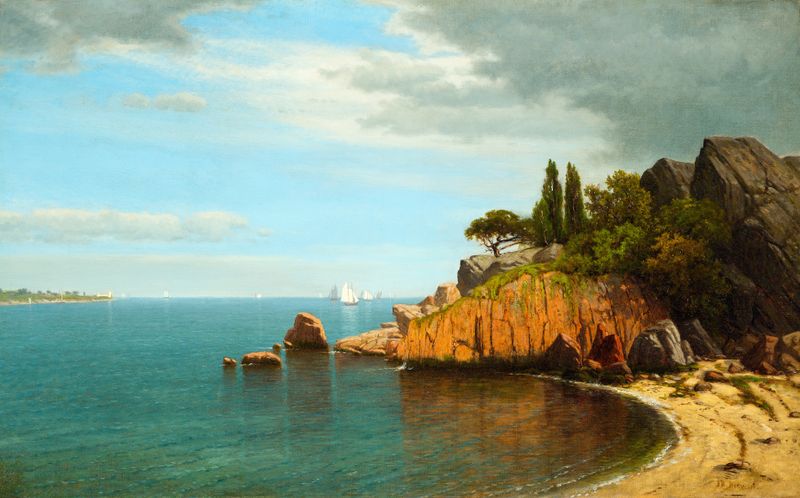
Where does light end, and longing begin? In the interplay of shadow and form, Boulders beckons us to explore the delicate boundaries of truth and nature. Focus on the boulders that dominate the foreground, their textured surfaces alive with varying hues of gray and ochre. Notice how the light cascades across their rugged contours, creating an interplay of highlights and deep shadows that almost breathe with life. Behind them, a soft, ethereal landscape emerges, marked by a muted palette and gentle brushstrokes that evoke a sense of serene isolation.
This contrast between the solidity of the stones and the fluidity of the backdrop draws our eyes deeper into the composition. Within this stillness, there lies an emotional tension — the boulders represent both permanence and the passage of time, grounding us in reality while simultaneously inviting contemplation of our fleeting existence. The delicate balance between light and shadow hints at deeper truths about the nature of perception. One cannot help but feel a longing for connection, as if these rocks hold stories of countless generations, whispering secrets of the earth's enduring spirit. Painted during the late 19th century, Boulders emerged from Brevoort's explorations in landscape painting amid an era of artistic transition.
This was a time when the American art scene was beginning to embrace a more personal and emotive approach, responding to both the burgeoning naturalism and the influence of the Hudson River School. Brevoort's work reflects his deep admiration for nature and the quest for authenticity in art, capturing a moment that resonates with the spirit of his time.