Inside Eastern Point, Gloucester Bay — History & Facts
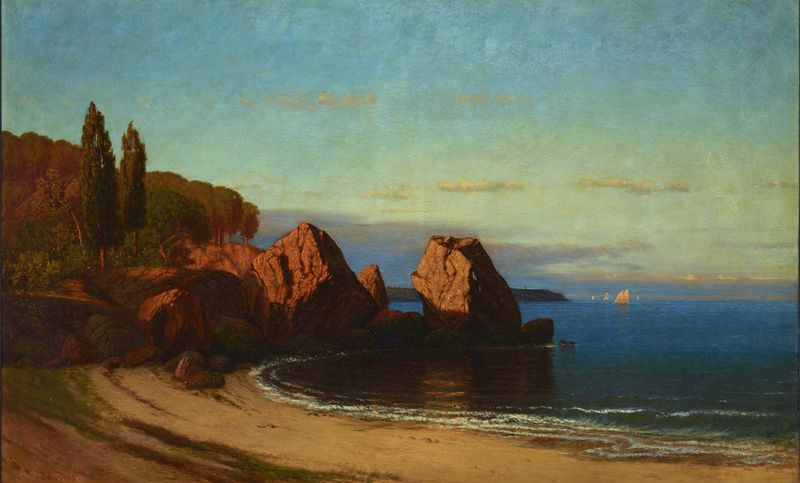
What secret hides in the quiet of the canvas? In Inside Eastern Point, Gloucester Bay, tranquility envelops the viewer, inviting contemplation and reflection. Look to the left at the subtle interplay of light and shadow as it dances across the water’s surface, illuminating the soft contours of the coastline. The palette, deftly blended in serene blues and gentle earth tones, captures the moment where land meets sea—a harmonious, almost sacred embrace. Notice how the brushwork varies, with bold strokes capturing the texture of the rocks, while delicate touches render the clouds, creating an ethereal atmosphere that enhances the work's meditative quality. This painting contrasts the solidity of the land with the fluidity of the water, suggesting a deeper connection between permanence and change.
The lighthouse stands resolute, symbolizing guidance and faith, while the ebbing waves reinforce the inevitability of time and movement. These elements evoke a sense of introspection, prompting viewers to ponder their own search for stability amidst life’s currents. In 1871, Brevoort created this piece in Gloucester, a period marked by both personal exploration and an artistic shift towards realism. As he engaged with the coastal landscape, he was influenced by the American Romantic movement, which emphasized nature's beauty and sublime power.
This work reflects not only his artistic journey but also a broader cultural moment where the relationship between humanity and nature was increasingly celebrated.