Boulevard des Invalides — History & Facts
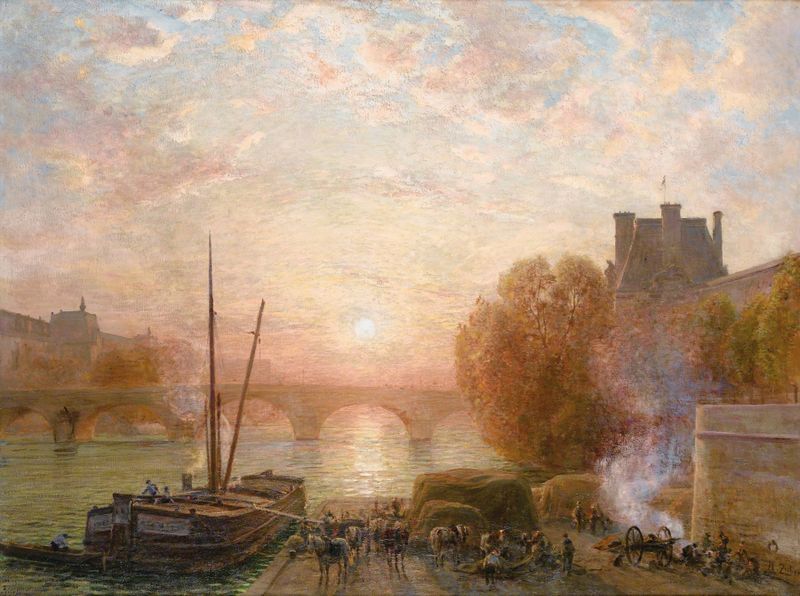
In the fleeting moments of life, decay whispers stories of beauty and loss, urging us to look deeper. Look to the left at the vibrant greens of the trees, their leaves kissing the air with the promise of life amidst the somber architecture. Then, shift your gaze to the crumbling façade of a nearby building, where patches of warm brick and peeling paint reveal the passage of time. The palette is rich yet muted, capturing not just the vibrancy of an urban landscape, but also the subtle interplay between vitality and desolation, as flickers of sunlight dance across the scene. At first glance, the painting presents a bustling street, but it unfolds layers of emotional tension as one notices the contrast between the lively pedestrians and the decaying structures that surround them.
Each figure hurries along, seemingly oblivious to the fading grandeur of their environment, reflecting a world caught in transition. Zuber’s meticulous brushwork reveals texture and history, urging viewers to confront the inevitability of decay and the stories hidden in these weathered walls. Henri Zuber painted this piece between 1889 and 1891 during a time of artistic evolution, marked by the rise of Impressionism in France. Living in Paris, he was influenced by the changing urban landscape and the effects of modernity on traditional life.
This period also saw shifts in societal values, where beauty and neglect coexisted, encouraging Zuber to explore the themes of time and memory within his work.