Sunset at the Banks of the Loing — History & Facts
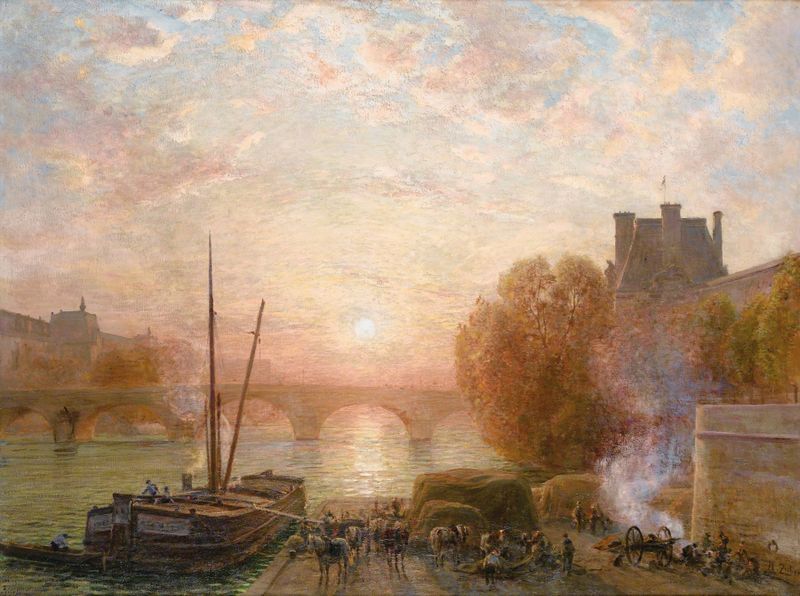
In the delicate balance of hues and shadows, betrayal weaves its intricate web, revealing deeper layers beneath the surface of tranquility. Focus on the horizon, where the sun melts into the water, casting a warm, golden glow that dances across the surface. Notice how the vivid oranges and soft pinks bleed into the tranquil blues, creating a striking juxtaposition between the day's end and the encroaching night. The figures along the banks, subtle yet poignant, seem to hold their breath, caught in a moment that hints at unspoken tension. As you explore the scene, observe the solitary tree, its gnarled branches reaching out like twisted fingers, perhaps a metaphor for the complexity of relationships within the composition.
Each figure carries an air of introspection, and their positioning suggests a silent conflict—a shared past filled with unvoiced betrayals. The serene beauty of the landscape envelops their emotions, reflecting the contrasts between what is seen and what remains hidden. Henri Zuber painted Sunset at the Banks of the Loing in 1896 while living in France, a period when Impressionism and Post-Impressionism were flourishing. At this time, he sought to capture the essence of nature and human experience, often infusing his landscapes with emotional depth.
This work emerges from a moment in his life marked by a quest for artistic identity amidst the cultural transformations of his era.