Boulevard Vaugirard, Paris — History & Facts
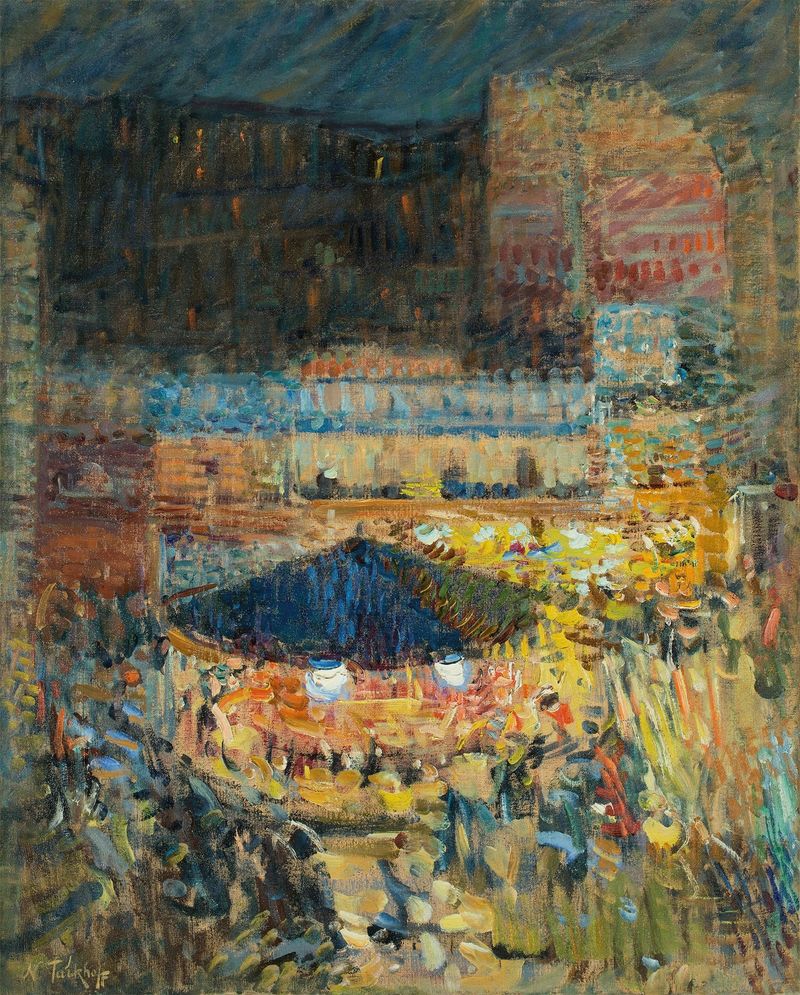
What if silence could speak through light? In Boulevard Vaugirard, Paris, the essence of transformation is captured, revealing the city's heartbeat beneath a tranquil exterior. Focus first on the luminous play of light that dances across the canvas. The gentle brushstrokes create a shimmering effect, inviting you to explore the soft hues of golden yellows and muted greens that dominate the scene. Notice how the light filters through the trees, casting dappled patterns on the cobblestone path.
This delicate interplay between light and shadow not only highlights the depth of the boulevard but also evokes a sense of movement, as if the viewer is standing at a threshold, about to step into a moment suspended in time. As you delve deeper, contemplate the emotional contrasts at play—the calmness of the street juxtaposed against the vibrant potential of life within the city. The solitary figures, seemingly disconnected from one another, hint at a broader commentary on urban isolation amidst thriving energy. Look closely at the distant rooftops, painted in soft grays and blues, which symbolize both the beauty of Paris and the transient nature of existence, reflecting a world in constant transformation yet yearning for connection. In 1909-1910, when this piece was created, Tarkhoff was living in Paris, immersed in a dynamic artistic environment.
Influenced by the Impressionists, he sought to express the changing landscapes of the city he adored. During this period, the art world was evolving, with movements like Fauvism and Cubism shaping new conversations about color and form. Tarkhoff’s work embodies a personal exploration of these ideas while capturing the essence of a vibrant Paris, where every moment holds the potential for transformation.