Une fête nocturne (Manège Place du Mène) — History & Facts
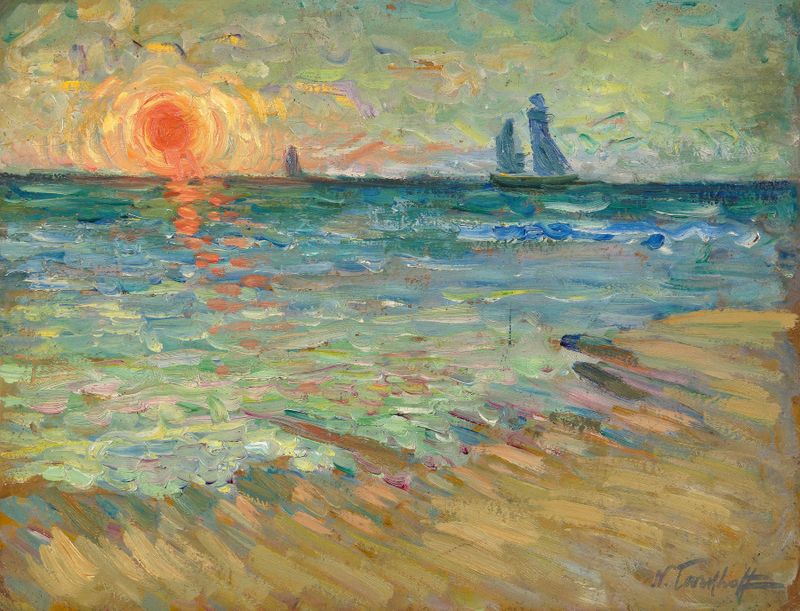
Can beauty exist without sorrow? The question lingers in the air, shimmering like the moonlight that bathes a quiet scene of nighttime revelry, where joy is colored by the shadows of introspection. Look to the center of the composition, where a carousel spins, its painted horses caught in a perpetual dance. The gentle curves of the ride invite the eye, while the warm, inviting lights create a contrast against the deep blues and purples of the night sky. Notice how Tarkhoff’s brushstrokes blend seamlessly—each stroke a whisper of movement, each color a note in a serene melody, evoking a sense of both nostalgia and celebration. As you explore further, observe the figures gathered around the carousel, their faces aglow with delight yet tinged with a hint of yearning.
The flickering lights contrast with the somber weight of the night, suggesting an underlying story of fleeting happiness. In this lively scene, Tarkhoff captures a delicate balance—the thrill of the fête juxtaposed with the inevitable passage of time, a reminder that joy is often laced with a touch of melancholy. During the early years of the 20th century, Tarkhoff was immersed in the vibrant art scene of Paris, where he painted Une fête nocturne (Manège Place du Mène) between 1902 and 1903. This period marked a transitional phase in his career, as he sought to express the emotional landscapes of humanity through color and light, reflecting a world on the cusp of modernity yet steeped in tradition.