Bretonische Küste — History & Facts
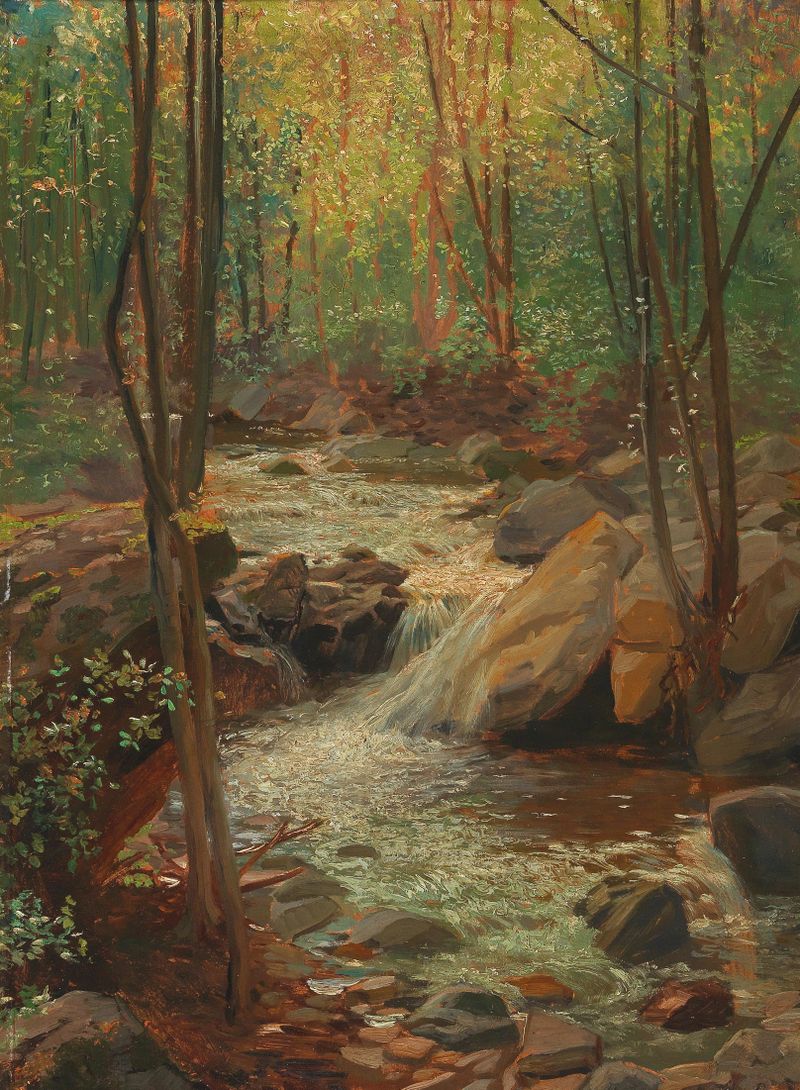
This haunting reflection lingers in the air, echoing over the tumultuous waves that crash against the rugged cliffs of the Breton coast, where tranquility battles with nature’s fierce temperament. To appreciate this piece fully, look to the left where the stormy sky looms ominously, painted in deep blues and grays that suggest an impending tempest. Your eyes should then draw toward the turbulent sea, where the white-foamed waves clash against sharp, unforgiving rocks. The brushwork is both chaotic and deliberate, capturing the raw power of nature, while flecks of gold in the horizon hint at the fleeting beauty within this violent scene.
The composition expertly balances light and dark, creating a dramatic tension that pulls the viewer into this moment of nature's fury. The painting is rich with emotional contrasts; the harshness of the landscape speaks to the turbulent relationship between humanity and the natural world. Hidden within the beauty of the waves is a reminder of the violence that accompanies such breathtaking vistas—each brushstroke reverberates with the struggle for survival amidst the beauty. The gleaming horizon offers a glimmer of hope, yet the tumultuous waters evoke feelings of chaos and uncertainty, suggesting that peace often lies just beyond the edge of turmoil. At the dawn of the 20th century, while working on Bretonische Küste, Alexander Demetrius Goltz found himself immersed in the artistic movements of Europe, particularly those favoring realism and the capture of nature's essence.
Living in Germany at a time of rapid social and political changes, he sought to express the powerful, often conflicting emotions evoked by landscapes. This period laid the foundation for many artists grappling with the duality of beauty and violence in their work, echoing the turmoil of the world around them.