Woodland Stream — History & Facts
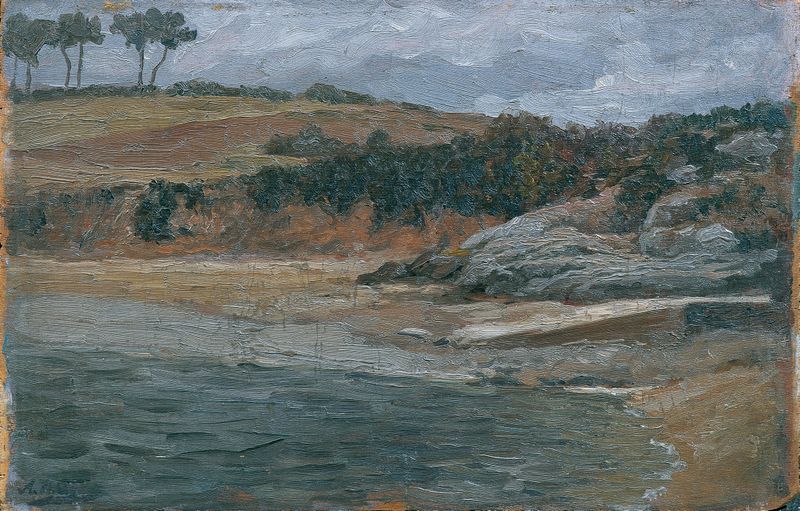
Could a single brushstroke hold eternity? In Woodland Stream, the essence of nature flows through the layers of paint, each stroke whispering stories of faith and tranquility. Look to the center, where a gentle stream threads its way through lush greenery. The artist employs a rich palette of emerald greens and earthy browns, inviting the viewer's gaze to dance across the surface. Notice how the dappled sunlight filters through the trees, creating a luminous interplay that suggests both movement and serenity.
The careful brushwork captures the texture of leaves and rippling water, instilling a sense of life that seems to pulse beneath the surface. Beneath the surface, there are deeper layers to explore. The juxtaposition of the tranquil stream against the vibrant foliage evokes a sense of harmony, a balance struck between chaos and calm. This tension reflects the complexity of faith itself—ever present yet often challenging to grasp fully.
The artist’s choice to emphasize the stream as a focal point underscores nature's role as a pathway to reflection and solace, inviting viewers to find their peace within the natural world. Goltz created this piece during a period when the artistic community increasingly embraced the beauty of nature as a source of inspiration. While the exact date remains unknown, it is likely that he painted it in the late 19th or early 20th century, a time when impressionism and symbolism were reshaping the landscape of art. Engaged in these movements, he sought to connect the viewer with the spiritual and the sublime, drawing from his experiences and surroundings to evoke a deeper understanding of the world’s inherent grace.