
Bridge over the Buskill, Easton, Pa. — History & Facts
In the stillness of this artwork, an unspoken narrative unfolds, capturing the weight of absence and the longing for connection amid vast landscapes. Look to the center, where the bridge gracefully arches over the tranquil waters, creating a division between two realms of nature. The cool tones of blue and green meld seamlessly with the warm, muted browns of the earth, guiding your gaze along the wooden planks. Notice how the soft light diffuses across the scene, casting gentle shadows that evoke a sense of quiet introspection.
The meticulous brushstrokes breathe life into the foliage, while the reflective surface of the water invites contemplation, deepening the emotional resonance of this serene moment. Yet, beneath this calm exterior lies a haunting contrast. The bridge, a symbol of human endeavor, is both an invitation to cross and a reminder of the distance between the two banks. The emptiness surrounding it suggests isolation, as if the viewer is a solitary figure standing at the edge, pondering the stories that remain unvoiced.
This juxtaposition of presence and absence evokes feelings of nostalgia, urging us to consider what lies beyond our immediate perception—past connections, untold histories, and the silence that envelops them. Mary Nimmo Moran created this piece in 1879, during a time when she was deeply immersed in the Hudson River School movement. Working from her home in Pennsylvania, she focused on the American landscape, capturing its beauty while reflecting on the transient nature of human life against the backdrop of nature. Her art frequently explored themes of solitude and the delicate interplay between humanity and the natural world, embodying the spirit of an era that sought to reconcile these elements.
More Artworks by Mary Nimmo Moran
Browse all →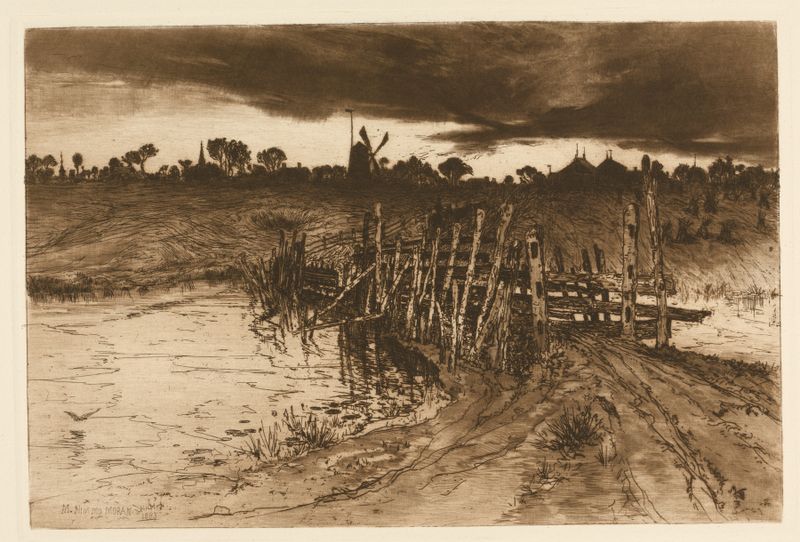
‘Tween the Gloamin’ and the Mirk, When the Kye Come Hame’
Mary Nimmo Moran
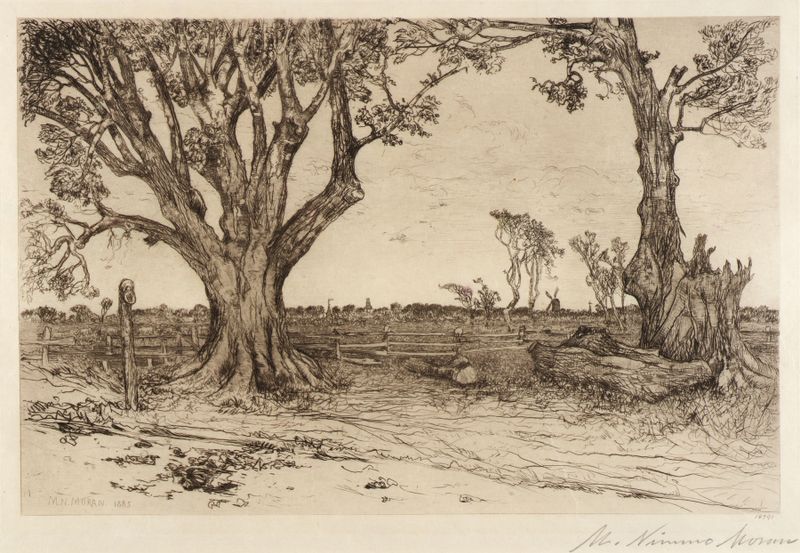
Old Lindens–Near Easthampton
Mary Nimmo Moran
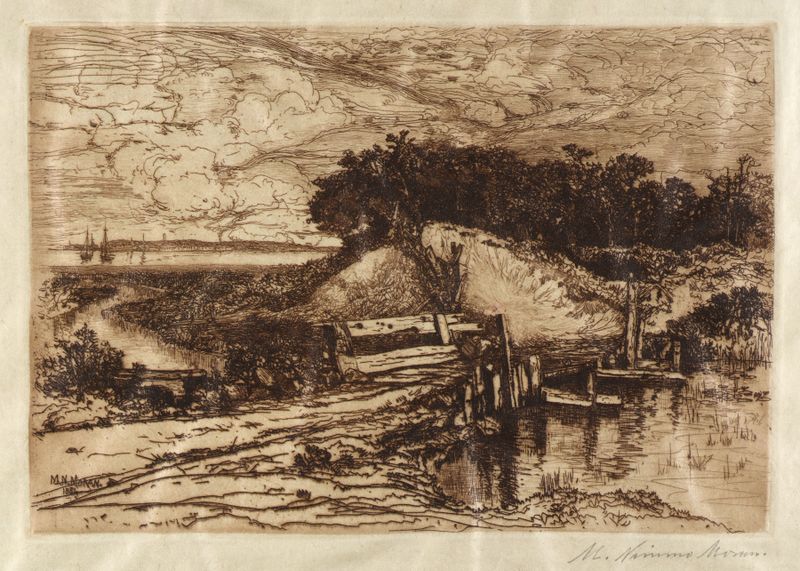
Gardiner’s Bay, L.I., Seen from Fresh Pond
Mary Nimmo Moran

House by a Stream
Mary Nimmo Moran
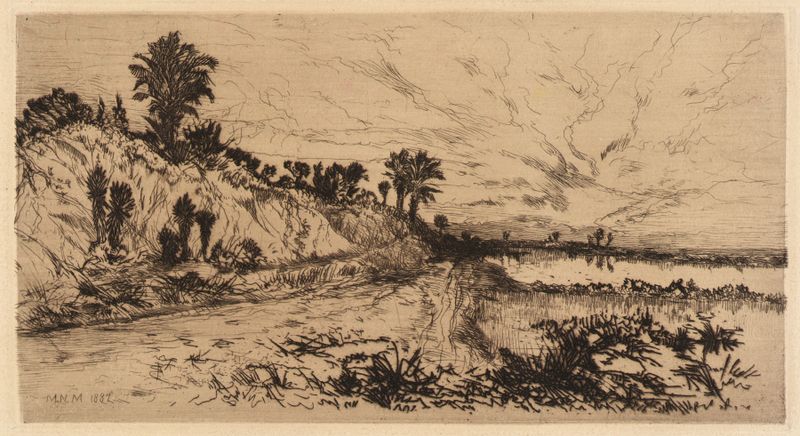
The Coast of Florida
Mary Nimmo Moran
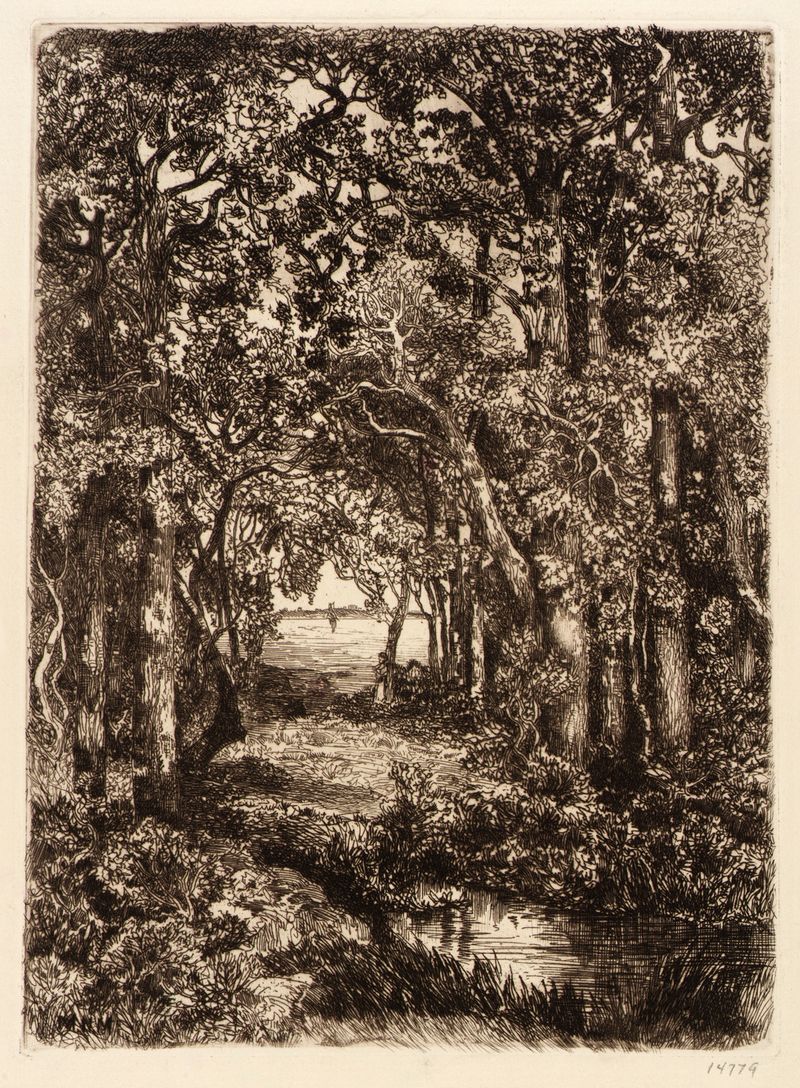
The Sea through the Woods
Mary Nimmo Moran

Looking Seaward
Mary Nimmo Moran

The Old Homestead
Mary Nimmo Moran

Home of the Muskrat
Mary Nimmo Moran
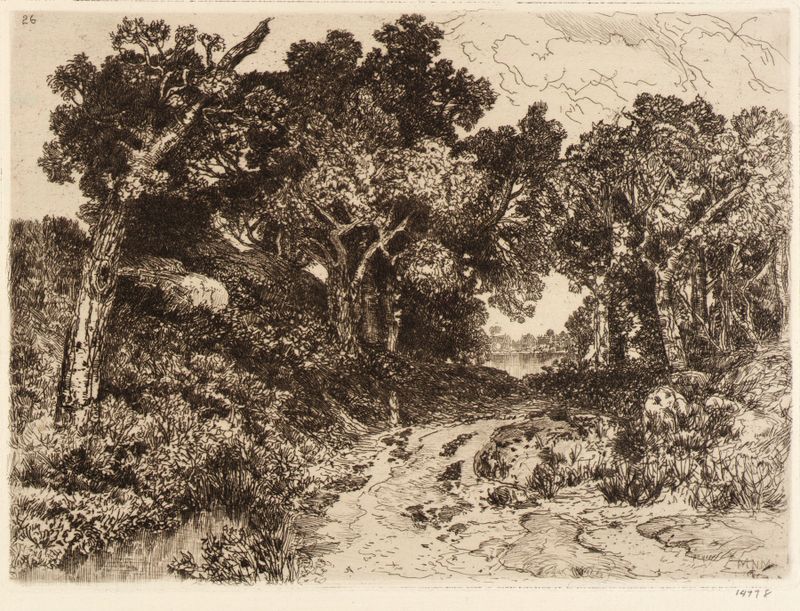
Across the Water
Mary Nimmo Moran





