
The Old Homestead — History & Facts
What if silence could speak through light? It captures the essence of a forgotten place, echoing the whispers of memories long past, where each shadow hints at the violence of time's passage. Look to the center where the weathered farmhouse stands, its wooden beams bathed in a warm golden hue, battling against the encroaching coolness of approaching dusk. The meticulous brushwork invites a closer inspection, revealing textures that suggest both decay and resilience—a reminder of countless storms weathered. Notice how the light falls upon the roof, creating a stark contrast with the deepening shadows at the base, symbolizing the struggle between vitality and decline. The emotional tension is palpable; this old homestead, once vibrant with life, now exists on the fringes of memory.
The surrounding landscape, lush yet untamed, hints at nature's relentless reclaiming of man’s dominion. Small details—a broken fence, a wilting flower—represent a violent conflict between creation and decay, evoking a sense of melancholy that resonates deeply within the viewer. In 1880, while creating this piece, Mary Nimmo Moran was deeply influenced by her surroundings in New York, embracing the Hudson River School's emphasis on natural beauty. During this period, American art was evolving, and she stood at the crossroads of romanticism and realism, navigating a world where industrial progress threatened the pastoral landscapes she cherished.
Her work captures not only the tranquility of nature but also the subtle violence of its inevitable transformation.
More Artworks by Mary Nimmo Moran
Browse all →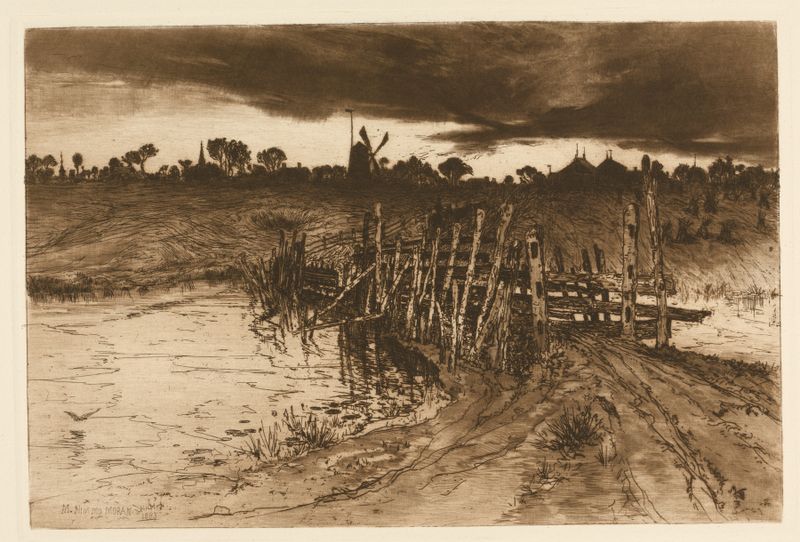
‘Tween the Gloamin’ and the Mirk, When the Kye Come Hame’
Mary Nimmo Moran
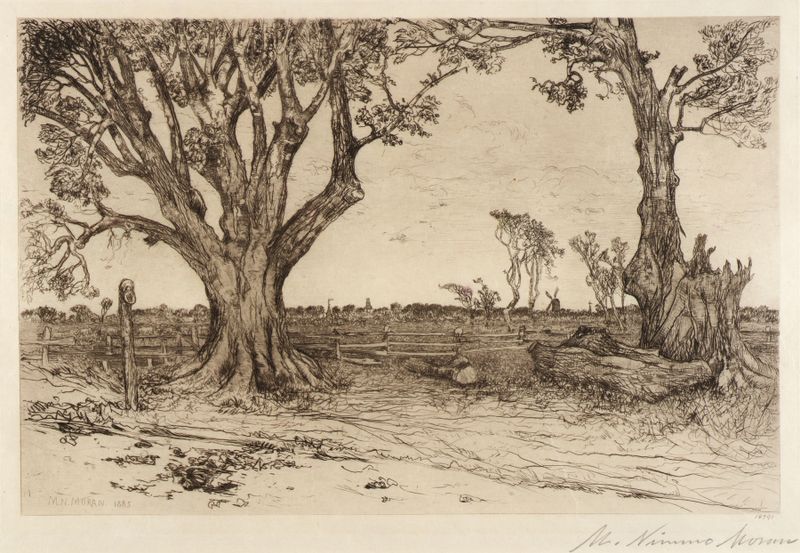
Old Lindens–Near Easthampton
Mary Nimmo Moran
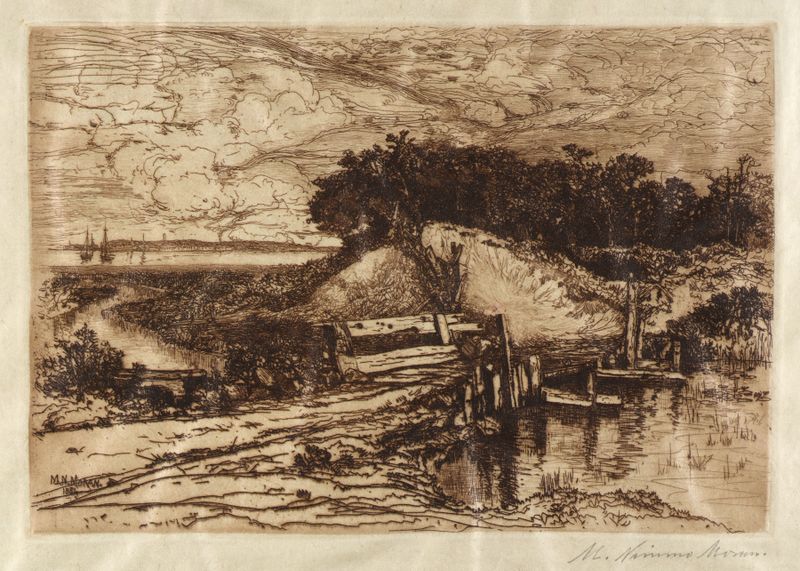
Gardiner’s Bay, L.I., Seen from Fresh Pond
Mary Nimmo Moran

House by a Stream
Mary Nimmo Moran
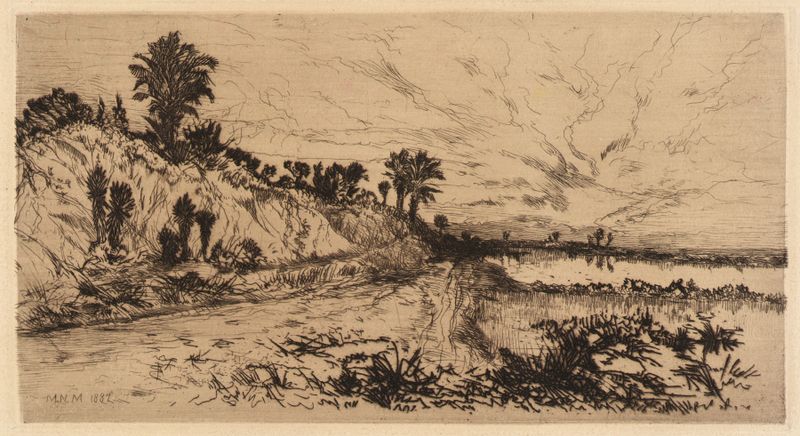
The Coast of Florida
Mary Nimmo Moran
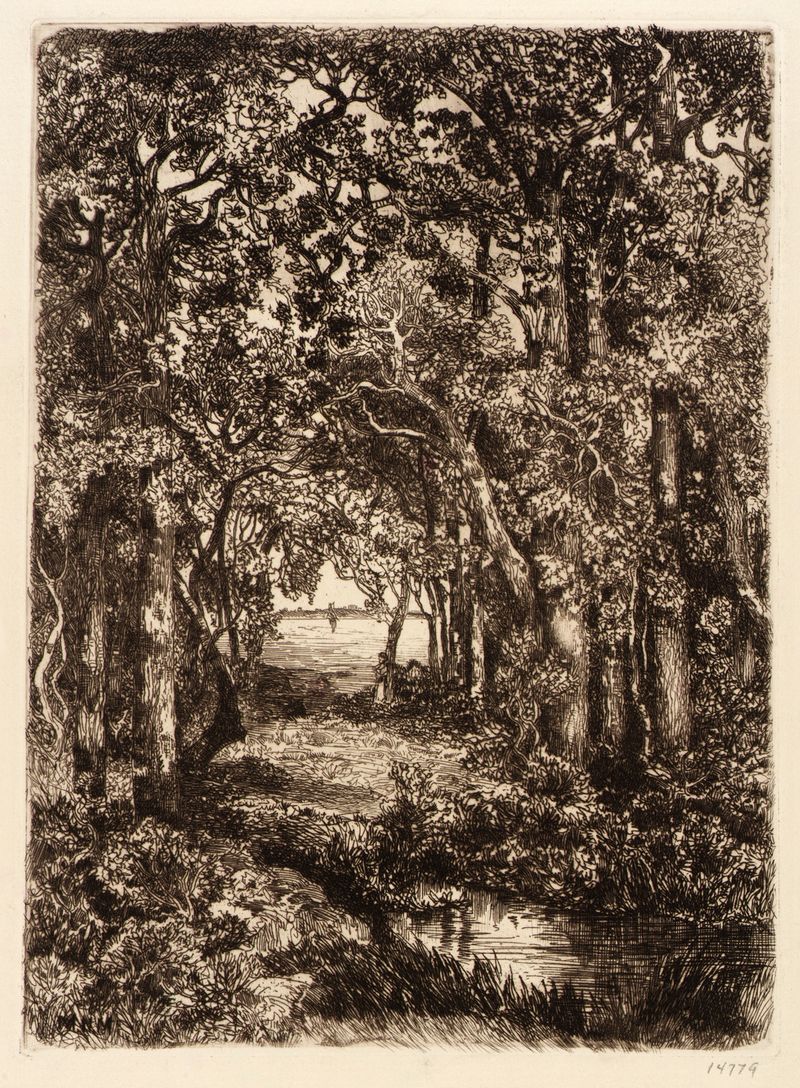
The Sea through the Woods
Mary Nimmo Moran

Looking Seaward
Mary Nimmo Moran

Bridge over the Buskill, Easton, Pa.
Mary Nimmo Moran

Home of the Muskrat
Mary Nimmo Moran
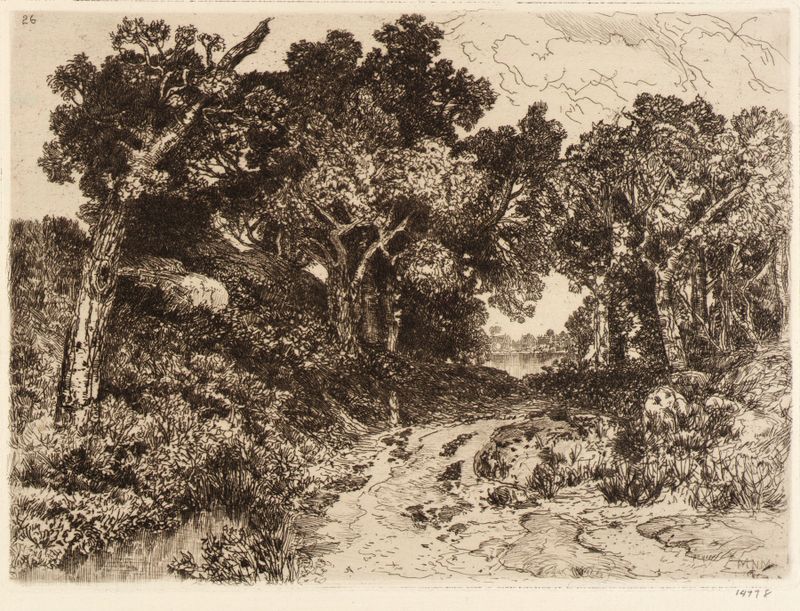
Across the Water
Mary Nimmo Moran





