Brighton, viewed from Lancing — History & Facts
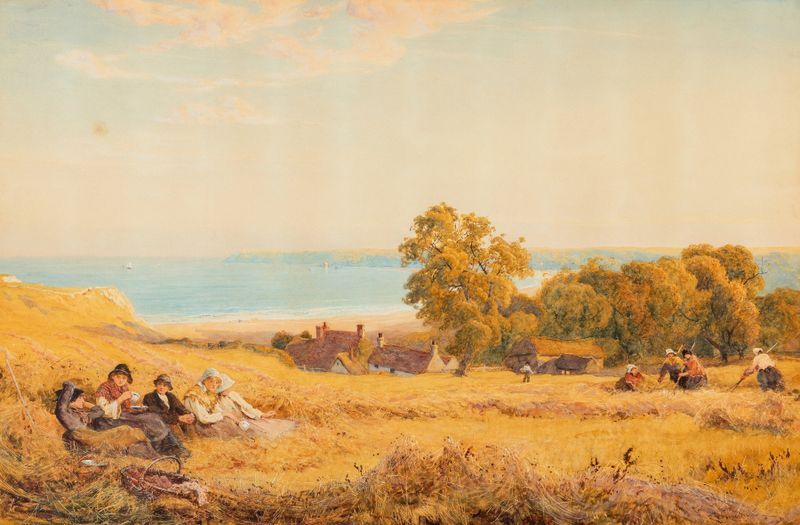
How do we reconcile the jagged edges of our world with the tranquil hues of a painted landscape? Focus on the distant horizon, where soft pastel blues and greens blend into one another, inviting the viewer to breathe in the serenity of a summer sky. Notice how the delicate strokes create a sense of motion in the clouds, each brushstroke a whisper of wind. The foreground, rich with vibrant greens and speckled wildflowers, grounds the scene, while the luminous sea glistens, drawing the eye to the horizon where land and sky merge. Yet, amid this beauty, there exists a tension between the idyllic view and the uncertain undertones of betrayal.
The lushness of the landscape seems to mask a deeper fracture, reminiscent of relationships where appearances deceive. The gentle waves rolling onto the shore evoke a sense of longing, hinting at what might lie beneath the surface—a hidden discord just out of sight. Each shadow hints at unseen forces, reminding us that not all is as it seems in this picturesque setting. In 1888, the artist was painting amidst a period of personal turmoil and transformation, reflecting the shifting tides of the art world.
Waite was deeply influenced by the Impressionist movement that challenged traditional representations of light and form. As he captured this view of Brighton from Lancing, he was navigating his own artistic expression, searching for the balance between beauty and the complexities of human experience.