Buitenplaats ‘t Kleine Loo — History & Facts
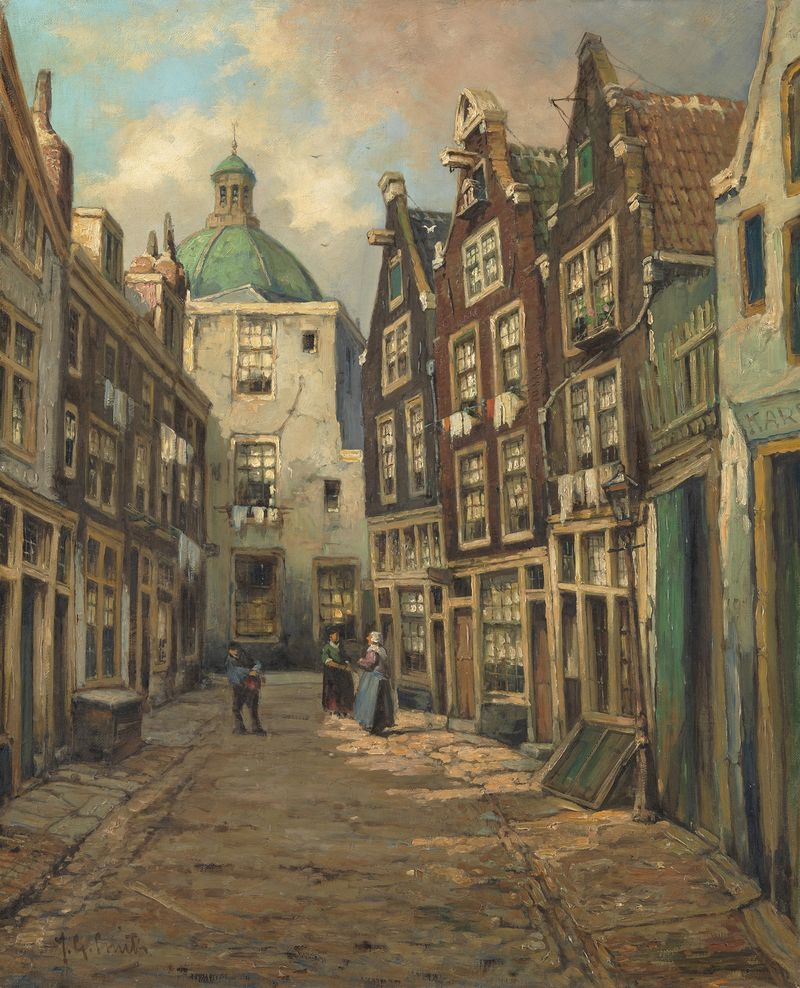
In the stillness of a summer’s day, the weight of what is left unsaid lingers in the air, echoing the beauty of loss. This sentiment resonates deeply through the layers of brushwork in a work that speaks to the passage of time and the remnants of grandeur now faded. Look closely at the left side of the canvas, where the lush greenery spills like a forgotten memory over the boundaries of an elegant estate. The sunlight filters through the leaves, casting delicate patterns on the ground, inviting the viewer to wander into this serene yet haunting landscape.
Notice how the artist employs a palette of soft greens and gentle blues, creating a tranquil atmosphere that belies an underlying melancholy. Beneath the surface, the subtle blend of light and shadow reveals contrasts not just in color but in emotion. The stately building in the background stands resolute, an echo of what once was, while the encroaching foliage suggests nature's slow reclamation of space, perhaps symbolizing the inevitable passage of time and the loss associated with it. Each brushstroke hints at stories untold, evoking nostalgia and a sense of yearning for a past that is both beautiful and irrevocably gone. In 1860, Jan Gerard Smits painted this scene during a time of personal reflection, navigating his own artistic journey amid a world that was rapidly changing.
As the Dutch art scene began to embrace more modern themes, he sought to capture the quiet strength of nature and architecture, embedding within it the profound emotions that such environments evoke.