Burgeoning Springs in Autumn — History & Facts
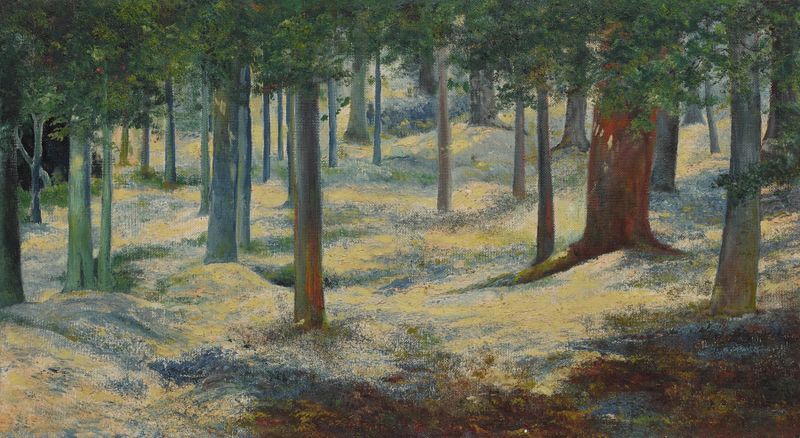
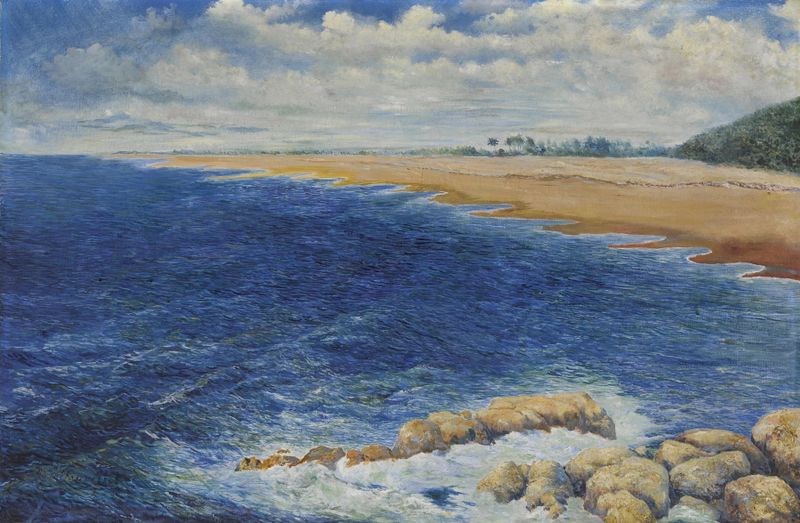
In a world where life's transitions whisper softly, fragility dances on the edge of existence, quietly yet powerfully. Focus on the hazy interplay of muted pinks and soft yellows that bleed into one another, evoking a sense of warmth amid decay. Look closely at the delicate strokes depicting the lightly trembling leaves, each brushwork revealing the artist's hand and intention. The vagueness of the background juxtaposes the vividness of the foreground, creating a dream-like quality that invites viewers to linger, as if holding their breath in anticipation of what comes next. The painting embodies a poignant tension between the vibrancy of life and the inevitability of change.
The interplay of light hints at a moment caught between seasons, where autumn's decay beckons yet a hint of spring's promise lingers in the air. Symbolism flourishes in the tiny details: a wilting flower, a shadow's embrace, the fragile petals that seem to tremble with both beauty and sorrow, reminding us that all things are impermanent. In 1910, Joaquín Clausell crafted this work during a time of personal exploration and artistic evolution, residing in Mexico where he sought to capture the essence of his homeland. Influenced by European impressionism yet rooted in Mexican themes, his work reflects the fervor of an artist eager to convey the subtleties of nature and existence.
The era was marked by a burgeoning national identity that shaped not just Clausell’s work, but also the wider landscape of art in Mexico.