Late Afternoon by the Sea (The Red Wave) — History & Facts
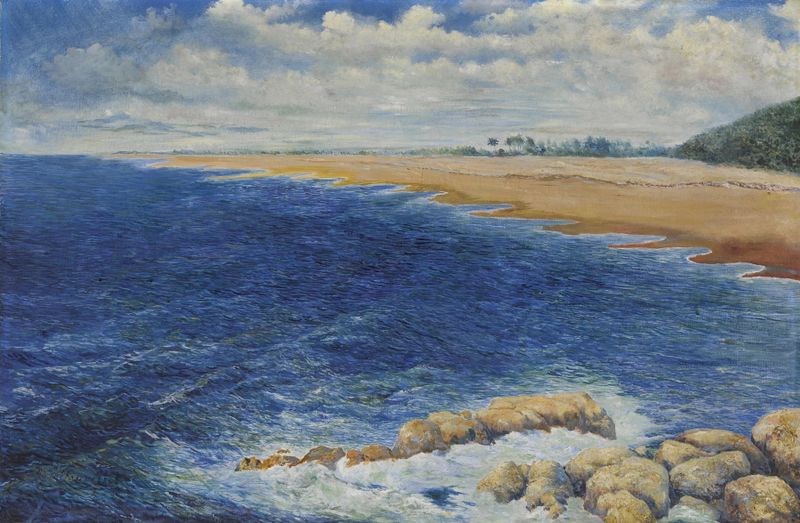
What if beauty was never meant to be finished? In Late Afternoon by the Sea (The Red Wave), a moment captures the relentless pursuit of the sublime, where nature's brilliance becomes an obsession. Look to the bottom left at the crashing wave, its vibrant crimson crest illuminated by the fading sun. The tumultuous ocean is masterfully rendered with thick strokes, imbuing the water with a life of its own, as if it were a living canvas. Notice how the light bathes the scene in a warm glow, creating a stark contrast with the cool blues and greens of the sea, leading the eye towards the horizon where the sky melts into a tapestry of orange and purple hues.
Each brushstroke reveals the artist's spirited engagement with his subject, an invitation to witness beauty in its wild, untamed form. Beneath the surface, the painting expresses an emotional restlessness, a tension between tranquility and chaos. The juxtaposition of the serene beach with the ferocity of the wave encapsulates the duality of nature's allure. The red wave, almost sentient in its motion, serves as a metaphor for desire — a force both captivating and destructive.
This interplay forces the viewer to confront the fleeting nature of beauty, and perhaps the inevitability of obsession itself, as they contemplate the moment frozen in time. Painted in 1910, the work emerged during a transformative period for Joaquín Clausell. As an influential figure in the Mexican avant-garde, he was experiencing a burgeoning interest in impressionism, seeking to capture emotional realities through color and light. At this time, the world was shifting; the winds of modernity were stirring artistic expression, and Clausell was at the forefront, exploring new frontiers in his relationship with nature and art.