By the Sea — History & Facts
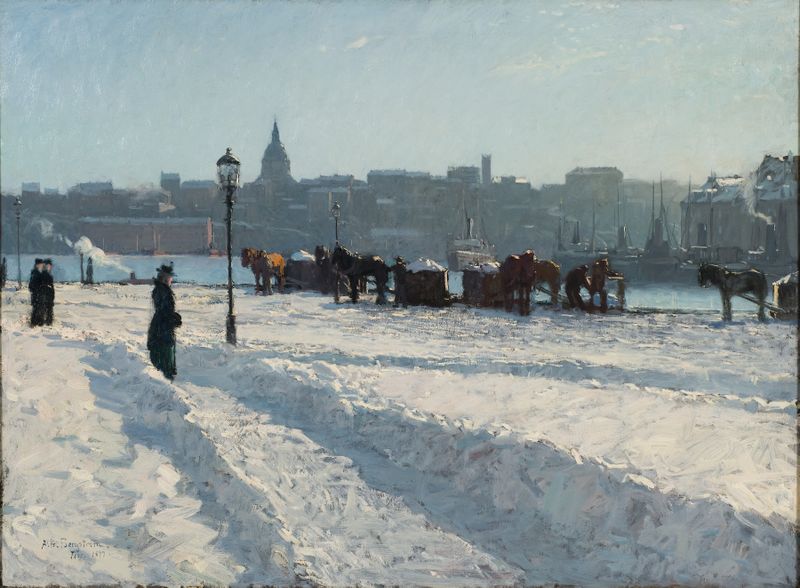
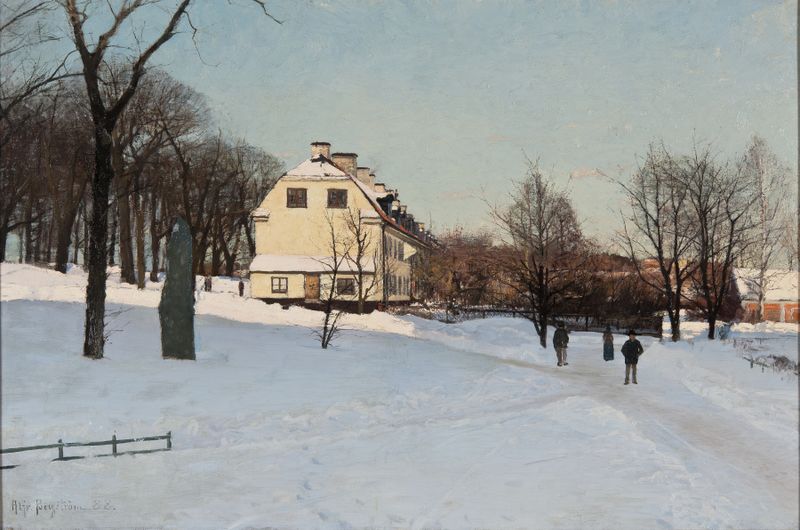
Did the painter know this moment would outlive them? The gentle lapping of waves against the shore, the teasing brush of a salty breeze—each detail a whisper of eternity captured in stillness. Look to the left at the delicate figures standing at the water's edge, their silhouettes softened by the fading light of day. The warm hues of orange and pink from the setting sun blend into the cool blues of the sea, creating a harmonious dialogue between light and shadow. Notice how the artist expertly layers brushstrokes to evoke both the texture of the sand and the fluidity of the water, inviting viewers to step into this serene coastal world. In the gentle embrace of the scene, a quiet tension simmers.
The figures are engrossed in their moment, yet their shadows stretch behind them, suggesting a tether to the past or perhaps a hint of impending departure. The contrast between the vibrancy of the sun setting and the darkening shoreline speaks to the transient nature of life; each passing second a reminder of what is fleeting. Alfred Bergström painted By the Sea in 1905 during a period marked by the rise of Impressionism in Sweden. At that time, he was exploring the interplay of light and color, influenced by both natural landscapes and urban life.
The world was undergoing rapid changes, and this work reflects a desire to capture the immediate experience of beauty amidst transformation.