Cabin in the Cotton — History & Facts
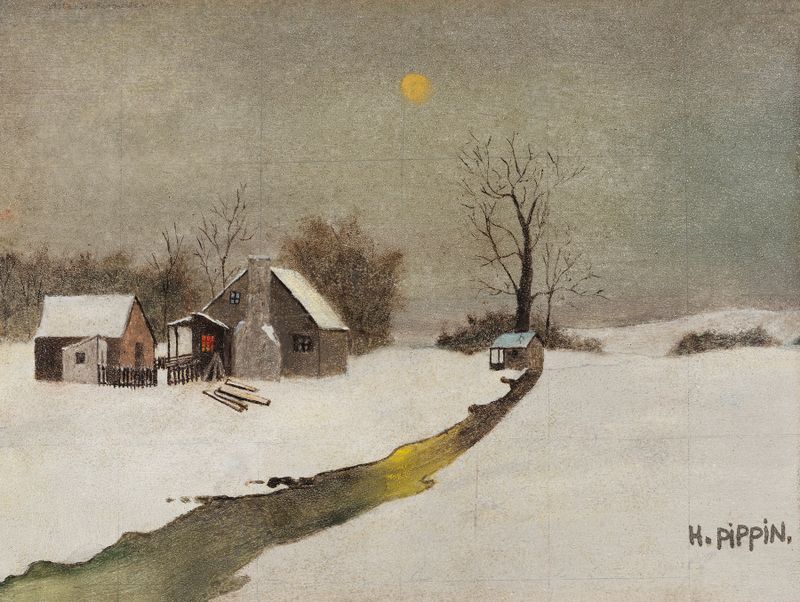
In Cabin in the Cotton, the viewer is drawn into a world where decay dances with resilience, revealing the delicate balance between nature's relentless march and human existence. Look to the left at the sturdy cabin, its weathered wood telling stories of countless seasons. Notice the muted earth tones that suffuse the canvas, evoking a sense of nostalgia and wear. The cotton plants stretch toward the sky, their soft white blooms a stark contrast against the gritty ground.
Pippin's brushwork animates the scene, giving life to textures that suggest both beauty and the inevitable decay surrounding it. Each stroke breathes individuality into the landscape, pulling us closer to the essence of rural life. Beneath the surface, the painting symbolizes both hardship and hope. The cabin stands resilient amid the encroaching cotton fields, hinting at the labor and toil of those who worked the land.
The interplay of light and shadow creates a tension that speaks to the fleeting nature of abundance and the scars of struggle. Here, decay is not merely loss but a testament to survival, urging the viewer to reflect on the cycles of life that shape both nature and humanity. In the early 1930s, Pippin painted this work in West Chester, Pennsylvania, as he navigated the complexities of his own life as an African American artist. During a time of economic hardship and racial tension, he sought to capture the beauty in the everyday life around him, using his art as a means of expression and resilience.
His experiences of both personal and social challenges influenced his creative vision, resulting in artworks that resonate deeply with themes of memory and legacy.