
Caerlaverock Castle Entrance Gateway and Flanking Towers — History & Facts
Did the painter know this moment would outlive them? In the stonework of a castle gateway, the weight of history and loss thickens the air, inviting both reverence and sorrow. Look to the left at the grand entrance, where weathered stones rise majestically, each crevice telling tales of battles fought and time passed. The meticulous detailing draws the eye toward the flanking towers, their sturdy silhouettes contrasting sharply with the soft, muted hues of the surrounding landscape. Shadows stretch across the foreground, hinting at the passage of time, and the gentle interplay of light reveals the texture of the stone, suggesting both strength and fragility. Yet, beneath this architectural beauty lies a deeper narrative of obsolescence and memory.
The towers, though imposing, stand as relics of a bygone era, whispering secrets of abandonment to the viewer. A single bird taking flight in the background may symbolize both freedom and the inevitability of change, emphasizing the transient nature of life against the permanence of stone. Created in 1848, this work emerged as Robert William Billings grappled with the romanticism of medieval architecture during a time when Britain was undergoing rapid industrialization. Amidst the shifting cultural landscape, he sought to immortalize the essence of historical structures, reflecting a yearning to connect with the past even as it slipped from contemporary consciousness.
More Artworks by Robert William Billings
Browse all →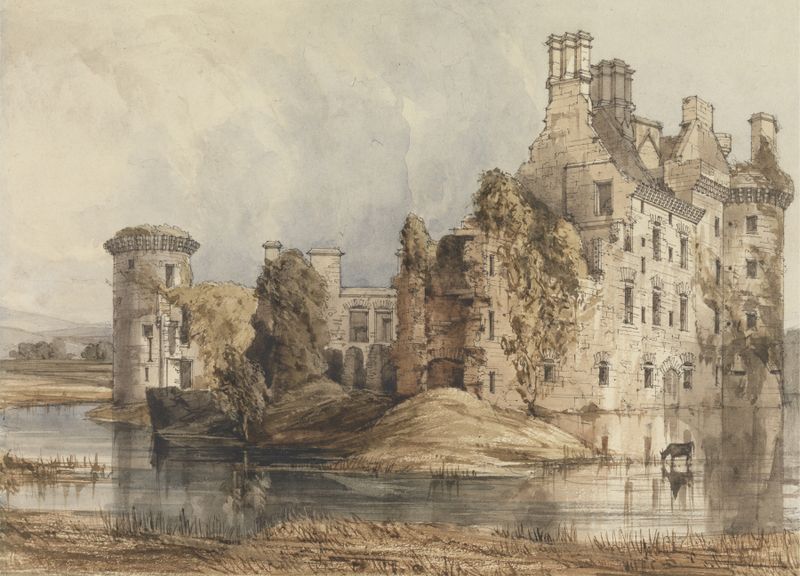
More Architecture Art
Browse all →
The statue of Liberty
Frédéric Auguste Bartholdi

View of Houses in Delft, Known as ‘The Little Street’
Johannes Vermeer

View of Houses in Delft, Known as ‘The Little Street’
Johannes Vermeer

The Cathedral in Rouen. The portal, Grey Weather
Claude Monet

The yellow house
Vincent van Gogh

The Church in Auvers-sur-Oise, View from the Chevet
Vincent van Gogh