
Calm Sea — History & Facts
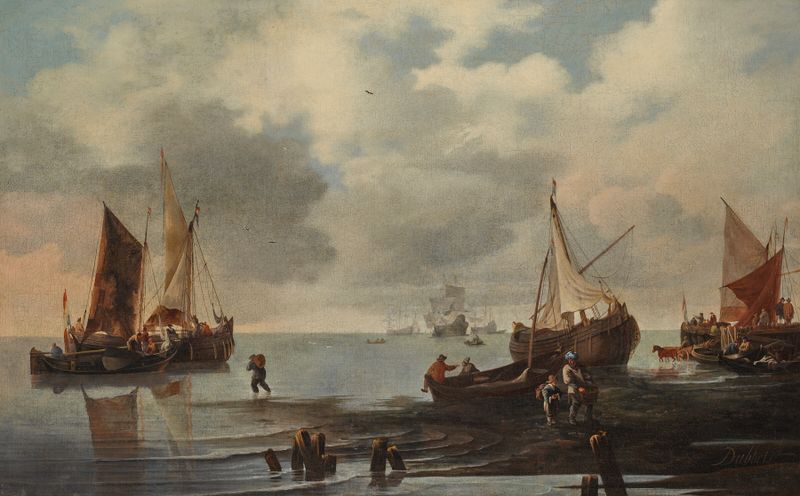
Can beauty exist without sorrow? The juxtap of calmness and turmoil in nature offers a poignant reflection on human existence. Look to the center where gently lapping waves caress the shore, framed by an expansive sky that hints at an imminent storm. The deep blues and muted greens evoke tranquility, contrasting sharply with the darker undertones lurking within the water. Notice how the light dances upon the surface, creating a fleeting shimmer, while the distant horizon blurs—suggesting that even in serene moments, chaos is ever-present just beyond the visible. The interplay of light and shadow reveals layers of meaning, drawing the viewer into a narrative of anticipation.
The calm waters, deceptive in their beauty, hint at the tempestuous nature of life itself. Small details, such as the subtle ripples and the distant, stormy clouds, symbolize the underlying struggles and chaos that often accompany stillness. This duality invites contemplation on how tranquility can mask deeper currents of unrest. During the mid-17th century, Dubbels painted this seascape in a period characterized by the Dutch Golden Age's flourishing maritime trade and exploration.
While he captured the serenity of the oceans, Dubbels was also influenced by the shifting socio-political climate of Europe, where the promise of peace frequently teetered on the edge of conflict. His work reflects a world caught between beauty and chaos, a theme that resonates powerfully through the ages.
More Artworks by Hendrick Jacobsz. Dubbels
Browse all →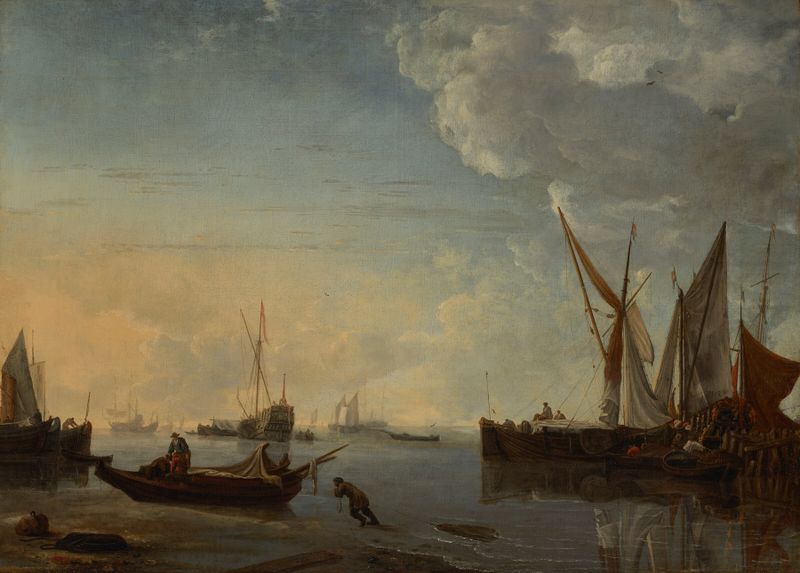
Ships in a calm at sunset
Hendrick Jacobsz. Dubbels
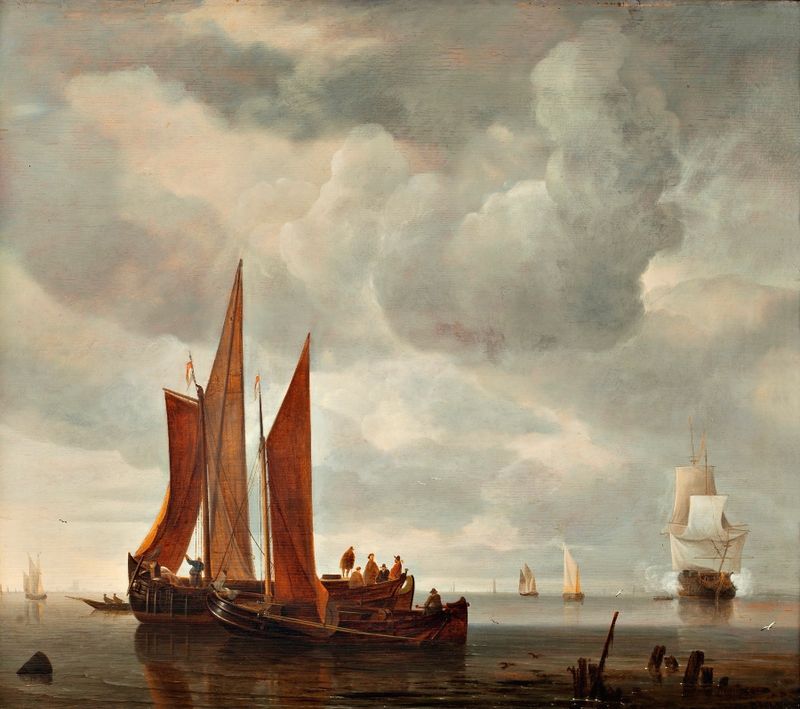
Ships outside Dordrecht
Hendrick Jacobsz. Dubbels

View of Batavia
Hendrick Jacobsz. Dubbels

A Moonlit Coastal Landscape With Fishermen In The Foreground
Hendrick Jacobsz. Dubbels

Hoys In A Calm
Hendrick Jacobsz. Dubbels
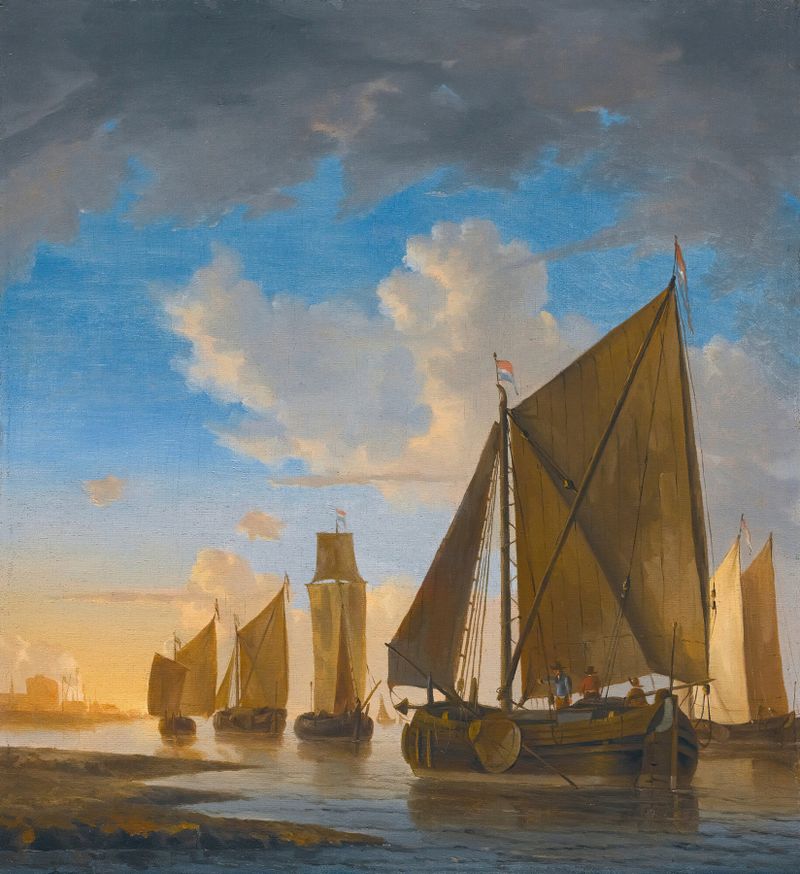
Smalschips In A Calm Near The Shore At Sunset
Hendrick Jacobsz. Dubbels
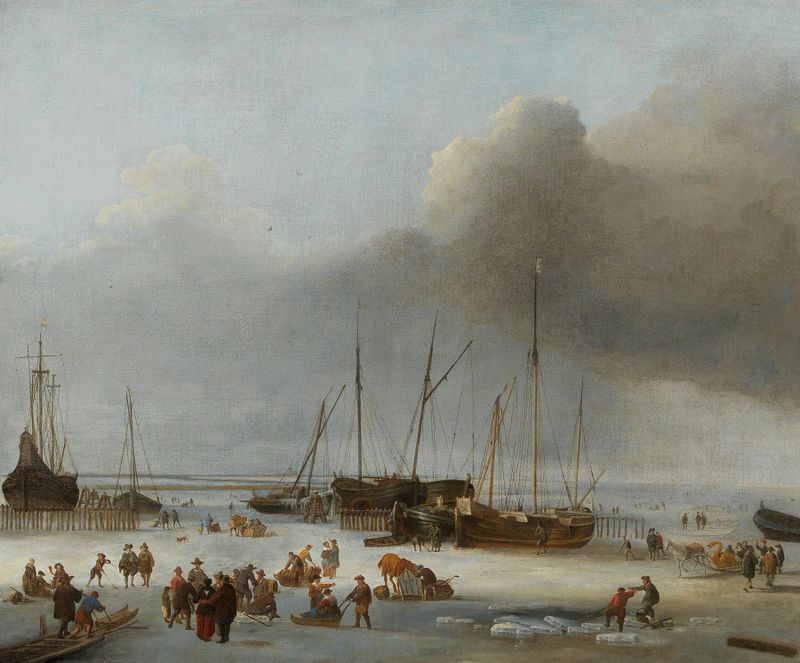
Ice-skating on the Eastern Docks of Amsterdam
Hendrick Jacobsz. Dubbels
A calm with ships and fishermen along the shore
Hendrick Jacobsz. Dubbels

Harbor with Sailboats and Ferry Boat
Hendrick Jacobsz. Dubbels





