
Calm Spring in Jiangnan — History & Facts
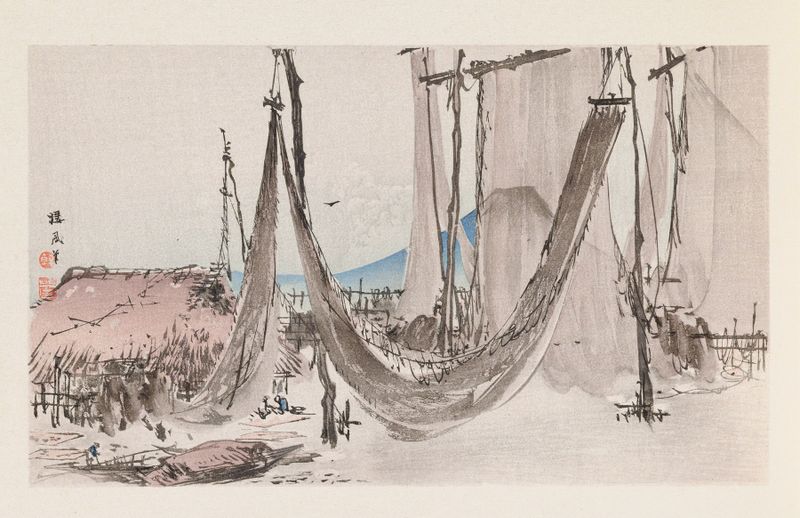
What if beauty was never meant to be finished? In the delicate strokes of Takeuchi Seihō's work, we glimpse a moment suspended, inviting us to linger on the edge of revelation. Look to the left at the serene village nestled amid gentle hills, where muted greens and soft blues blend harmoniously. The brushwork captures the fluidity of water as it reflects the pale, whispering sky, creating a sense of tranquility that permeates the entire composition. Note the subtle gradations of color that evoke the softness of spring; each petal and leaf is imbued with life, yet they remain effortlessly quiet, as if the scene is holding its breath. Underneath the surface lies a deeper interplay of stillness and growth.
The contrast between the still waters and the budding flora suggests a tension between the past and future — a reminder that beauty, much like seasons, evolves over time. The distant mountains loom silently, grounding the scene while symbolizing the timelessness of nature's cycles, inviting introspection about what lies beyond the horizon. In 1921, Seihō created this masterpiece during a period of personal reflection and change, shaped by Japan’s modernization yet yearning for the essence of traditional aesthetics. This artwork reflects the artist’s dedication to capturing the transient beauty of nature, a sentiment that resonated deeply amid the shifting tides of contemporary art.
As he painted in his studio in Kyoto, Seihō embraced the tranquility of Jiangnan, yearning to preserve these fleeting moments within the frame of his canvas.
More Artworks by Takeuchi Seihō
Browse all →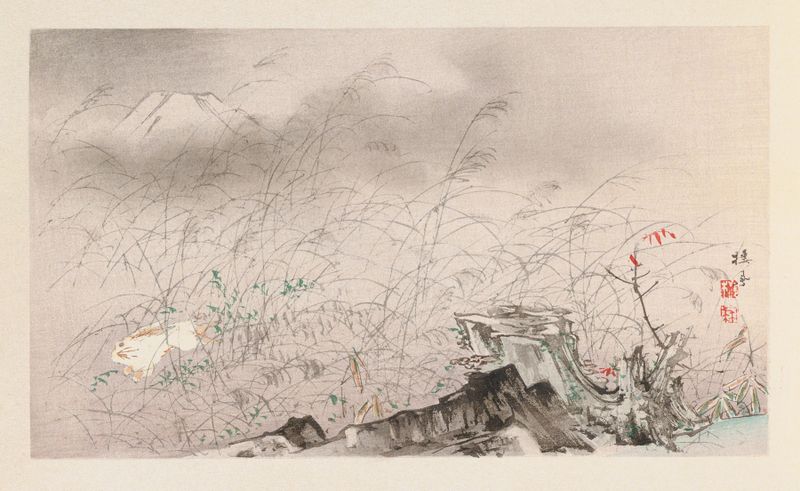
Seihō jūni Fuji, Pl.11
Takeuchi Seihō
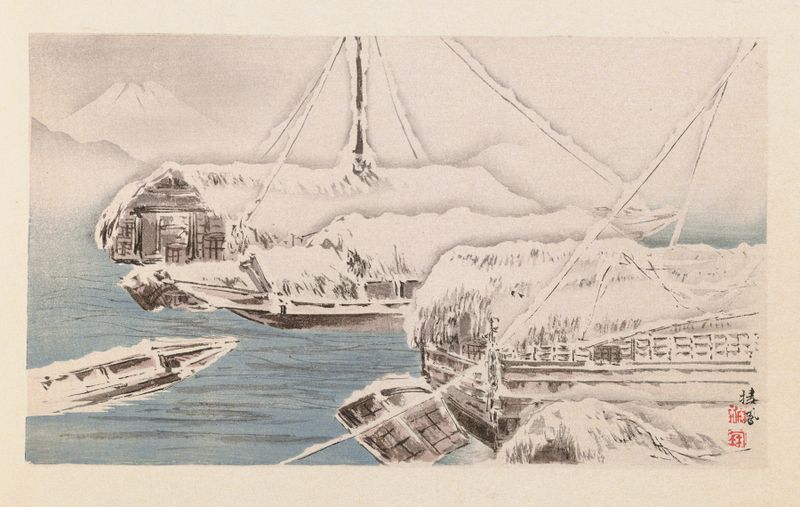
Seihō jūni Fuji, Pl.12
Takeuchi Seihō
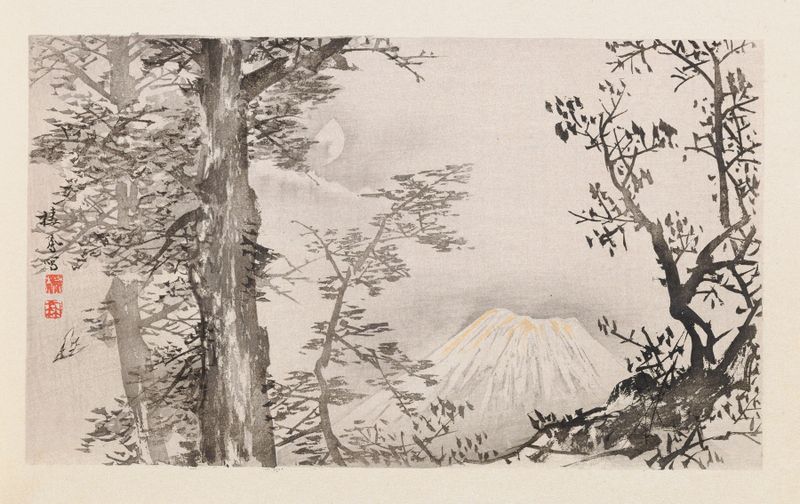
Seihō jūni Fuji, Pl.04
Takeuchi Seihō
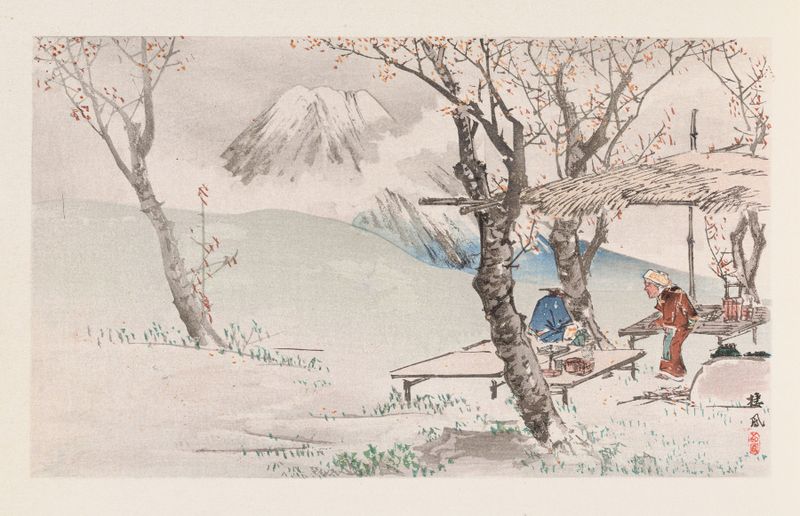
Seihō jūni Fuji, Pl.03
Takeuchi Seihō
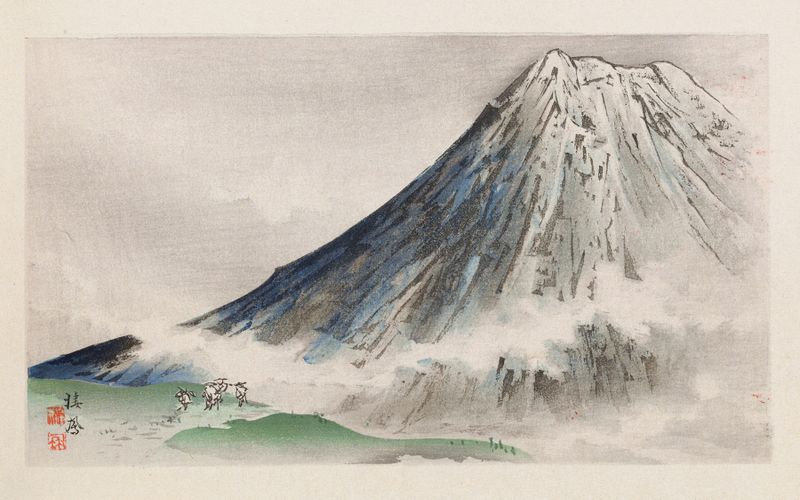
Seihō jūni Fuji, Pl.08
Takeuchi Seihō

A Fine Day During the Rainy Season
Takeuchi Seihō
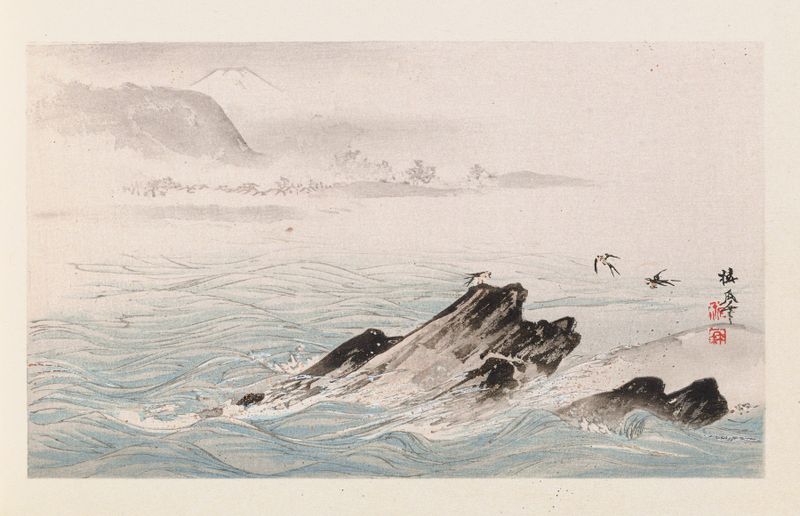
Seihō jūni Fuji, Pl.02
Takeuchi Seihō
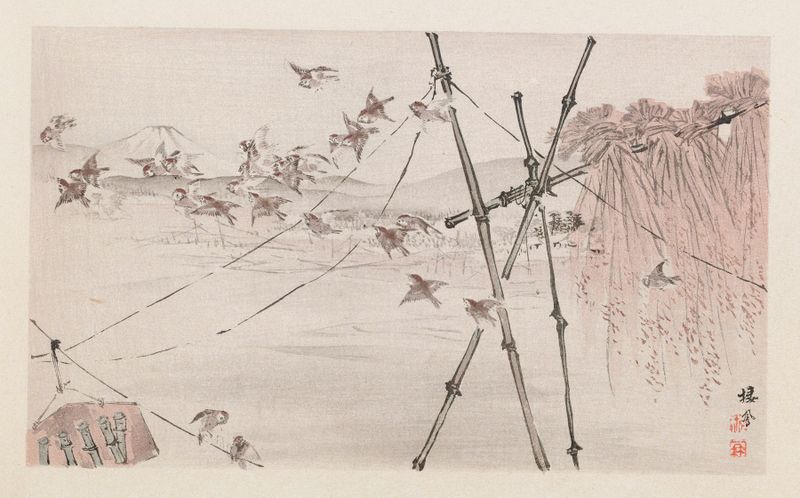
Seihō jūni Fuji, Pl.10
Takeuchi Seihō
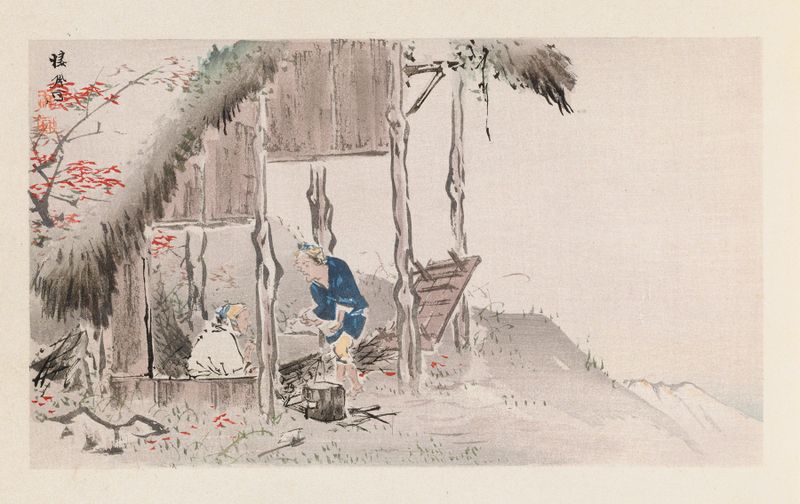
Seihō jūni Fuji, Pl.09
Takeuchi Seihō
Seihō jūni Fuji, Pl.07
Takeuchi Seihō





