
Campagna with Distant Aqueduct — History & Facts
In its stillness, it reflects the heartache of what has been lost and the quiet resilience of nature reclaiming its space. Look to the foreground, where the undulating hills stretch out in muted greens and ochres, whispering stories of time gone by. Notice how the distant aqueduct, a skeletal remnant of human achievement, rises against the horizon — a ghost of an era cradled by soft clouds. The careful brushwork creates a texture that invites your gaze to wander over the landscape, revealing contrasts between the vitality of the earth and the desolation of the forsaken structure. As you delve deeper into the scene, a tension unfolds.
The aqueduct, once a proud testament to human ingenuity, now stands languid and crumbling, emblematic of loss and decay. The horizon hints at an unseen boundary between the past and present, a reminder that nature, though resilient, often reclaims what humanity has neglected. The gentle light illuminating the hills hints at hope, yet shadows linger in the folds of the landscape, suggesting an emotional weight that cannot be ignored. Ernst Schiess created this work in the late 19th century, during a period marked by burgeoning interest in naturalism and a shift away from industrialization.
While specific details of his life during this time remain elusive, the artwork reflects the wider sentiments of nostalgia and a yearning for connection with the landscape, echoing the conversations around environmental and human impact that resonate even today.
More Artworks by Ernst Schiess
Browse all →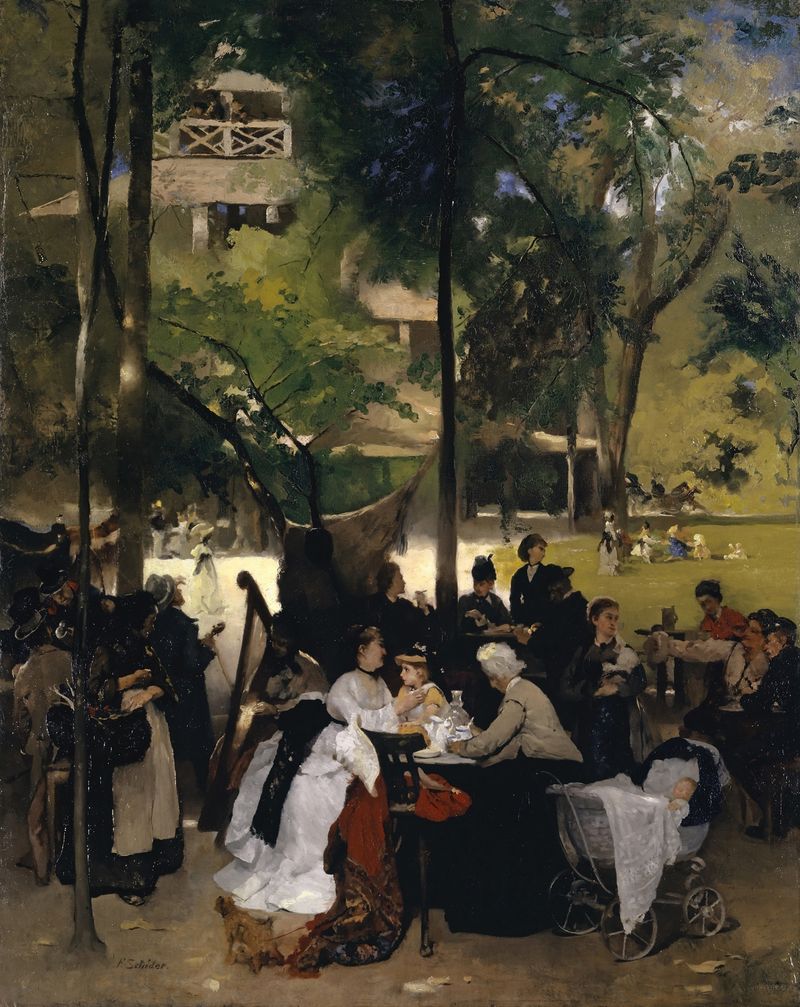
The Chinese Tower in the English Garden in Munich
Ernst Schiess

Evening Walk Above a Southern Lake
Ernst Schiess
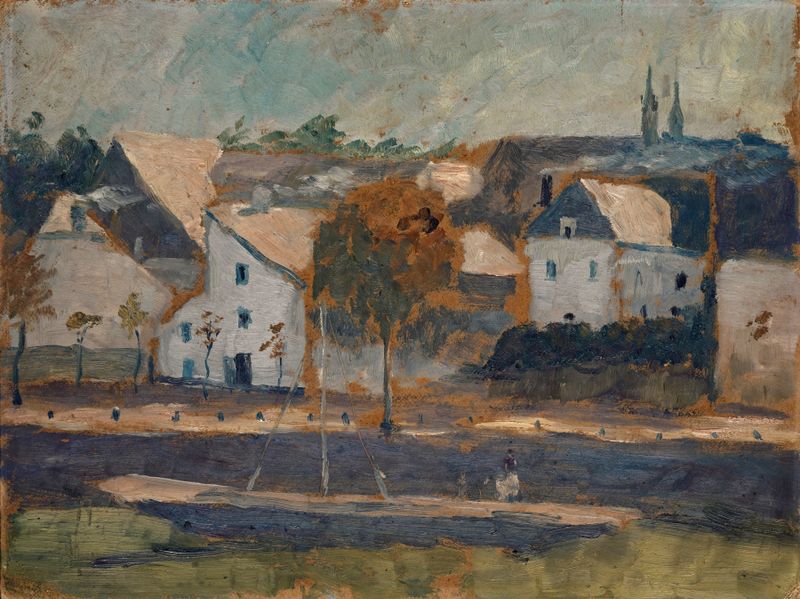
Kleine Stadt an Kanal
Ernst Schiess
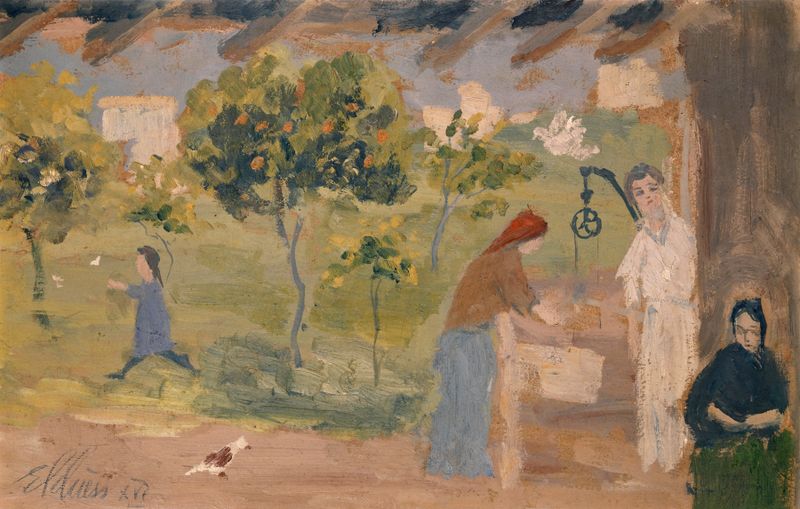
At the Fountain
Ernst Schiess

At the Harbour of Palma de Mallorca
Ernst Schiess
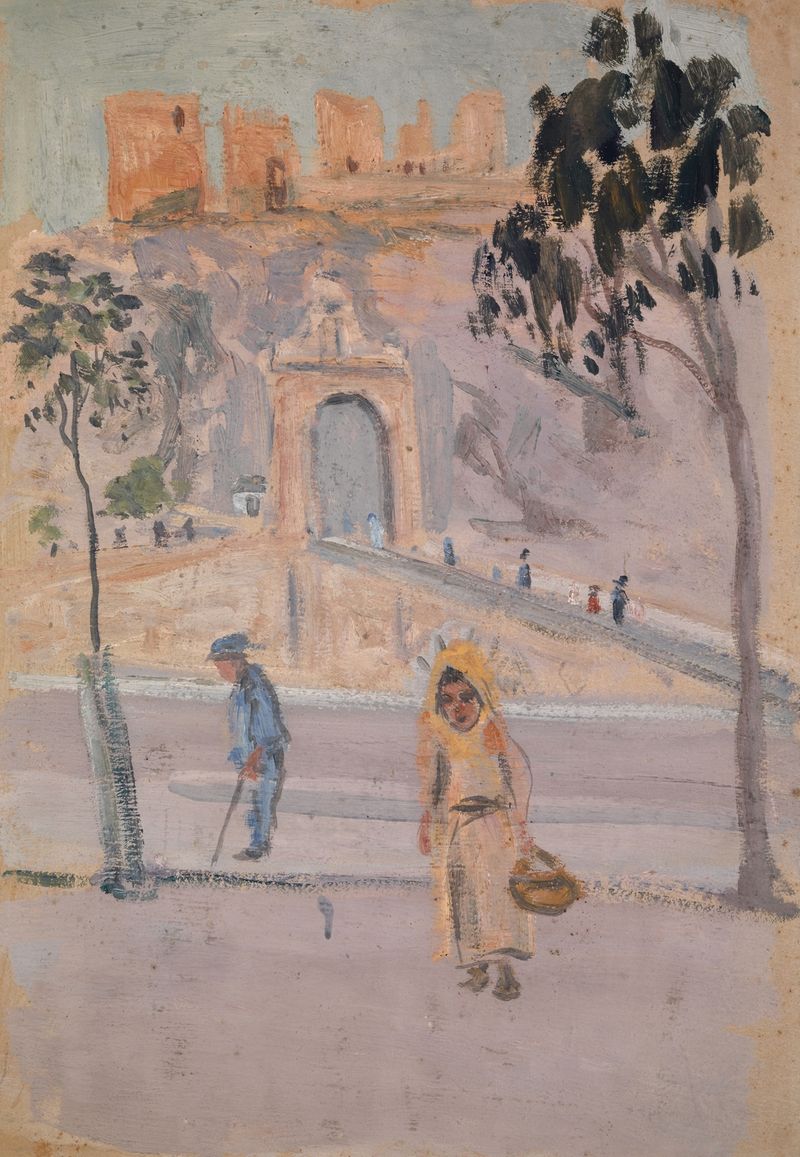
Alcantarabridge and Castillo de San Servando at Toledo
Ernst Schiess
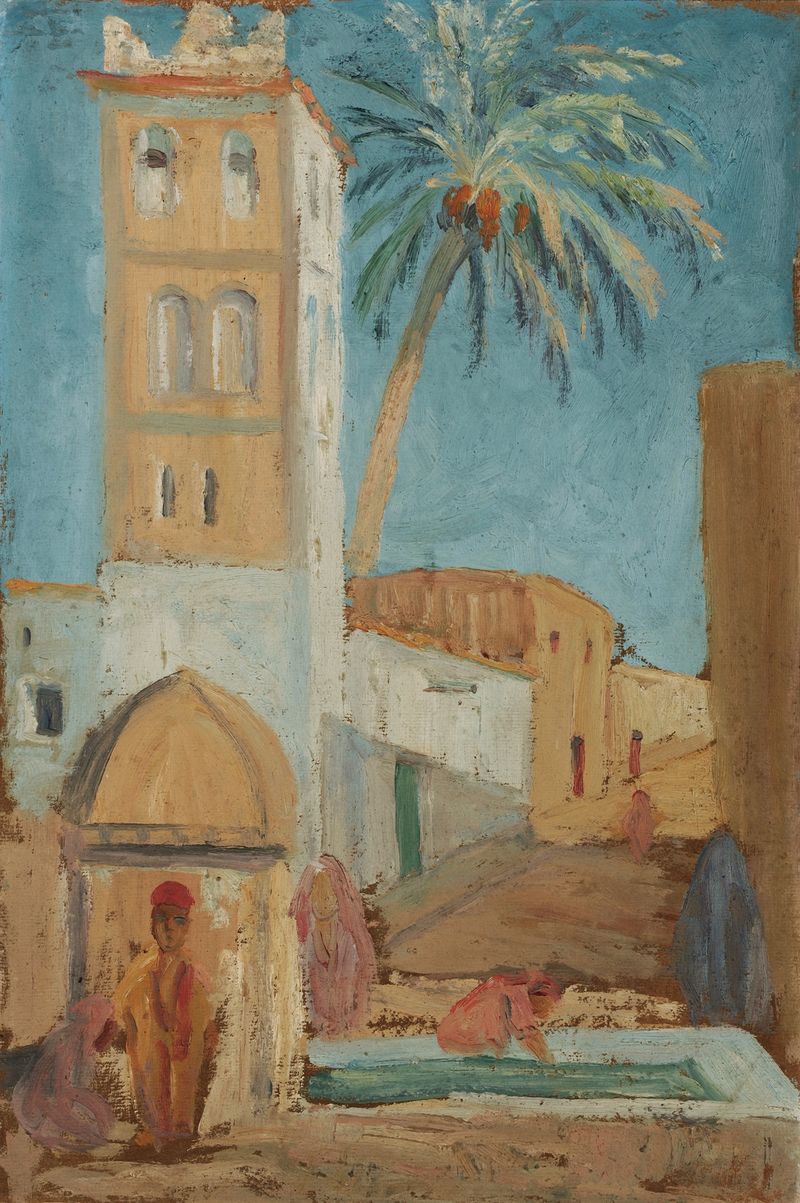
Scene at a Fountain in a Moroccan Place
Ernst Schiess
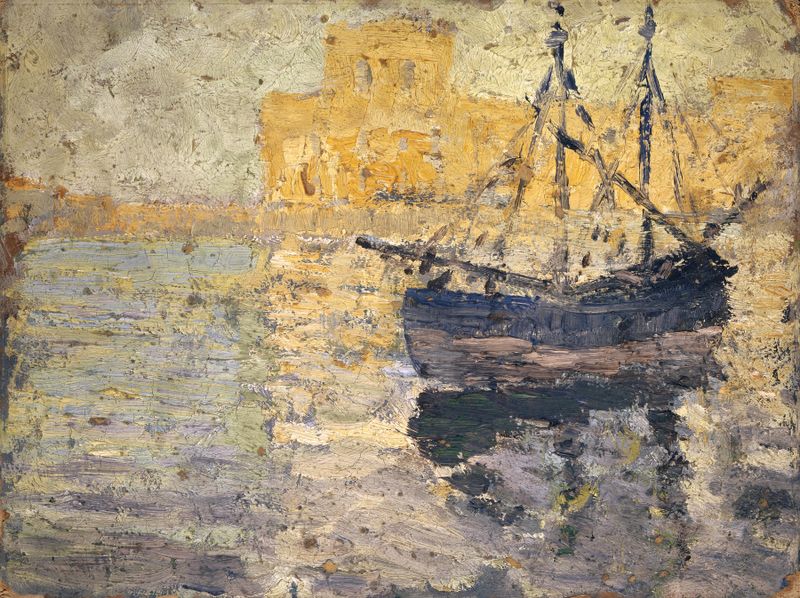
Harbour with Sailing Boat
Ernst Schiess
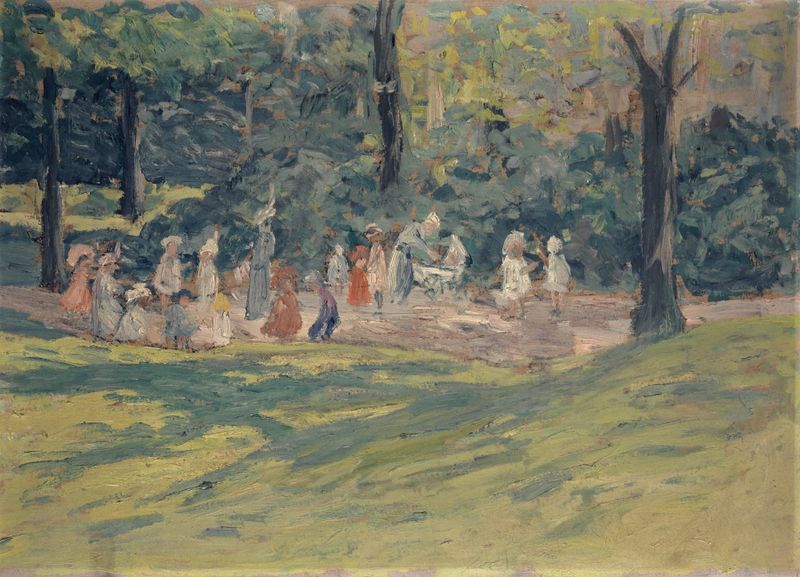
Children Playing in a Public Park
Ernst Schiess

Mohammedanischer Friedhof
Ernst Schiess





