
Mohammedanischer Friedhof — History & Facts
In the stillness of a graveyard, memories intertwine with the earth, and obsessions linger like whispers among the stones. Here, a quiet reverence breathes life into the act of remembrance, calling forth histories often left unspoken. Look closely at the foreground, where rows of gravestones emerge like quiet sentinels, their surfaces worn but resolute. The muted tones of gray and earth blend seamlessly, evoking a sense of solemnity that permeates the air.
Notice how the soft light caresses each monument, highlighting the delicate engravings and casting long shadows that stretch into the background, suggesting a timeless struggle between existence and oblivion. The composition is grounded yet ethereal, pulling the viewer’s gaze deeper into the scene. Beneath the surface, a profound tension lies in the contrast between decay and memory. The gravestones, meticulously rendered, serve as a testament to lives once lived—each one a story, a name, a fragment of identity that refuses to fade.
Yet, the artist hints at the ephemeral nature of life through the encroaching wildness of nature, where foliage seeks to reclaim space, symbolizing the inevitable passage of time and the obsession to hold onto memory. Here, the desire to remember clashes with the inevitability of forgetting. Ernst Schiess painted this work between 1916 and 1918, during a time marked by the devastation of World War I. Living in Germany, he was part of a broader movement exploring themes of identity and mortality amidst the chaos of war.
The ambiance of loss and reflection during this period profoundly influenced his artistic expression, capturing a moment where obsessions with the past cling to the fragile threads of the present.
More Artworks by Ernst Schiess
Browse all →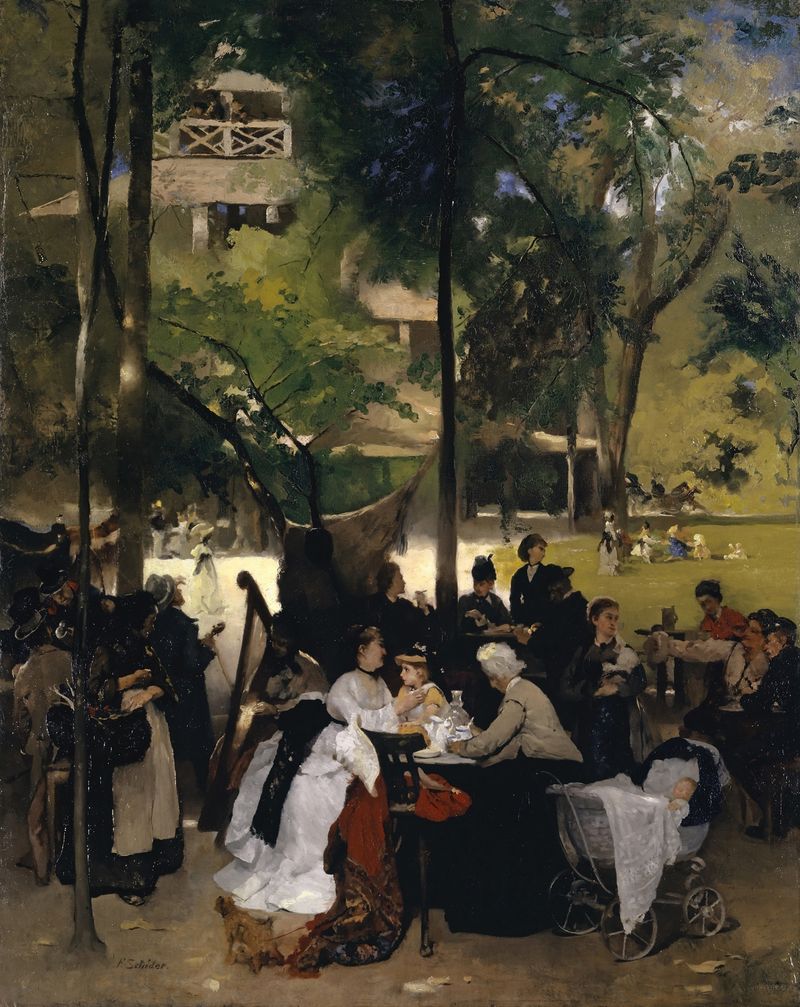
The Chinese Tower in the English Garden in Munich
Ernst Schiess

Evening Walk Above a Southern Lake
Ernst Schiess
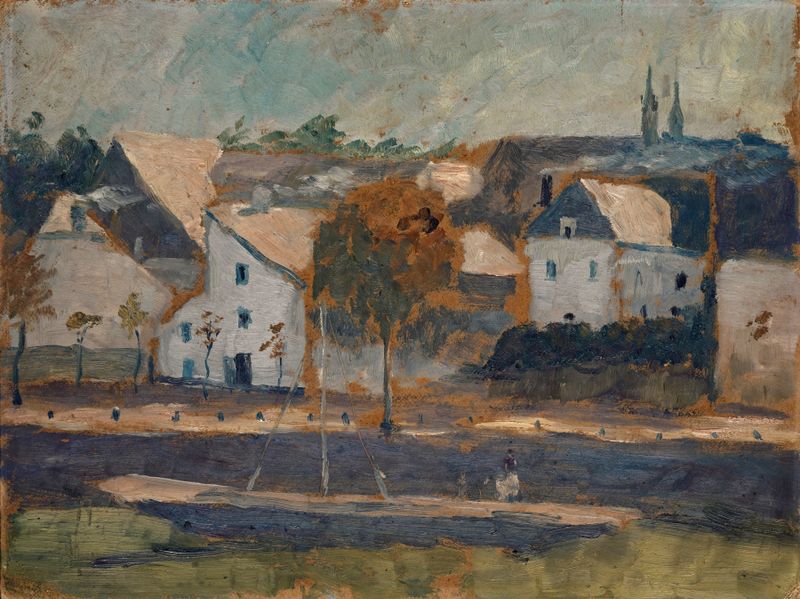
Kleine Stadt an Kanal
Ernst Schiess
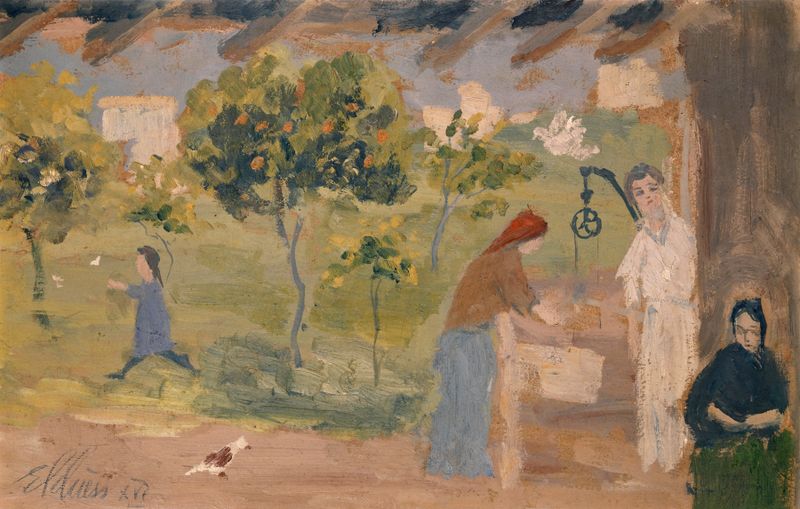
At the Fountain
Ernst Schiess

At the Harbour of Palma de Mallorca
Ernst Schiess
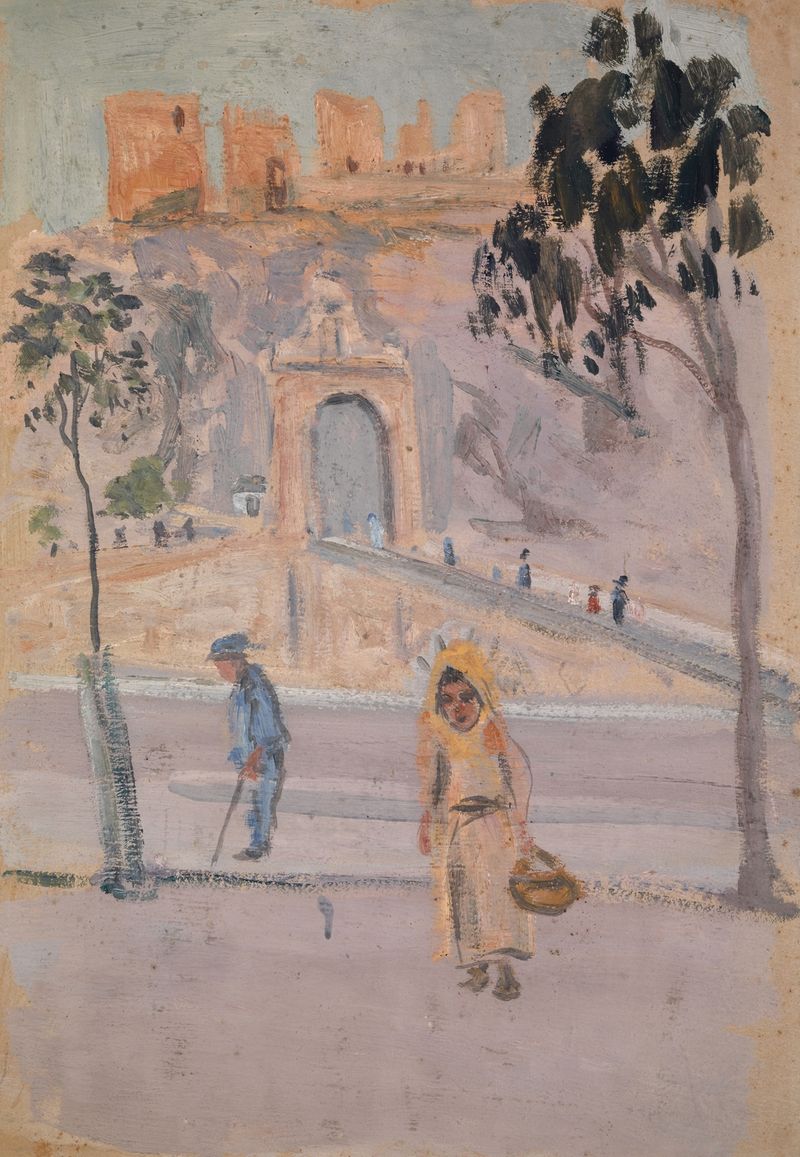
Alcantarabridge and Castillo de San Servando at Toledo
Ernst Schiess
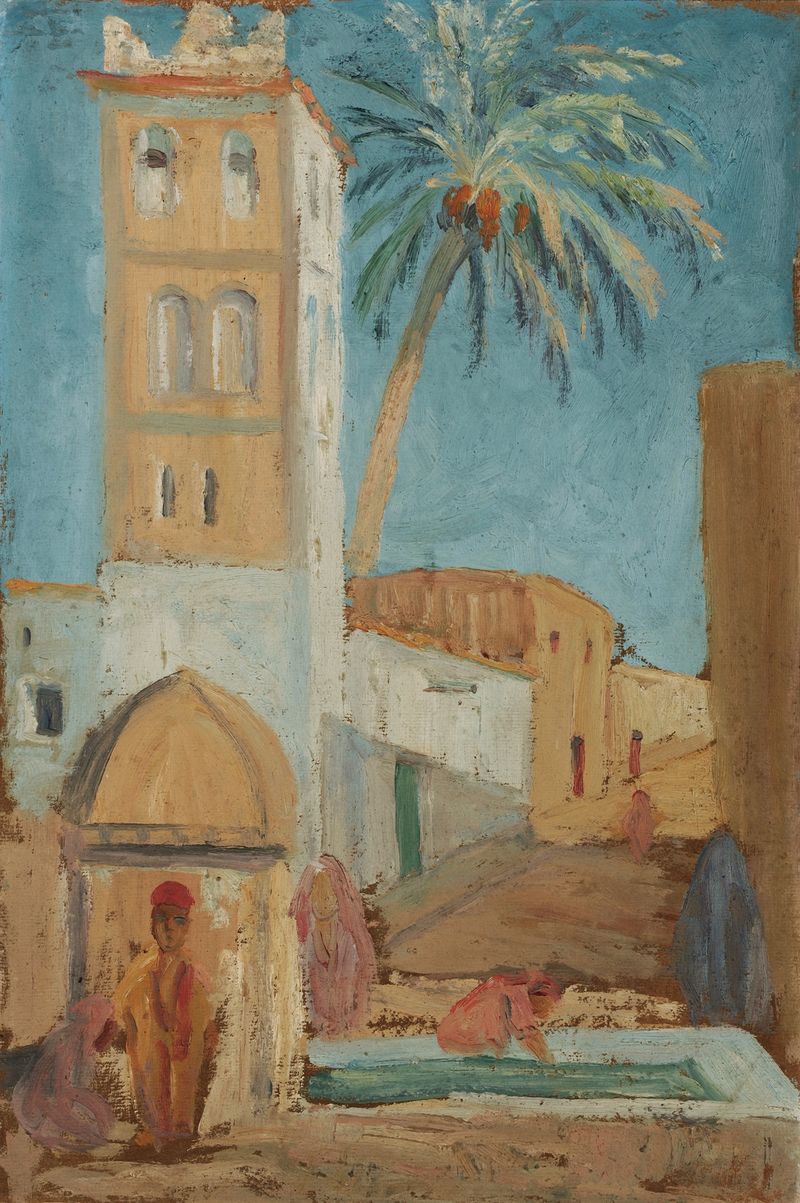
Scene at a Fountain in a Moroccan Place
Ernst Schiess
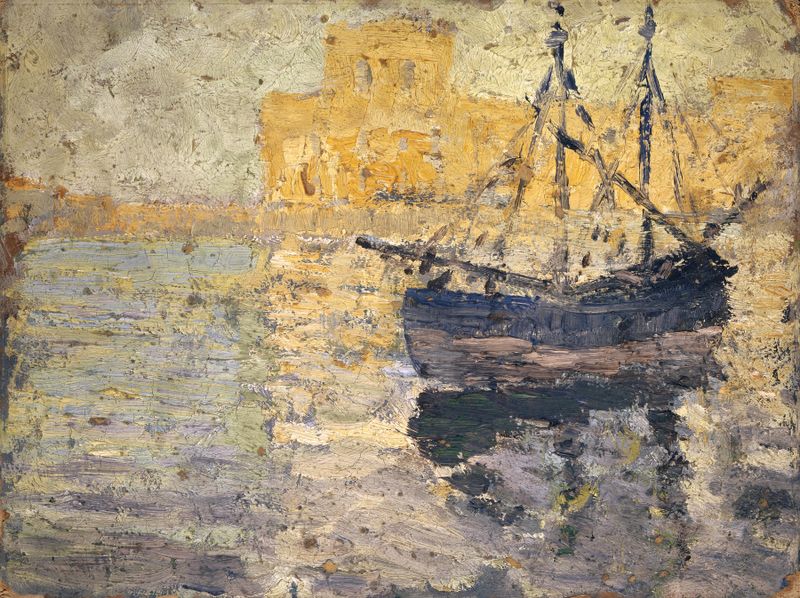
Harbour with Sailing Boat
Ernst Schiess
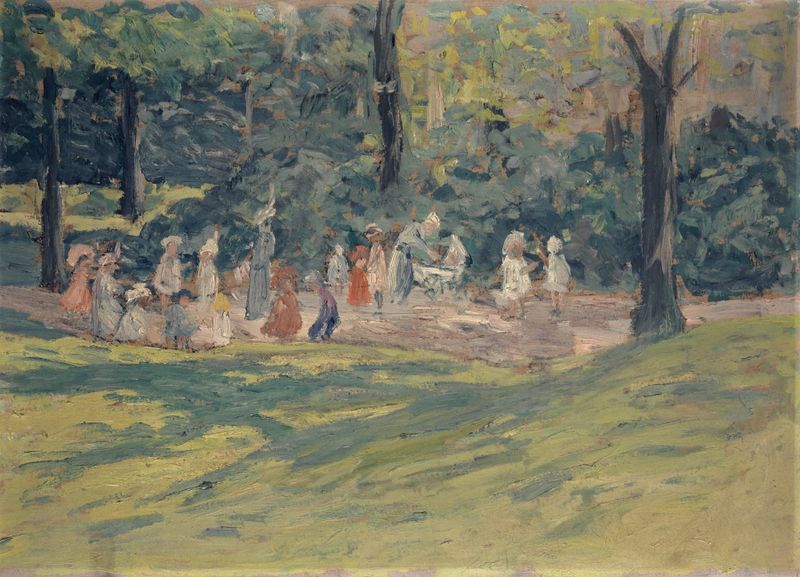
Children Playing in a Public Park
Ernst Schiess
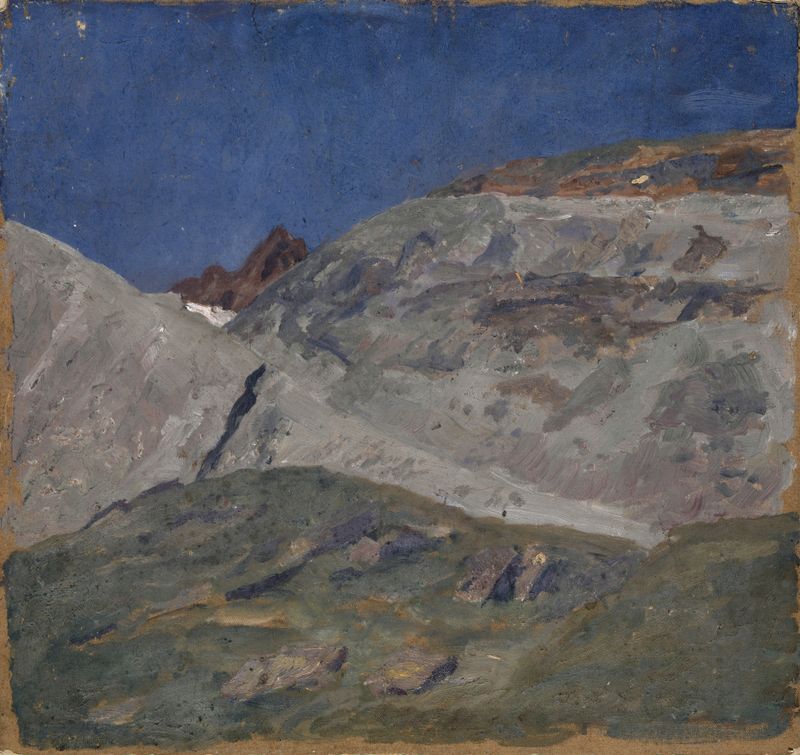
Gebirgslandschaft
Ernst Schiess





