
Campagnalandschaft — History & Facts
At the heart of creation lies a conversation between nature and the artist, a dialogue that resonates through brush and canvas, revealing the unseen. Look to the horizon in Campagnalandschaft, where soft undulating hills meet a gentle sky. The muted palette of greens and browns suggests a tranquil yet vibrant countryside, while strokes of sunlight dance delicately across the lush fields. Each brushstroke evokes a tactile quality; the natural textures invite the viewer to trace the contours of the land with their eyes.
The trees stand tall, guardians of the serene landscape, their silhouettes contrasting subtly against the luminous sky, inviting contemplation and reflection. Beneath its serene exterior, the painting captures a deeper tension between solitude and harmony. The vastness of the countryside hints at the isolation often felt within nature's embrace, while the interplay of light and shadow speaks to fleeting moments of beauty. A lone figure in the foreground, perhaps a farmer or wanderer, epitomizes the quiet resilience of humanity amidst the expansive landscape, suggesting both the vulnerability and strength inherent in creation. In 1864, Albert Flamm painted Campagnalandschaft during a period of burgeoning Romanticism, where artists sought to reconnect with nature and express emotional depth through their work.
Living in Germany, he was influenced by the changing tides of society and the growing industrial landscape, yet he chose to capture the pastoral beauty of the countryside. This choice reflects both a longing for simplicity and an homage to the beauty residing in the untouched corners of the world.
More Artworks by Albert Flamm
Browse all →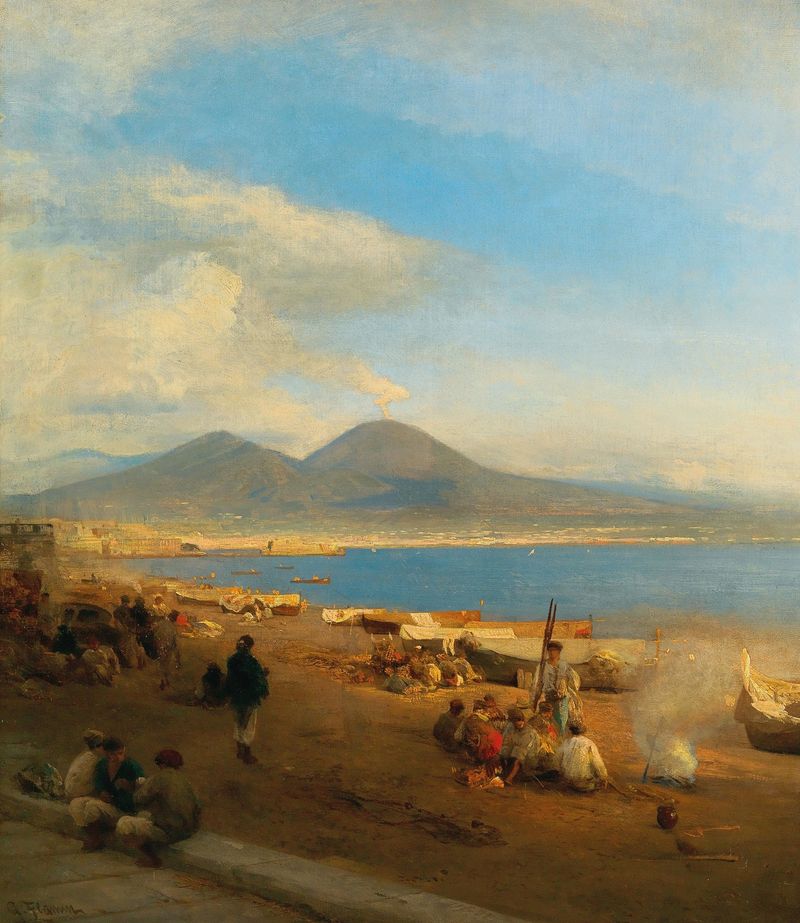
A view of the Gulf of Naples from Posilippo
Albert Flamm
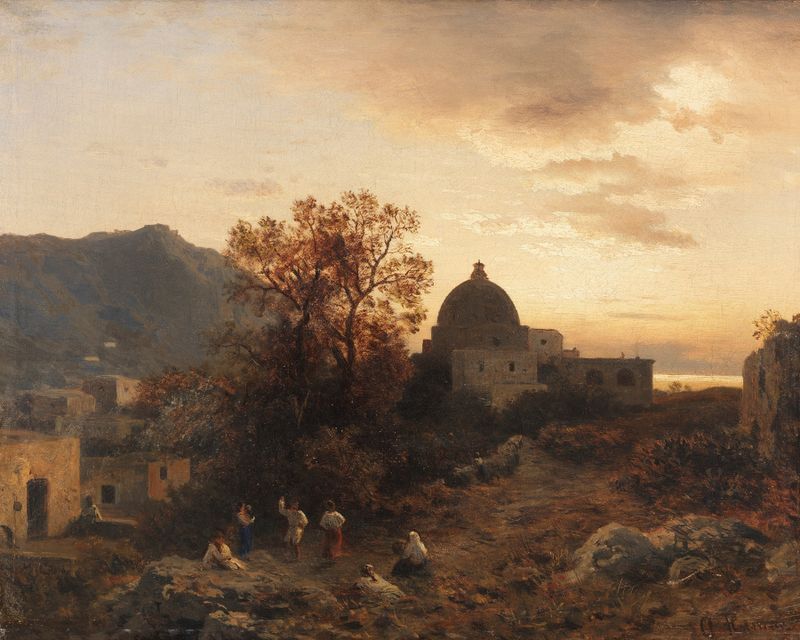
Abendstimmung an der italienischen Küste mit tanzenden Figuren
Albert Flamm
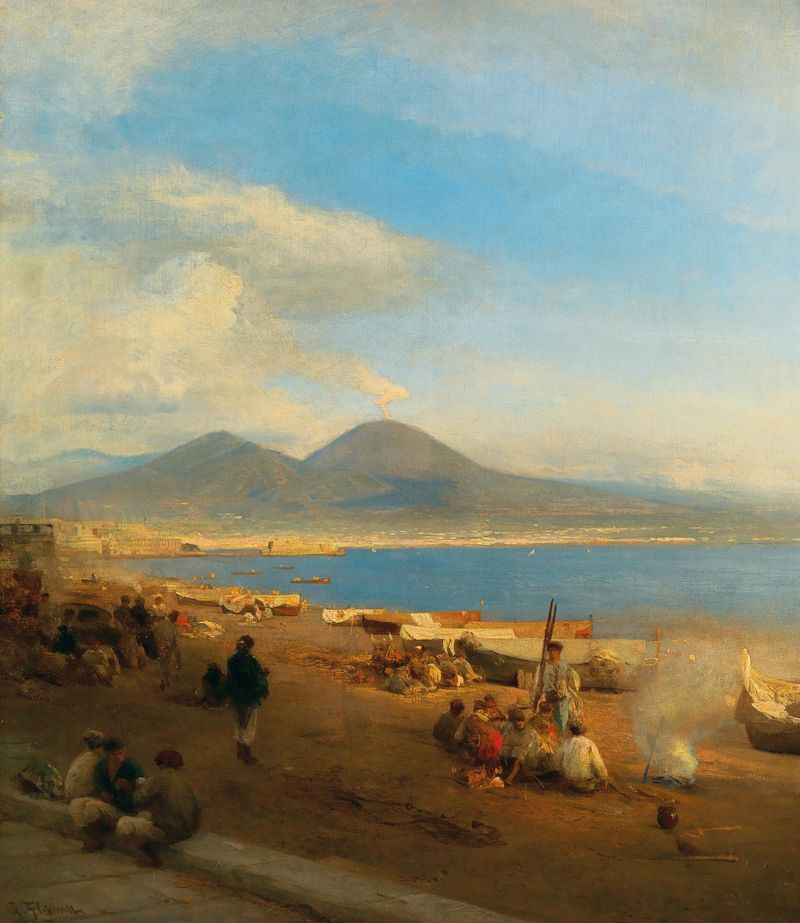
A View Of The Gulf Of Naples From Posilippo
Albert Flamm

Abendstimmung am Rhein
Albert Flamm

Badende Frauen am Golf von Neapel
Albert Flamm
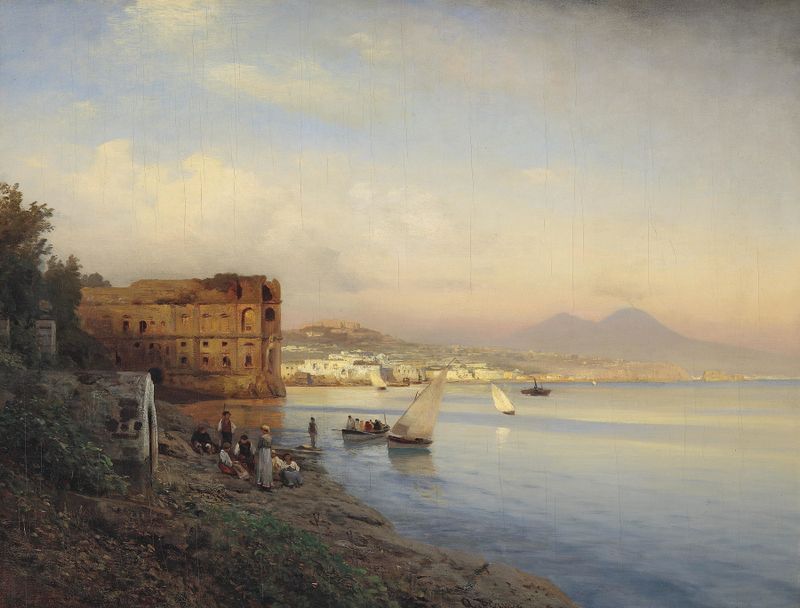
Blick auf die Bucht von Neapel
Albert Flamm

Crab Fishermen On The Beach
Albert Flamm
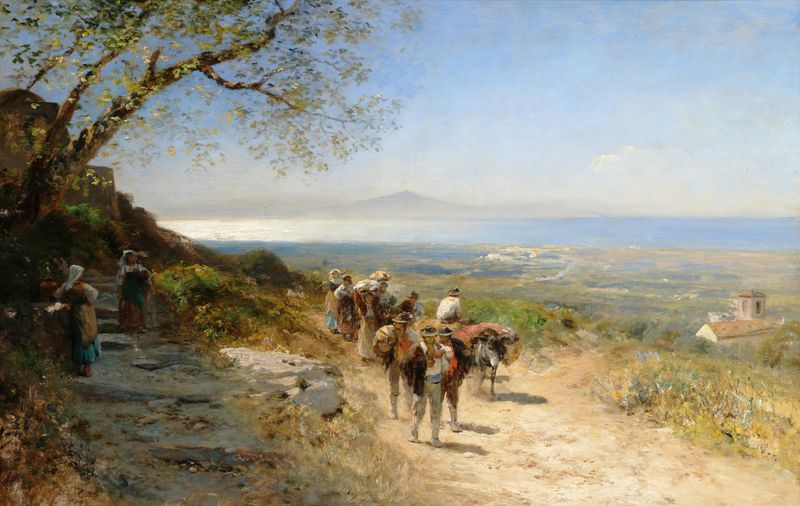
Homecoming of the Field Workers
Albert Flamm
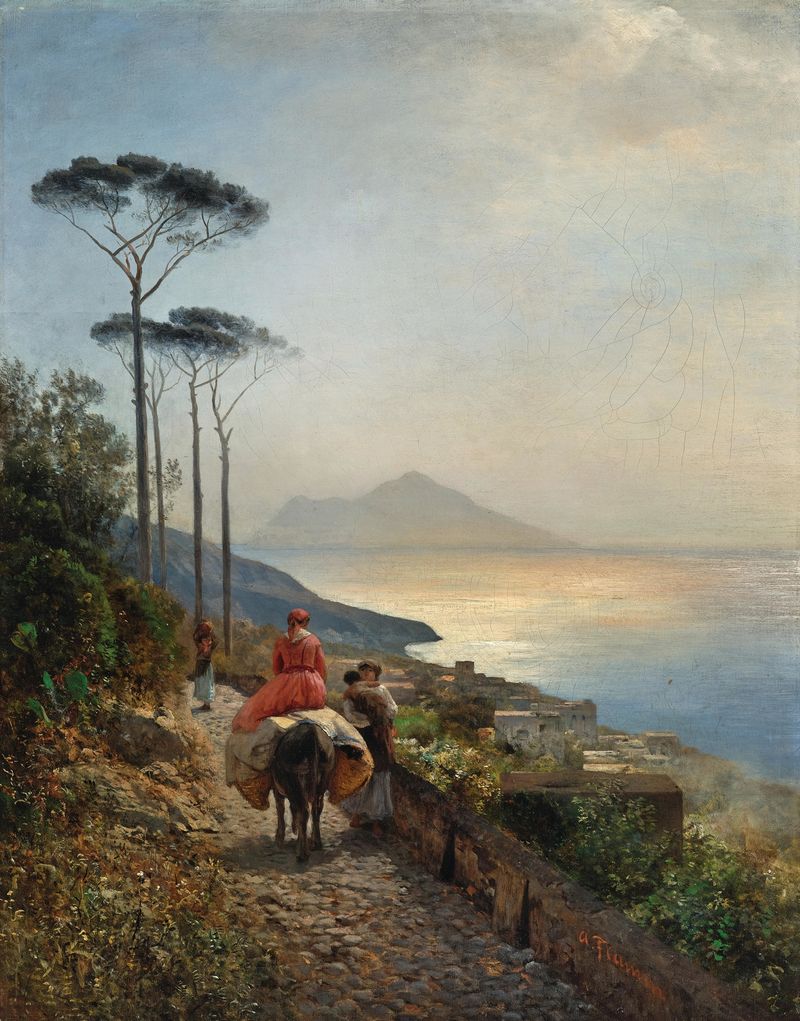
Sunset at the Bay of Naples
Albert Flamm
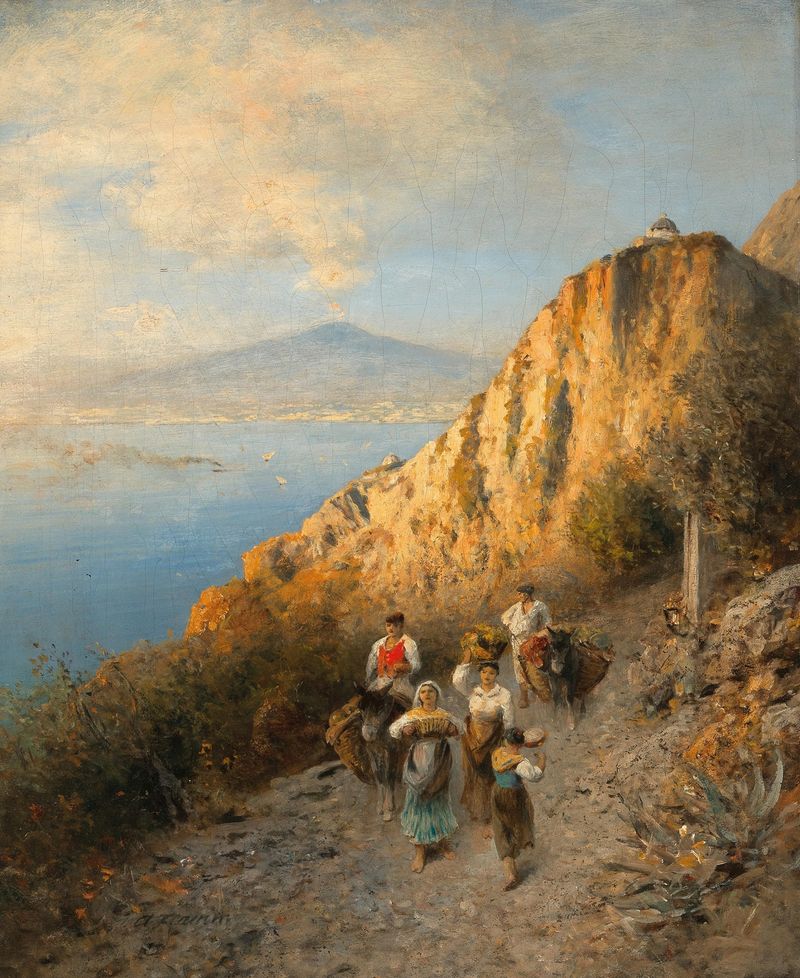
Returning Home from the Market, with Vesuvius in the Background
Albert Flamm





