Campagnalandschaft mit Wanderern — History & Facts
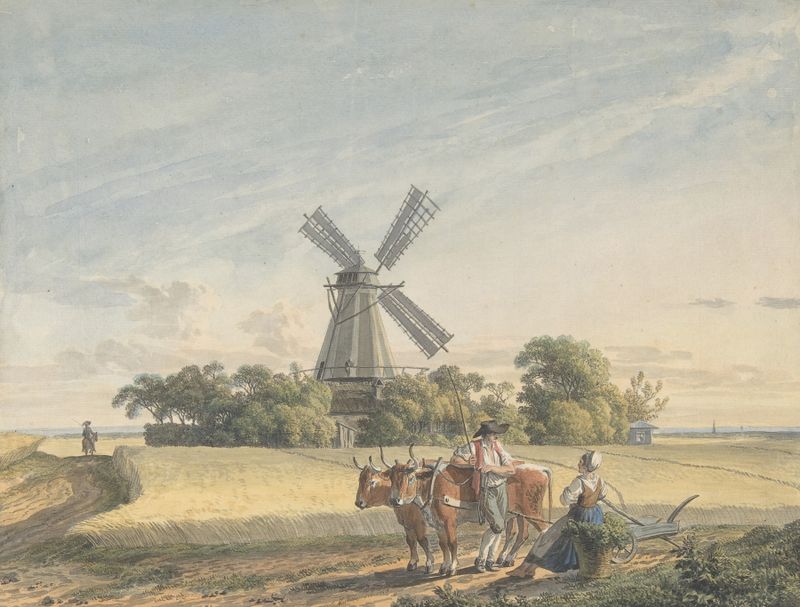
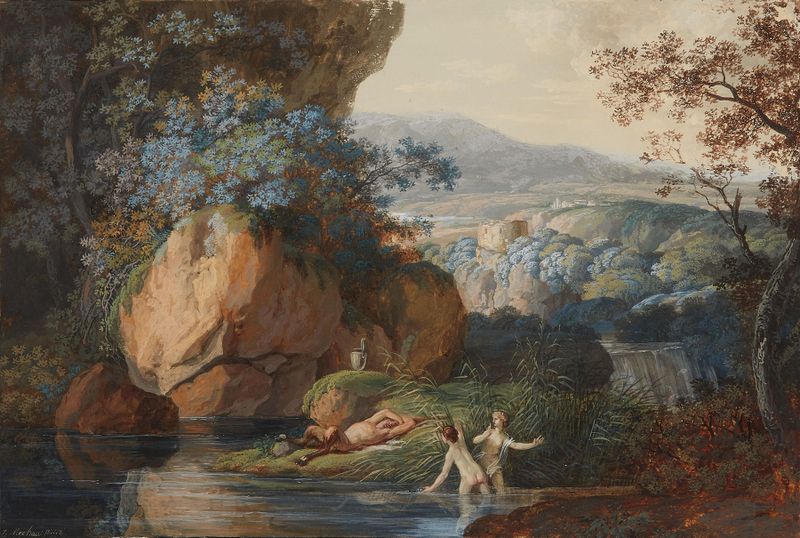
Can paint confess what words never could? In Campagnalandschaft mit Wanderern, the canvas speaks of longing and the quiet search for connection amidst the vastness of nature. Look to the foreground, where two figures traverse a rolling landscape. The soft, earthy tones of green and brown cradle their presence, while a gentle light spills across the hills, creating a warmth that contrasts with the cooler blue hues that stretch across the sky. Notice the way the brushstrokes meld together, forming both the textured fabric of the land and the fluidity of the atmosphere.
The distant horizon beckons, inviting the eye to wander further into the depths of the scene. Beneath the tranquil portrayal lies an emotional undercurrent, the tension between isolation and companionship. The wanderers appear small against the expansive backdrop, hinting at the human desire for belonging amidst landscapes that often feel indifferent. The choice to depict these figures engaged in quiet communion with nature, rather than with one another, reflects a poignant solitude.
This duality invites contemplation on our relationship with the environment and the unspoken yearning for connection that persists even in solitude. Jacob Wilhelm Mechau painted this work between 1780 and 1790, during a time of personal and artistic exploration. Living in Germany, he was influenced by the Romantic movement, which celebrated the beauty of nature and individual emotion. As artists sought to express deeper feelings through their work, Mechau contributed to this evolving narrative, capturing the essence of human experience against the backdrop of the natural world.