Campo Santi Giovanni e Paolo, Venice at dusk — History & Facts
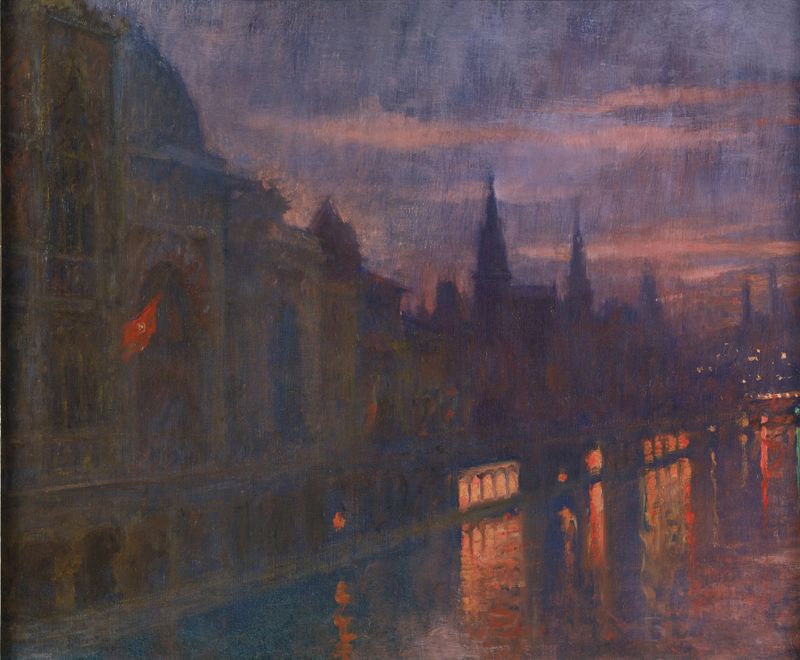
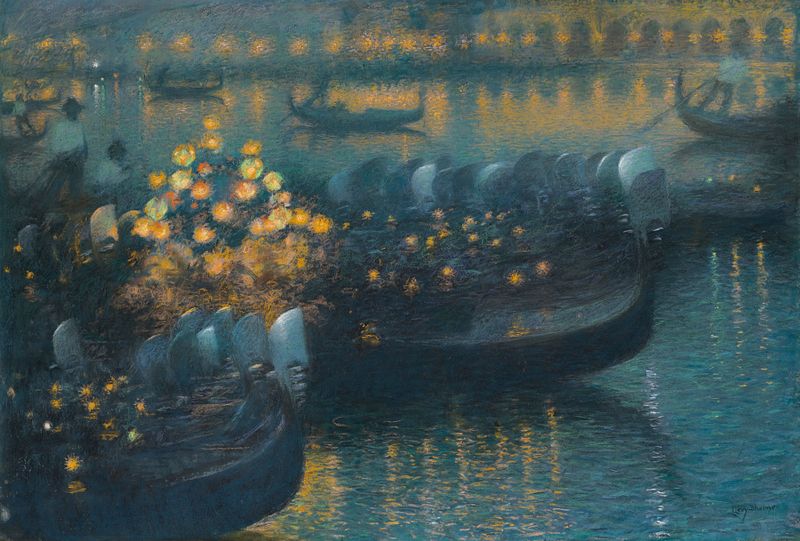
What if silence could speak through light? In Campo Santi Giovanni e Paolo, Venice at dusk, this unvoiced dialogue resonates with the colors and shadows of a city on the cusp of evening transformation. Look to the left, where the deep blues of twilight cloak the sky, slowly surrendering to the amber glow from the lanterns below. The serene façade of the church emerges faintly, its intricate details softened by the encroaching dusk. Notice how Lévy-Dhurmer’s brushstrokes blend together, creating a gentle haze that blurs the boundaries between earth and sky, reality and dream.
The harmonious palette draws you into this moment, evoking a sense of calm anticipation as day slips into night. Amid the tranquil beauty lies a tension between permanence and transience. The church stands resolute, a testament to enduring faith, while the fleeting light hints at the ephemeral nature of time. Each illuminated window is a glimpse into lives unfolding behind closed doors, suggesting stories woven into the fabric of the city.
The stillness envelops the scene, yet it is alive with the potential for change, reflecting a world poised on the edge of awakening or slumber. In 1912, Lévy-Dhurmer created this piece during a time when Symbolism was flourishing in Europe, reflecting both personal and collective sentiments of nostalgia and transformation. Living in Paris, he was immersed in the vibrant artistic community, influenced by the intersections of light, emotion, and atmosphere. This painting captures not just a moment in Venice, but also a broader artistic exploration of how landscapes can evoke deep emotional resonance, bridging the gap between reality and imagination.