
Venise — History & Facts
The act of creation can transform grief into something beautiful, revealing the profound depth of human emotion. How do we navigate the tempest of loss when the world around us continues to pulse with life? Focus on the gentle hues that flow through the canvas, where blues and greens intertwine with flecks of gold, inviting you to explore the tranquil waters of a gondola-laden canal. Notice how light dances upon the surface, reflecting fragments of the sky, while the muted architecture of Venice looms in the background.
Each brushstroke reveals the delicate balance of nature and structure, capturing a moment suspended in time. Yet beneath this serene facade lies an undercurrent of longing and melancholy. The stillness of the water hints at unspoken narratives, while the ghostly reflections suggest that what is seen cannot fully encompass what is felt. Through this beautifully chaotic composition, the artist captures the duality of Venice—a city of romance and sorrow, where even the most picturesque scenes are tinged with a sense of loss. Created during a time of personal and artistic exploration, the work emerged in a period when Lévy-Dhurmer grappled with both the loss of loved ones and the burgeoning Modernist movement.
His explorations in color and form sought to echo the complexities of human emotion, making the city’s haunting beauty a fitting backdrop for his revelations. In Venise, he encapsulates the truth that even within the heartache, grace can be found.
More Artworks by Lucien Lévy-Dhurmer
Browse all →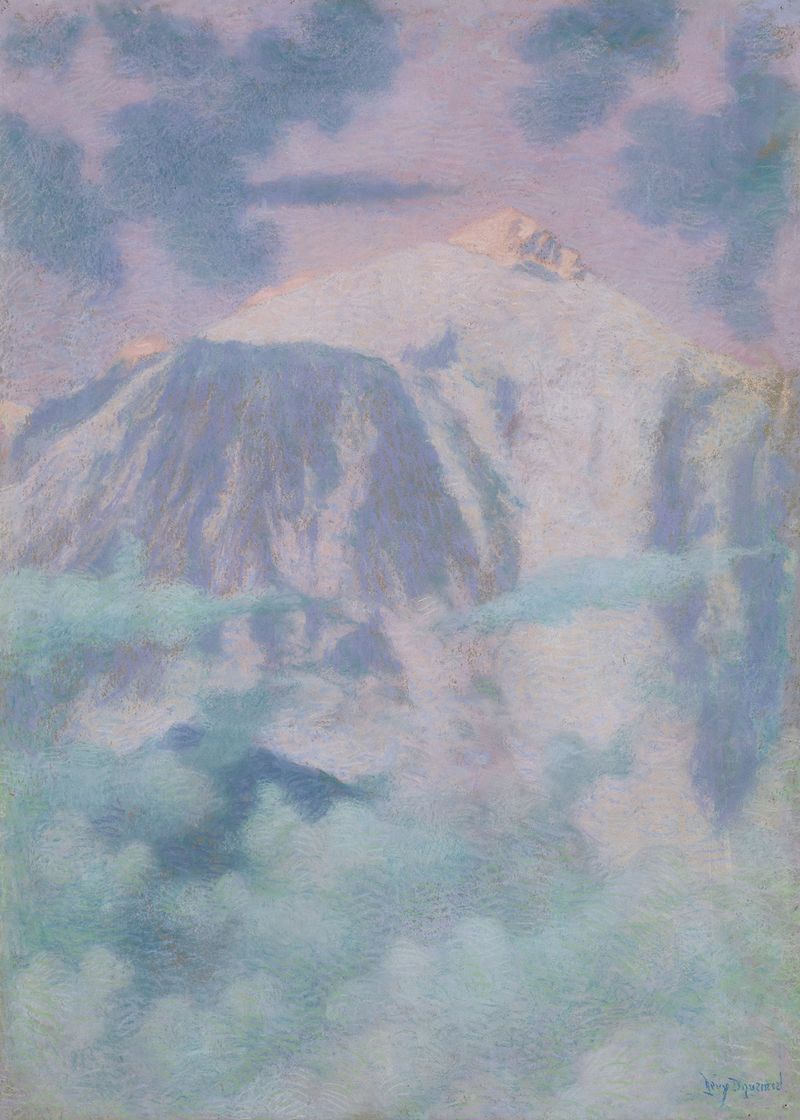
Montagnes Paysage de Rève
Lucien Lévy-Dhurmer
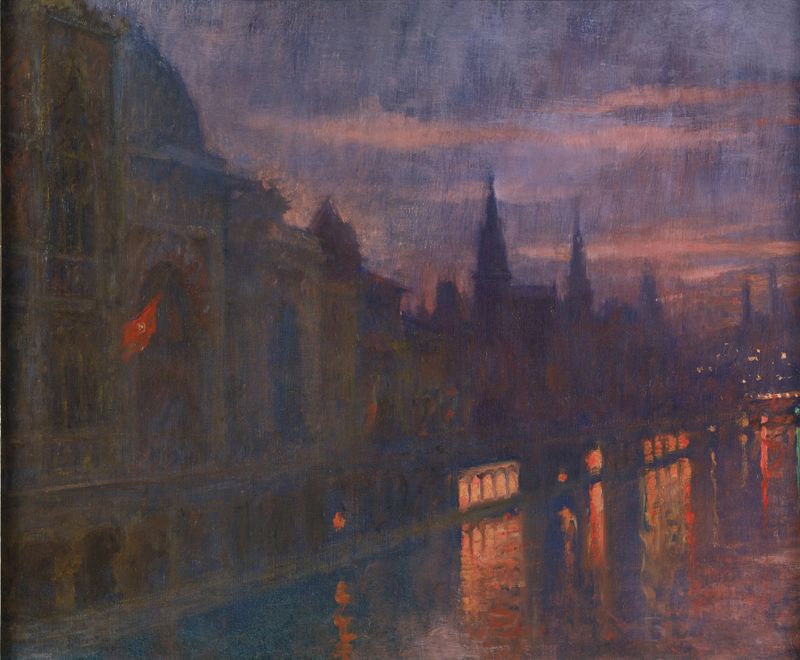
View from Pont des Invalides Towards Pont de l’Alma, Exposition Universelle, Paris 1900
Lucien Lévy-Dhurmer

Les Roses d’Ispahan
Lucien Lévy-Dhurmer
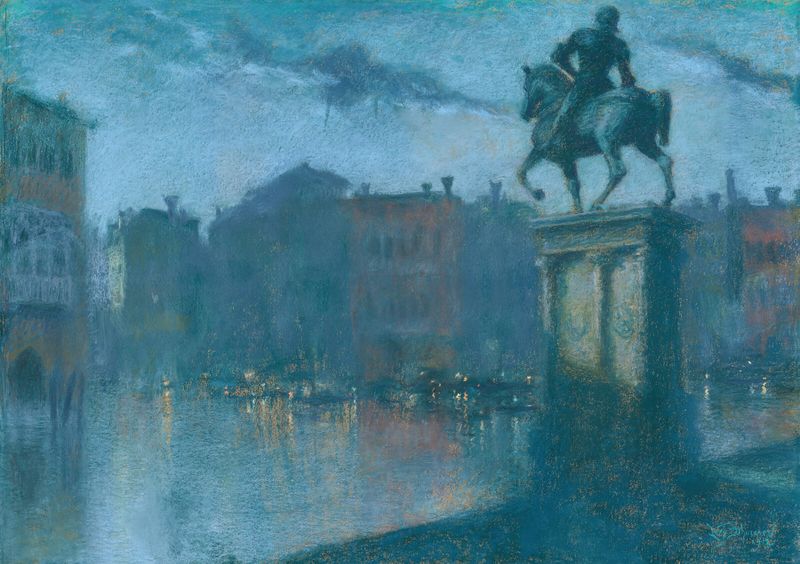
Campo Santi Giovanni e Paolo, Venice at dusk
Lucien Lévy-Dhurmer
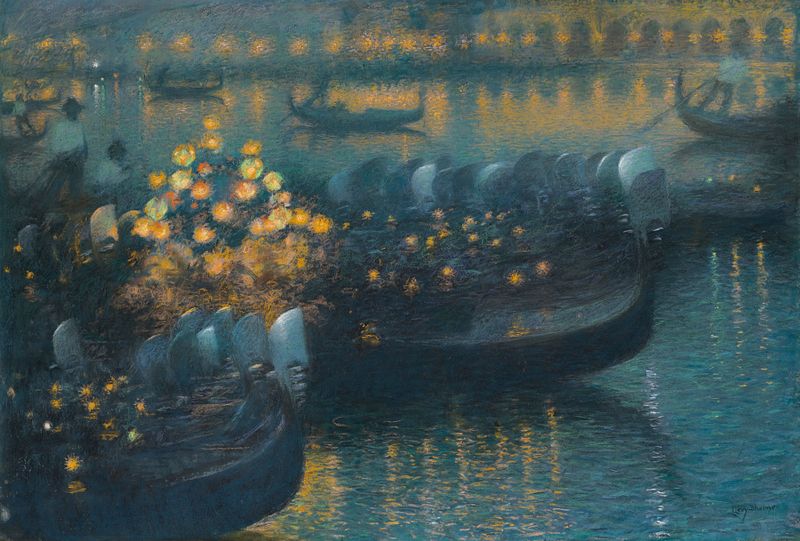
Sérénade au clair de lune – Venise
Lucien Lévy-Dhurmer





