
Canon of Laramie River, depth 1500 feet — History & Facts
In the stillness of the moment captured on canvas, a profound silence envelops the viewer, inviting introspection. It is in this quiet space that the essence of nature is distilled, reverberating with the echoes of history and solitude. Focus first on the sweeping expanse that dominates the canvas, stretching before you like an ancient manuscript etched in earth and sky. The canyon emerges in layers of rich, earthy browns, deep greens, and delicate grays, each stroke whispering stories of erosion and time.
Notice how the light dances subtly along the canyon walls, creating intricate shadows that enhance the depth of this monumental scene. The composition draws the eye toward the distant horizon, a subtle interplay of depth that evokes both awe and tranquility. Delving deeper, the painting speaks to contrasts—the rugged terrain against the serenity of the river flowing softly below. The tumultuous peaks rise abruptly, yet the gentle curves of the water offer a harmonious balance, showcasing nature's duality.
This juxtaposition reflects not just the physical landscape, but also the emotional landscape of the artist: a yearning for both adventure and the quietude that follows. The stillness captured here encourages contemplation on the passage of time, what remains, and what is lost in the relentless movement of nature. Joseph F. Knapp created this artwork in 1864, a period marked by the tumult of the American Civil War.
Working in a rapidly changing landscape, both literally and metaphorically, he found refuge in the beauty of the western frontier. As new artistic movements began to emerge, this piece stands as a testament to his exploration of natural beauty while simultaneously reflecting the deepening awareness of the evolving American identity.
More Artworks by Joseph F. Knapp
Browse all →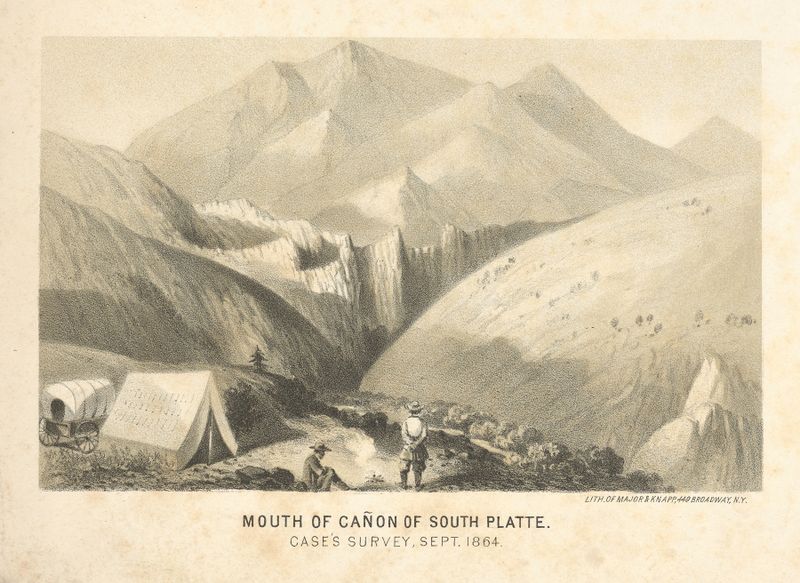
Mouth of canon of South Platte. Case’s Survey, Sept. 1864.
Joseph F. Knapp
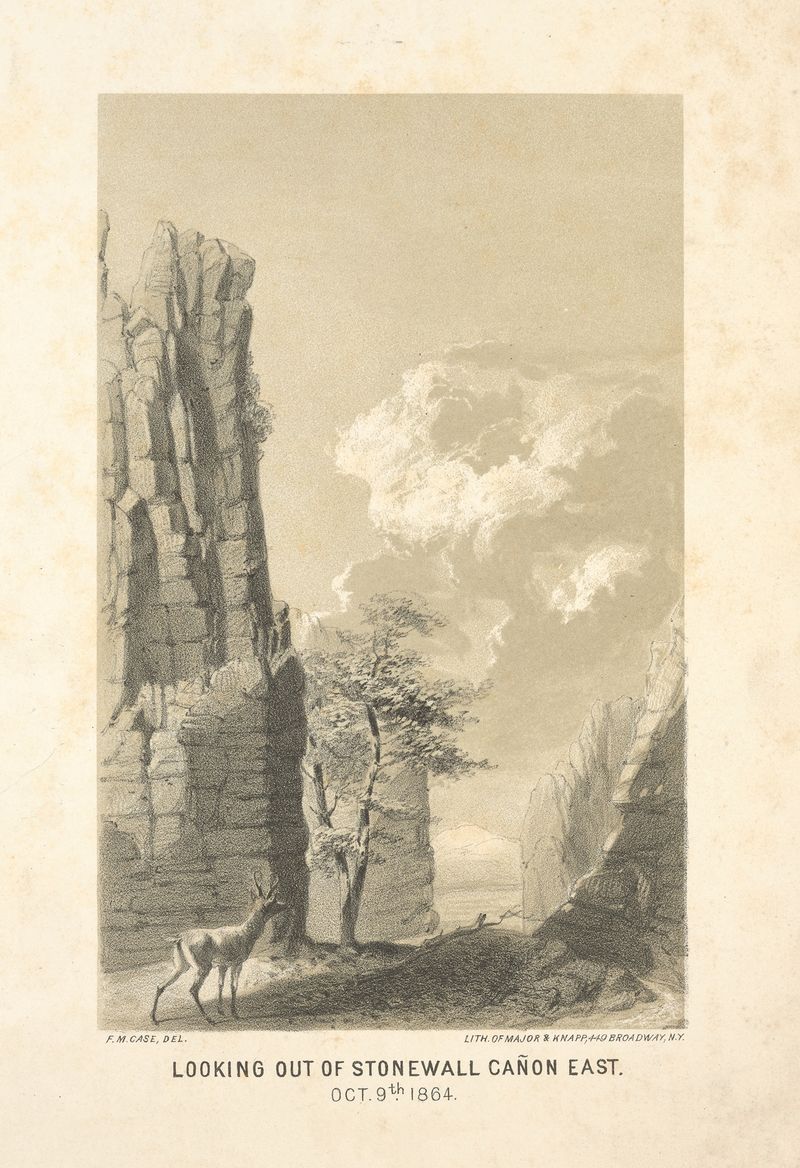
Looking out of Stonewall Canon east. Oct. 9th 1864.
Joseph F. Knapp
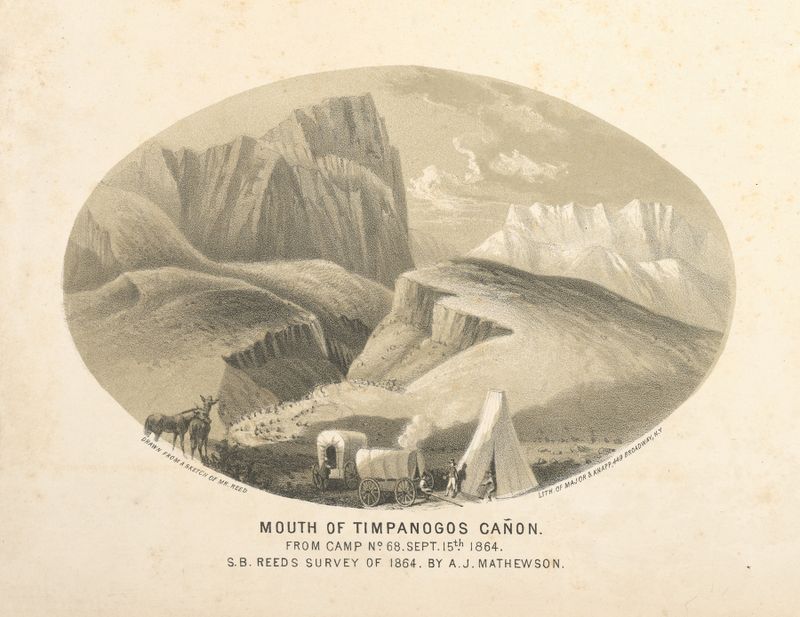
Mouth of the Timpanogos Canon. From Camp No. 68. Sept. 15th 1864
Joseph F. Knapp
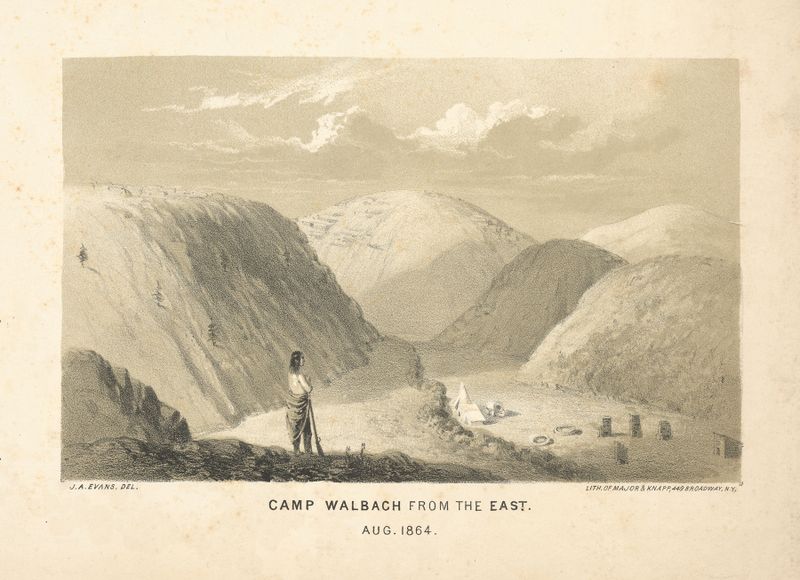
Camp Walbach from the east. Aug. 1864.
Joseph F. Knapp
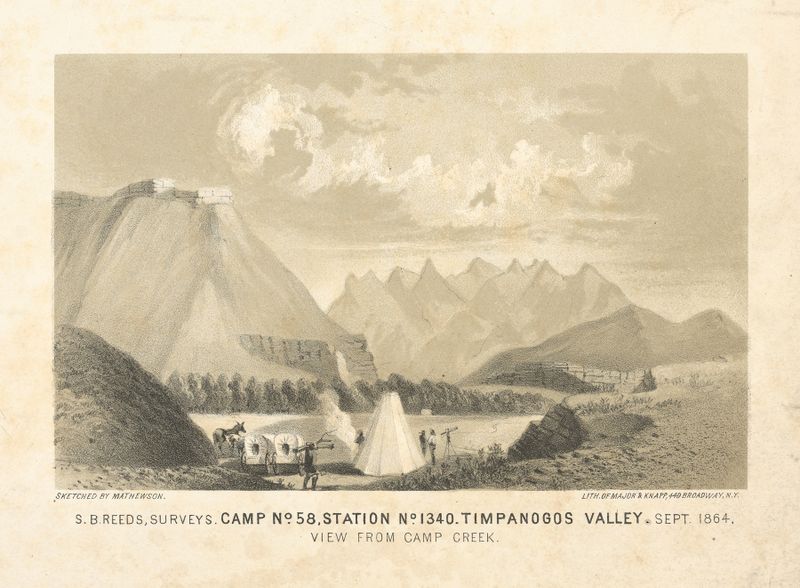
Camp No. 58, Station No. 1340. Timpanogos Valley. View from Camp Creek.
Joseph F. Knapp
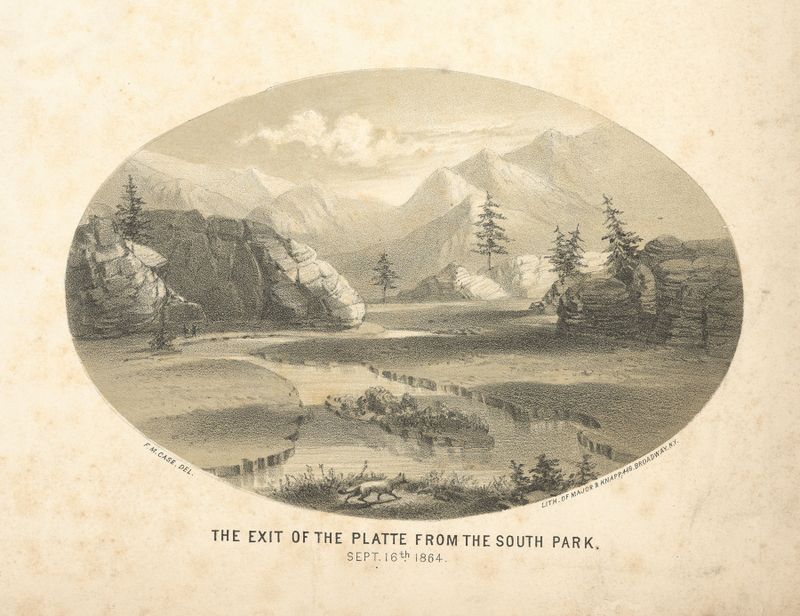
The exit of the Platte from the South Park.
Joseph F. Knapp
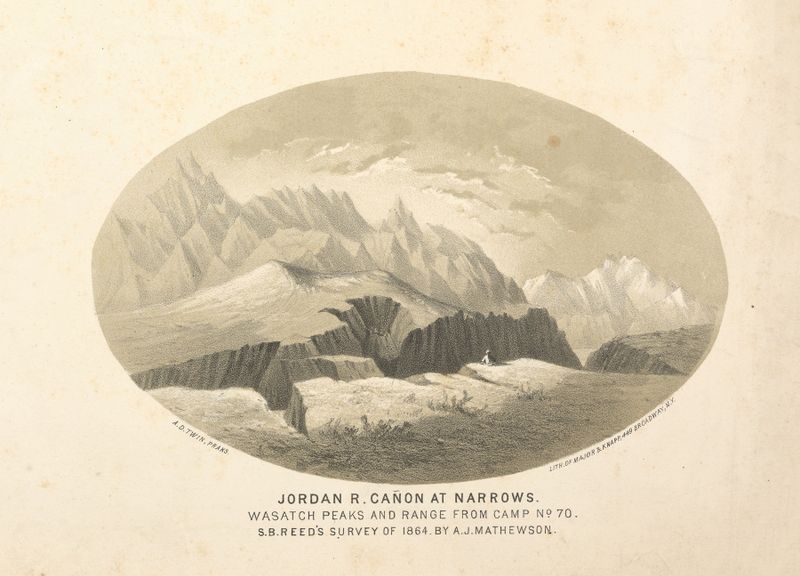
Jordan R. Canon at narrows.
Joseph F. Knapp
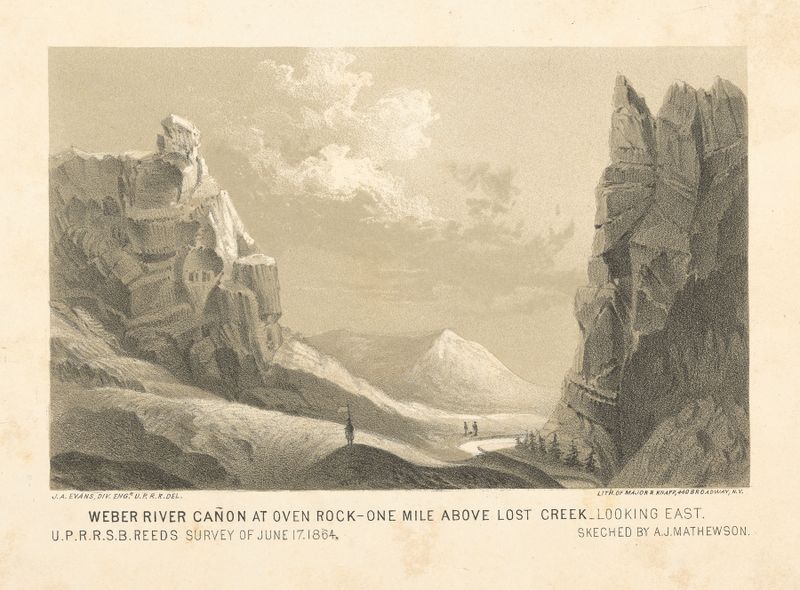
Weber River Canon at Oven Rock — one mile above Lost Creek, looking east.
Joseph F. Knapp
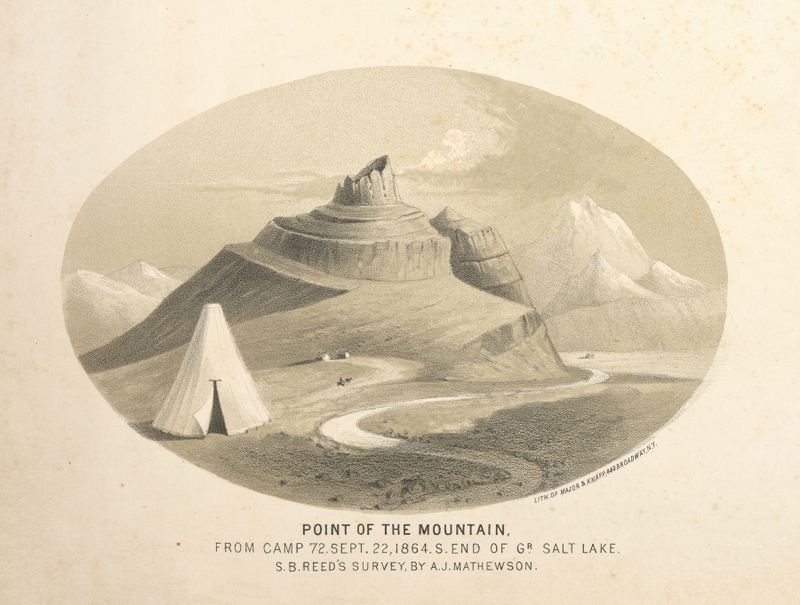
Point of the mountain, from Camp 72. Sept. 22, 1864. S. end of Gr. Salt Lake.
Joseph F. Knapp





