
Point of the mountain, from Camp 72. Sept. 22, 1864. S. end of Gr. Salt Lake. — History & Facts
What secret hides in the quiet of the canvas? In the hushed expanse of Point of the Mountain, from Camp 72, a delicate tension lingers, as if the landscape itself holds its breath, teetering on the brink of revelation or madness. Focus first on the sweeping panorama that stretches across the canvas, where rolling hills meet expansive skies. Notice how the muted palette of earthy tones evokes a sense of serenity, contrasting sharply with the jagged peaks that loom in the distance. The light dances across the surface, illuminating the contours of the mountains, while hints of shadow invite the viewer to contemplate the depths below.
Each stroke conveys both the beauty of nature and an underlying sense of foreboding, inviting us to explore what lies beneath the tranquil surface. As you delve deeper into the details, consider the subtle interplay of light and shadow, which reveals more than just the landscape. The rugged terrain, with its hidden crevices, serves as a metaphor for the human psyche—reflecting the madness that lurks beneath calm exteriors. The distance between the observer and the majestic mountains may symbolize life's unreachable aspirations, beckoning yet remaining elusive.
Here, the stillness of nature contrasts with the unspoken chaos that resides within, hinting at fears and desires that often remain concealed. In 1864, Joseph F. Knapp painted this piece during a time of personal upheaval and societal change in America. As the nation grappled with the turmoil of the Civil War, he found refuge in the beauty of the Utah landscape.
This artwork emerged alongside a burgeoning interest in the American West, capturing both the physical grandeur and the psychological complexities of a nation at war with itself and its own identity.
More Artworks by Joseph F. Knapp
Browse all →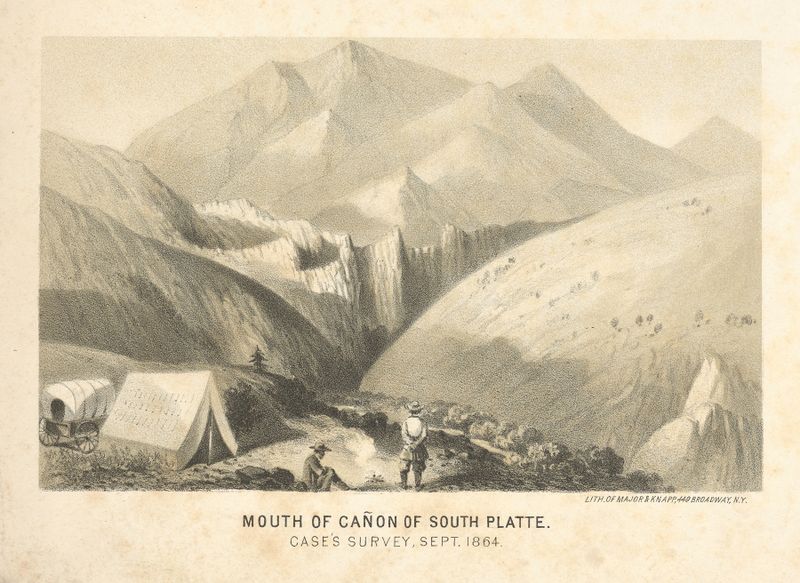
Mouth of canon of South Platte. Case’s Survey, Sept. 1864.
Joseph F. Knapp
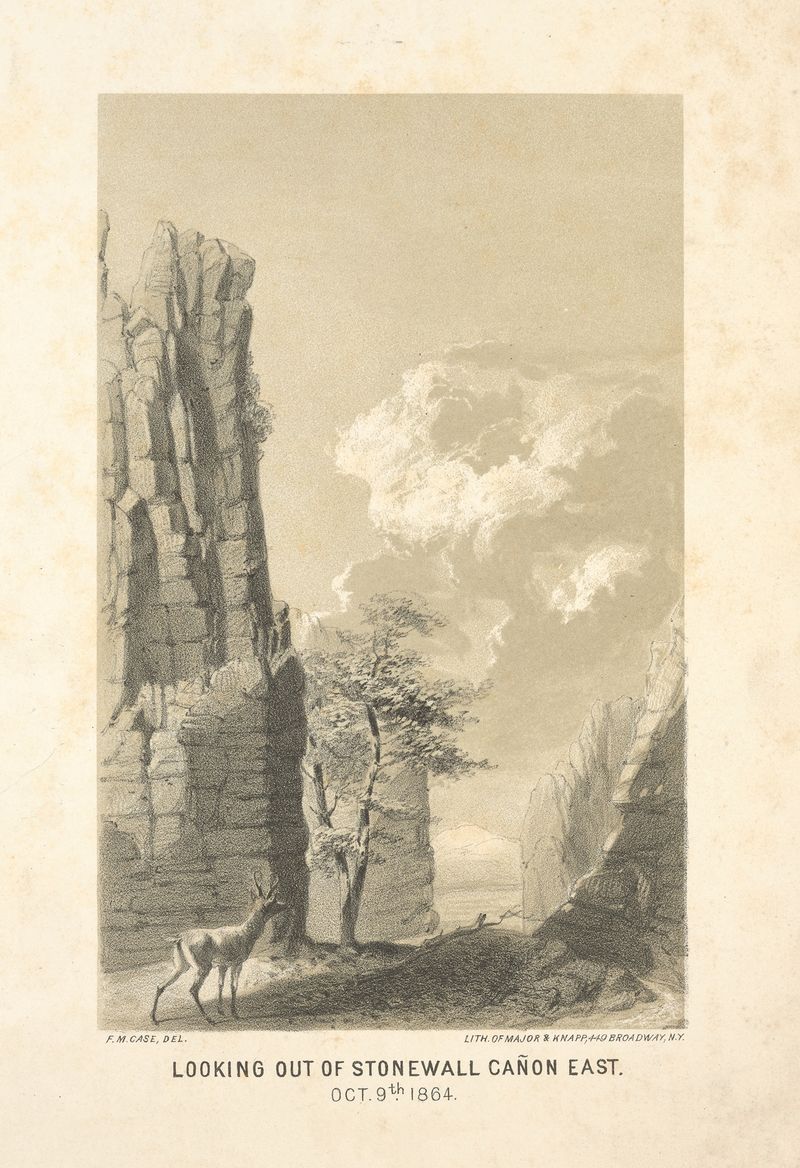
Looking out of Stonewall Canon east. Oct. 9th 1864.
Joseph F. Knapp
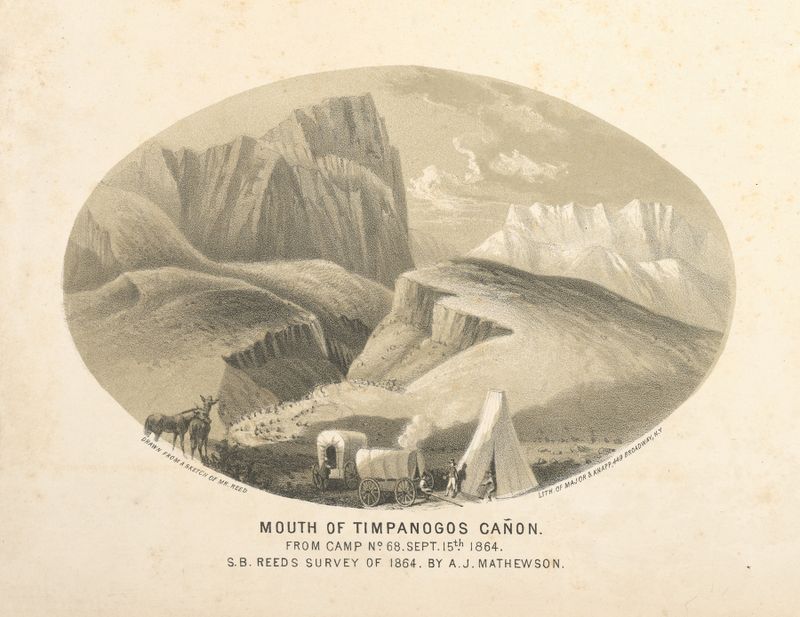
Mouth of the Timpanogos Canon. From Camp No. 68. Sept. 15th 1864
Joseph F. Knapp
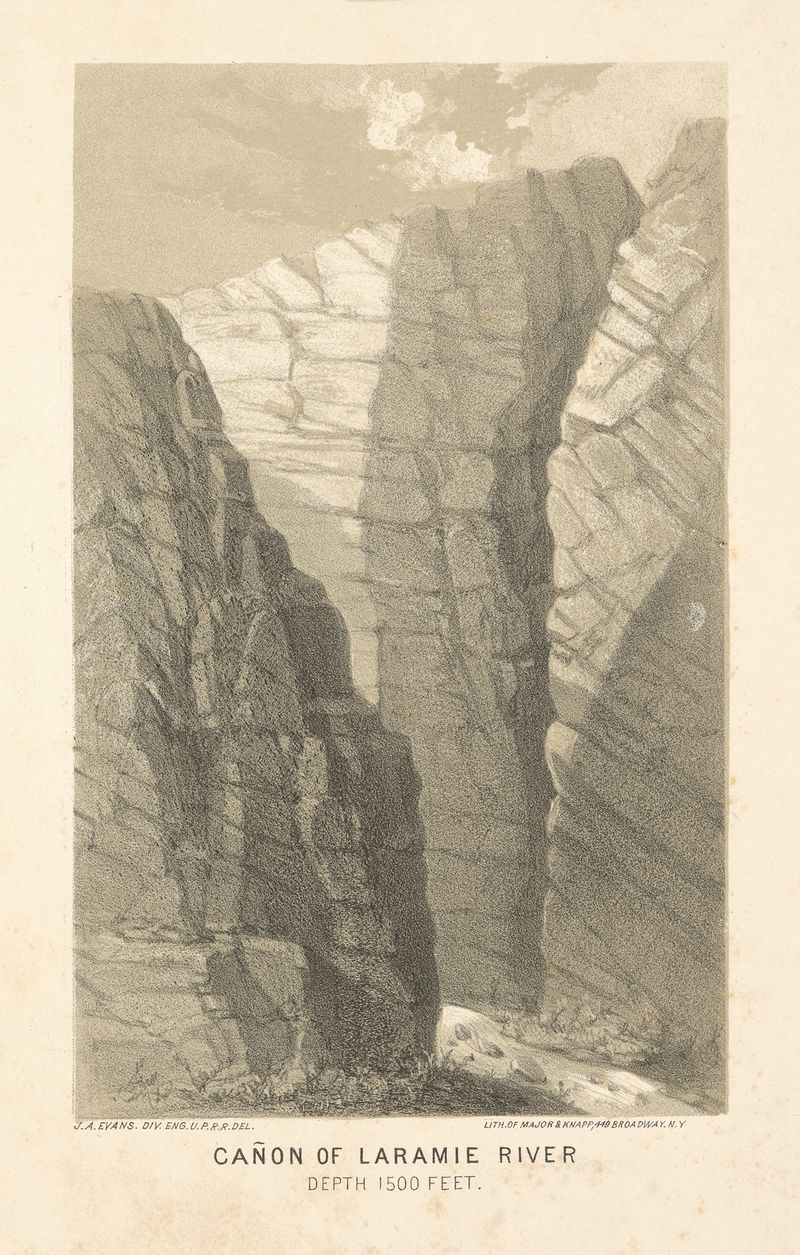
Canon of Laramie River, depth 1500 feet
Joseph F. Knapp
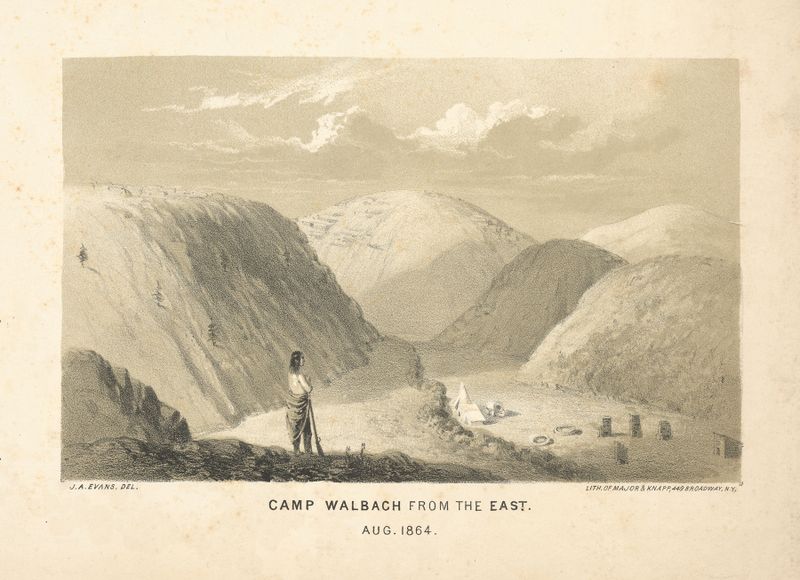
Camp Walbach from the east. Aug. 1864.
Joseph F. Knapp
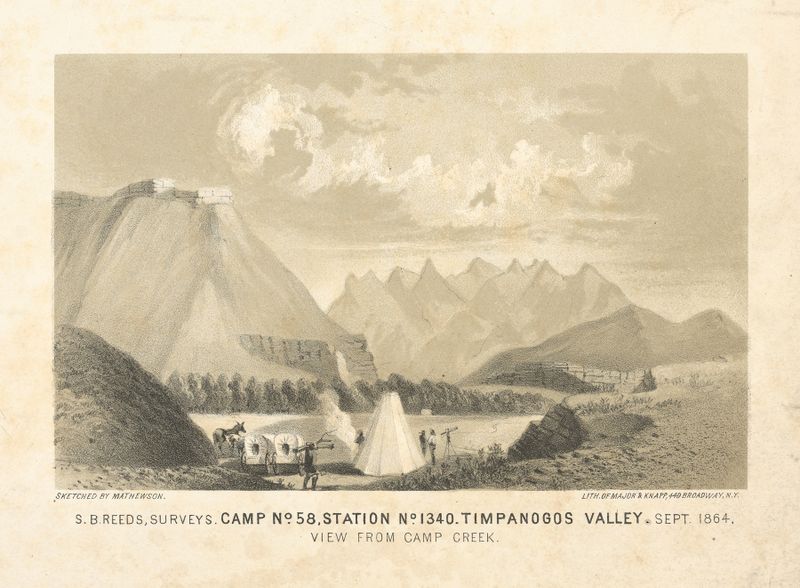
Camp No. 58, Station No. 1340. Timpanogos Valley. View from Camp Creek.
Joseph F. Knapp
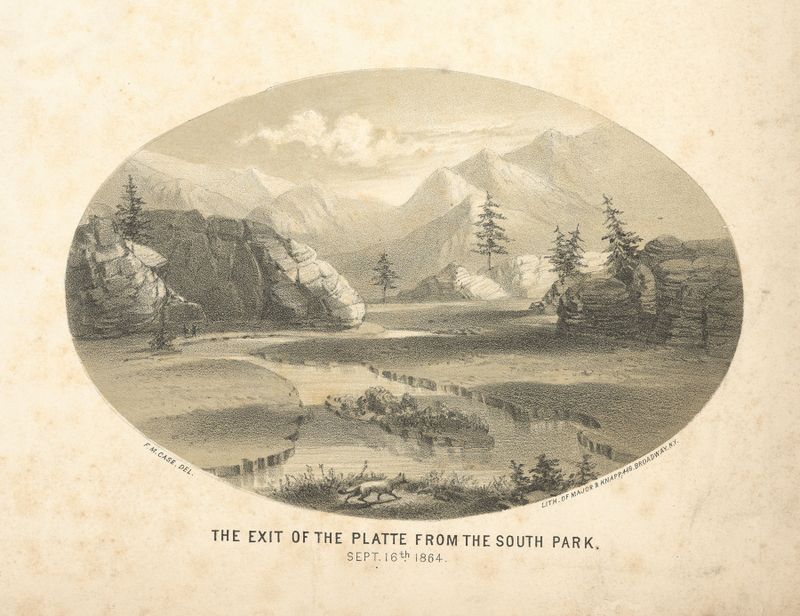
The exit of the Platte from the South Park.
Joseph F. Knapp
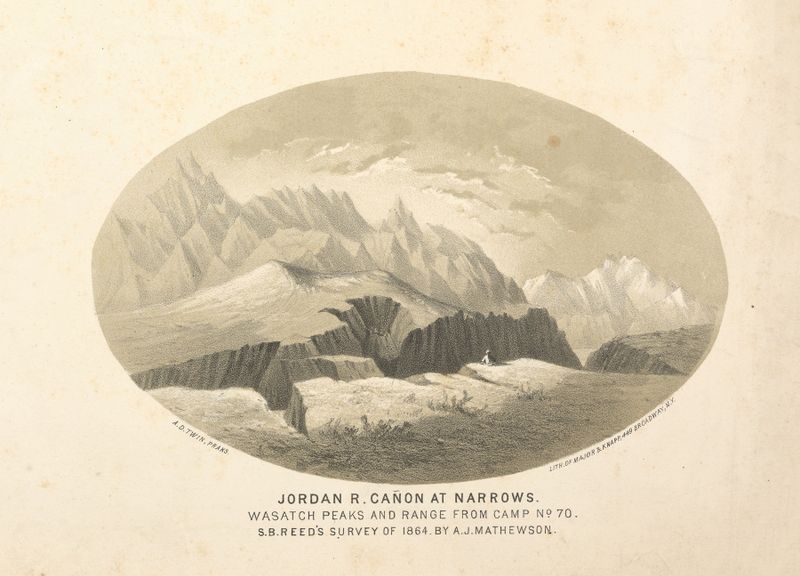
Jordan R. Canon at narrows.
Joseph F. Knapp
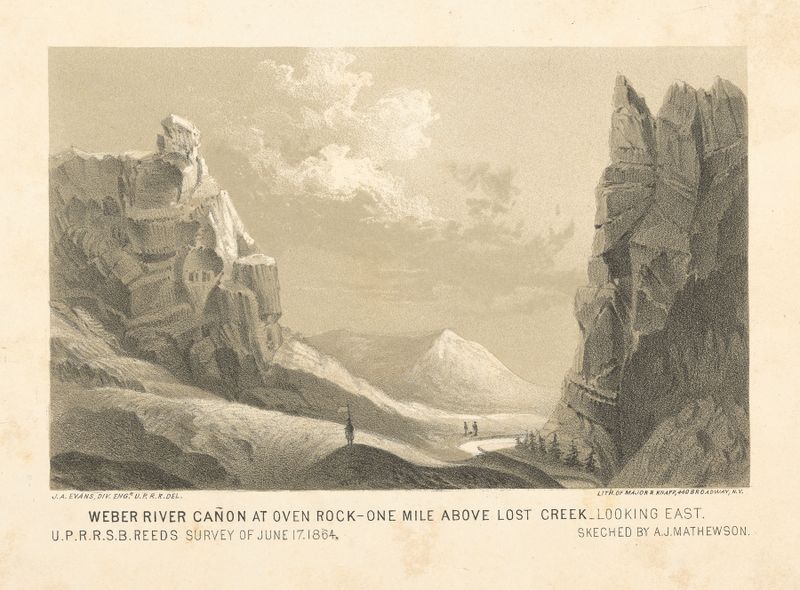
Weber River Canon at Oven Rock — one mile above Lost Creek, looking east.
Joseph F. Knapp





