Cape Aia and Balaklava Bay — History & Facts
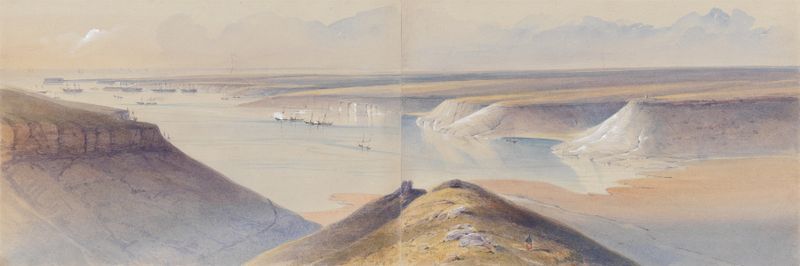
Can paint confess what words never could? In Cape Aia and Balaklava Bay, Gaspard Le Marchant Tupper captures a dreamlike beauty that transcends mere description, inviting viewers to explore the depths of their imagination. Focus your gaze on the horizon, where the cerulean sky melts into a shimmering sea. The gentle brushstrokes create waves that appear to dance, reflecting the soft light that bathes the landscape. Notice how the cliffs to the left stand resolute, their rugged edges softened by the ethereal haze, while the tranquil bay below cradles boats that seem suspended in time, each vessel whispering secrets of distant shores. The contrast between the solid land and the fluid water speaks to the transient nature of existence and dreams.
Tupper’s color palette—rich blues mingling with warm golden highlights—imbues the painting with a sense of yearning, as if the viewer is caught between the tangible and the enticing allure of the unknown. Look closely at the distant figures on the shore; their smallness against the vastness of nature evokes feelings of solitude and introspection, suggesting a shared human experience amid the grandeur. In 1854, Tupper painted this scene while living in England, a time marked by shifting artistic movements and the burgeoning influence of Romanticism. He sought to capture the sublime qualities of nature, reflecting the broader context of a world increasingly fascinated by the emotional resonance of landscapes.
This work encapsulates his commitment to conveying beauty as an entry point to deeper understanding and contemplation.