
Capilla de Ischilín — History & Facts
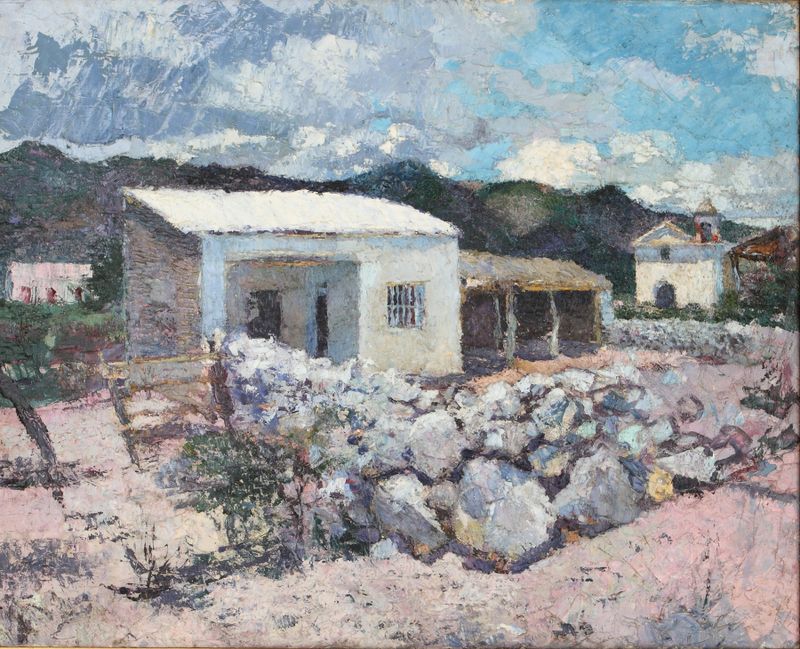
This sentiment captures the essence of a masterpiece where color intertwines with emotion, transforming the ordinary into something divine. In the vibrant strokes of one artist, we find not just a landscape, but a tapestry of human experience. Look to the center of the canvas, where the Capilla de Ischilín stands resolute against a backdrop of lush hills. The warm yellows and rich browns envelop the structure, accentuating its age and sanctity.
Notice how the light dances across the chapel’s facade, creating a striking contrast between the serene earth tones and the radiant sky above. The composition draws your eye, guiding you through the interplay of shadow and light, revealing Fader's masterful command of color and form. Beneath the surface, layers of meaning unfold. The chapel’s secluded placement suggests a sanctuary, yet its vibrant colors evoke a sense of longing and nostalgia.
Could the vivid palette be a metaphor for the emotional landscape of those who seek solace within its walls? Each brushstroke seems to resonate with the laughter and tears of past visitors, merging history with the present in a delicate balance of beauty and sorrow. In 1930, Fernando Fader was immersed in the rich cultural milieu of Argentina, a period marked by a search for national identity through art. His work during this time reflected not only the landscapes of his homeland but also the emotional undercurrents of society. As he painted Capilla de Ischilín, he captured a moment both timeless and contemporary, intertwining personal vision with the spirit of his era.
More Artworks by Fernando Fader
Browse all →

More Architecture Art
Browse all →
The statue of Liberty
Frédéric Auguste Bartholdi

View of Houses in Delft, Known as ‘The Little Street’
Johannes Vermeer

View of Houses in Delft, Known as ‘The Little Street’
Johannes Vermeer

The Cathedral in Rouen. The portal, Grey Weather
Claude Monet

The yellow house
Vincent van Gogh

The Church in Auvers-sur-Oise, View from the Chevet
Vincent van Gogh