Fin de invierno — History & Facts
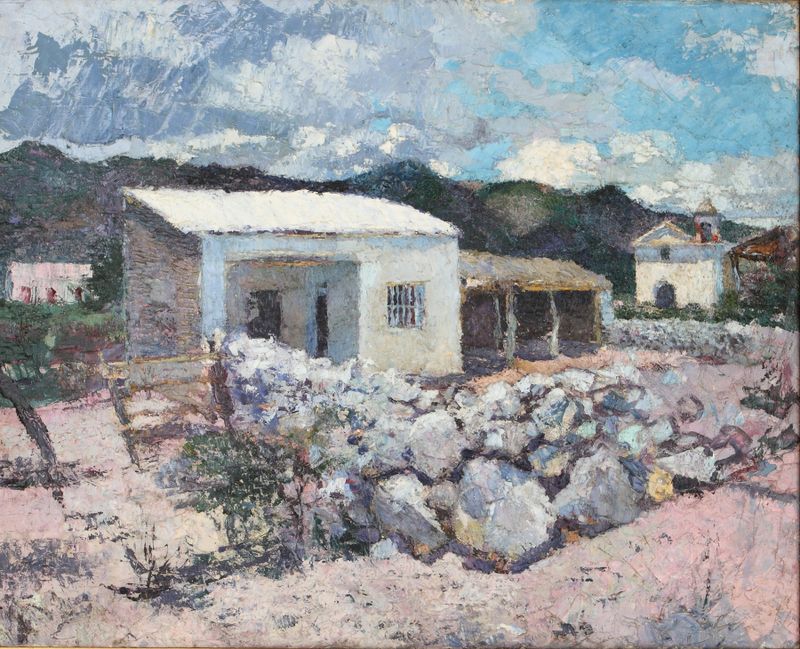
Can paint confess what words never could? In Fin de invierno, a hauntingly beautiful landscape emerges, whispering the language of solitude and transience. The canvas captures a fleeting moment, one where the chill of winter is slowly yielding to the promise of spring, yet the lingering shadows evoke a profound sense of loneliness. Look to the horizon, where a muted palette of grays and soft blues envelops the desolate expanse. Notice how the sparse trees, stripped of their leaves, stand like silent sentinels against the vast, open sky.
The brushwork is deft yet deliberate, infusing each stroke with an atmosphere of stillness, while faint hints of warmth begin to emerge at the edges of the frame, suggesting a struggle between the cold grip of winter and the tender touch of renewal. Delve deeper into the emotional landscape before you. The juxtaposition of barren branches against the budding hues reveals an inner tension — a longing for connection amidst isolation. Each element in the composition seems to echo the artist's own sentiments, as if he has captured not only the scene but also an unspoken yearning for companionship and warmth.
The delicate play of light and shadow accentuates this contrast, creating a poignant reminder that even in the loneliest moments, there lies a whisper of hope. Painted in 1918, during a period of personal upheaval for the artist, Fin de invierno reflects Fernando Fader's introspective journey as he grappled with themes of dislocation and yearning. Living in Argentina, he was influenced by the socio-political climate of the time, which resonated with the universal pursuit of solace and belonging amid a rapidly changing world. This artwork stands as a testament to his ability to translate profound human emotions into a landscape as evocative as it is beautifully melancholic.