Capo Miseno — History & Facts
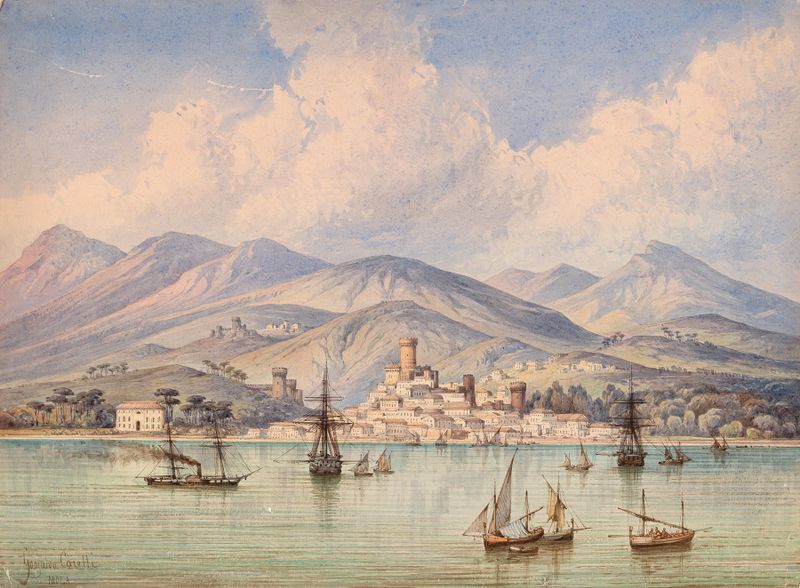
Could a single brushstroke hold eternity? In the delicate interplay of color and light, Capo Miseno whispers the fragility of both nature and existence itself. Look to the horizon, where the cerulean sky meets a gentle sea, dappled with hues of turquoise and gold. Notice how the artist's brush dances across the surface, capturing the shimmer of sunlight reflecting on water, creating an illusion of movement that feels almost palpable. The composition is meticulously balanced; rocky cliffs frame the scene, their earthy tones grounding the vibrant blues and soft whites of the sky and waves, inviting the viewer into a moment frozen in time. Yet, beneath this serene facade lies a tension between permanence and impermanence.
The rugged cliffs, steadfast as they may seem, are eroded by the relentless sea, symbolizing nature’s eternal battle. The calm waters, paradoxically, evoke both tranquility and the lurking uncertainty of change, suggesting that even in beauty, fragility is inherent. This duality resonates deeply, as it reflects the broader human experience — a reminder of the transient nature of life itself. In 1849, while creating this work, the artist found himself amidst a burgeoning Romantic movement in Italy, grappling with themes of nature and emotion.
Carelli, based in Naples, was influenced by the picturesque landscapes surrounding him, capturing the enchanting beauty of his homeland while also expressing the profound emotions tied to it. The painting embodies this era's longing for connection to nature, exemplifying the delicate balance between admiration and the recognition of its vulnerability.