
Capriccio with Ruins — History & Facts
In a world where creation dances hand in hand with decay, the juxtaposition of beauty and ruin invites deep reflection. The stillness of Capriccio with Ruins encapsulates the intricate relationship between nature and human endeavor, urging us to ponder what endures and what fades away. Look to the left at the crumbling arches, their once grand structure softened by the embrace of creeping vines and wildflowers. The vibrant hues of green and gold breathe life into the canvas, while muted earth tones remind us of the passage of time.
Notice how the light filters through the foliage, casting dappled shadows that play across the weathered stones, inviting your gaze to wander and explore this enchanting yet melancholic landscape. Within this composition, contrasts abound—between the permanence of nature and the transience of man-made creations. The gentle nostalgia evoked by the ruins speaks to past glories, while the lush scenery represents rebirth and the cycles of life. Each detail carries weight; the small figures in the distance seem to reflect on their own insignificance against the grandeur of their surroundings, reminding us of our fleeting existence in the face of time's relentless march. Pietro Bellotti painted Capriccio with Ruins in 1750, a period marked by a growing interest in the picturesque and the sublime in the art world.
Working in Italy, he engaged with the ideas of the Enlightenment, blending classical themes with an emerging Romantic sensibility. This painting reflects not just his aesthetic choices but also the broader cultural dialogues surrounding nature, history, and the human experience during a time of significant philosophical exploration.
More Artworks by Pietro Bellotti
Browse all →
Venice with the Punta della Dogana, looking East towards the Doge’s Palace
Pietro Bellotti
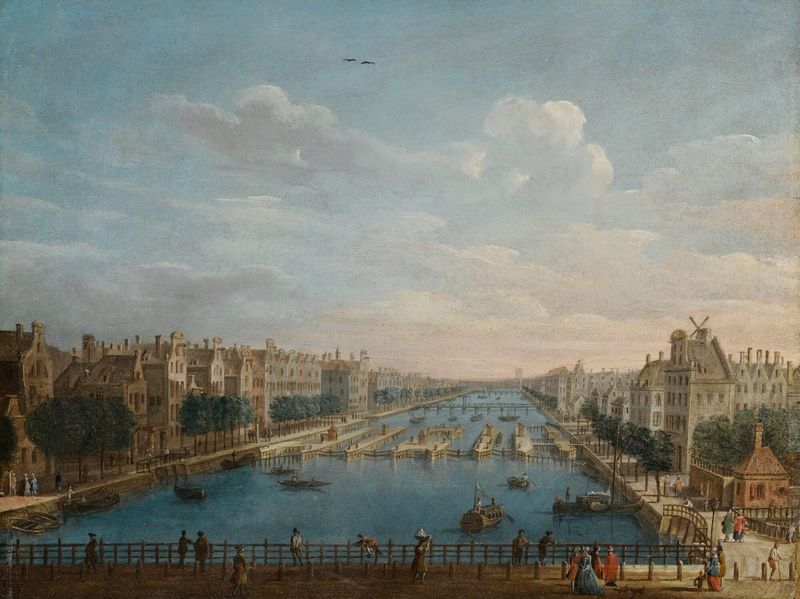
A View Of The Binnen Amstel Looking North
Pietro Bellotti

Capriccio with Ruins
Pietro Bellotti
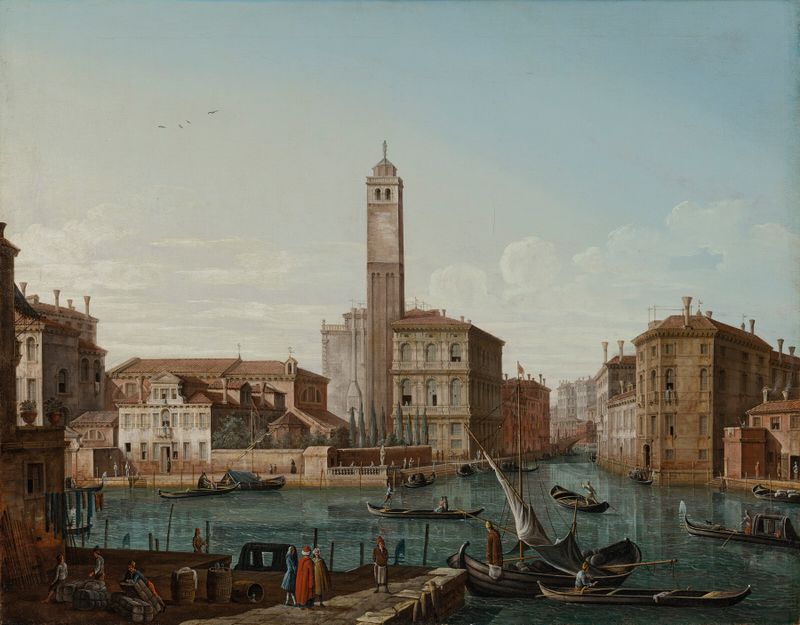
Venice with the Grand Canal, S. Geremia and the entrance to the Cannaregio
Pietro Bellotti

Capriccio With Figures In Front Of The Ruins Of A Church
Pietro Bellotti





