Castle in Krasiczyn — History & Facts
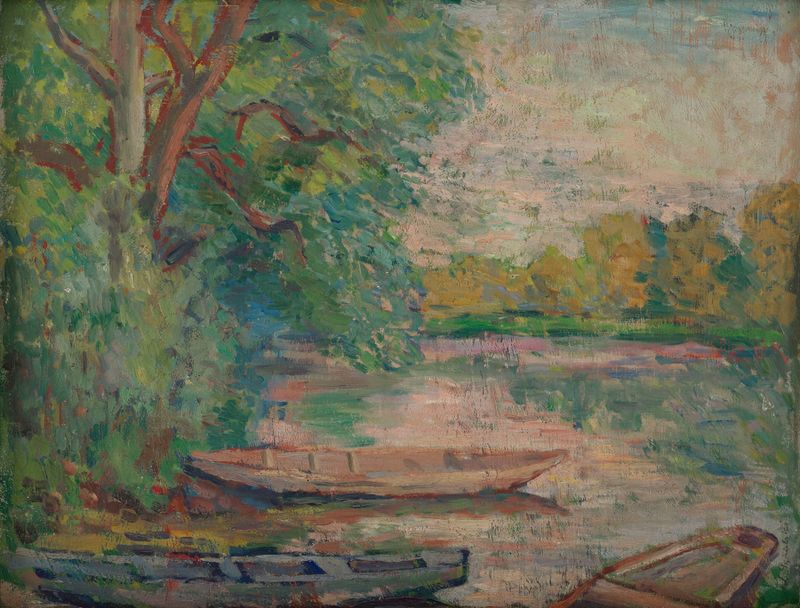
What secret hides in the quiet of the canvas? In Castle in Krasiczyn, a sense of longing permeates the air, inviting the viewer to explore the depths of tranquility and nostalgia tied to this serene landscape. Look to the left where the castle stands majestically, its stone facade reflecting shades of ochre and muted gray. The surrounding greenery frames the structure, while the delicate strokes depict the gently rippling water that mirrors the fortress above. Notice how the light falls upon the castle’s turrets, casting soft shadows that evoke a sense of timelessness.
The composition draws the eye upward, leading us to contemplate the distant sky, painted in hues of twilight that hint at both promise and uncertainty. The interplay between the solid, enduring castle and the ephemeral, shifting waters conveys a poignant contrast between permanence and transience. Hidden within the lush foliage are subtle hints of life, perhaps a reminder of faded histories and untold stories, echoing the emotional weight of memories long past. Each brushstroke suggests not just a physical space but the emotional landscape of yearning, longing for what has been lost or remains just out of reach. Leonard Pękalski created this work in 1936, during a period of significant artistic transition in Poland.
As a member of the Polish school of landscape painting, his focus on capturing the essence of natural beauty reflected a broader cultural movement that sought to celebrate national identity. This piece was born during a time of personal and social upheaval, as the artist grappled with the complexities of his surroundings while striving to convey a deeper, resonant connection to the landscapes of his youth.