Landscape from Krasiczyn — History & Facts
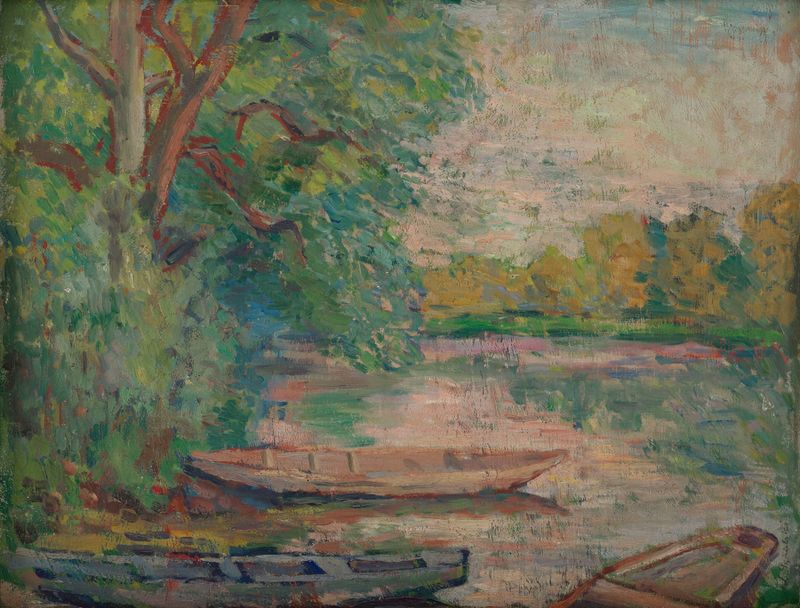
In the quiet aftermath of twilight, the essence of a landscape can evoke a powerful awakening within us. It is in this stillness that the world unfurls its stories, and every nuance reveals the tenderness of existence. Look to the center of the canvas, where rolling hills embrace a horizon painted in soft pastels. The gentle gradient of blues and pinks suggests the fading light of day, inviting the viewer to linger.
Notice how the strokes are deliberate yet fluid, creating a rhythmic flow that guides your eye through the vibrant greens of the foreground. The trees, with their delicate outlines, stand as sentinels, while clouds dance lightly overhead, their reflections hinting at a deeper connection between earth and sky. Delve into the contrasts within the scene—the interplay between the serene landscape and the vibrant colors that ignite it. The juxtaposition of light and shadow reveals a hidden emotional tension, as if the landscape itself is breathing, alive with the memories of those who have wandered through it.
Each element, from the curve of the hills to the wispy clouds, resonates with the idea of rebirth and renewal, hinting at life’s perpetual cycles. In 1936, Leonard Pękalski found himself in a world eager for change, painting in Poland during a tumultuous era. It was a time marked by shifting artistic movements, yet his work captured the essence of tranquility amid chaos. Surrounded by the beauty of his homeland, he sought to convey an awakening—a momentary escape into nature that reflects both personal and collective resilience.