Cattle in the Meadow — History & Facts
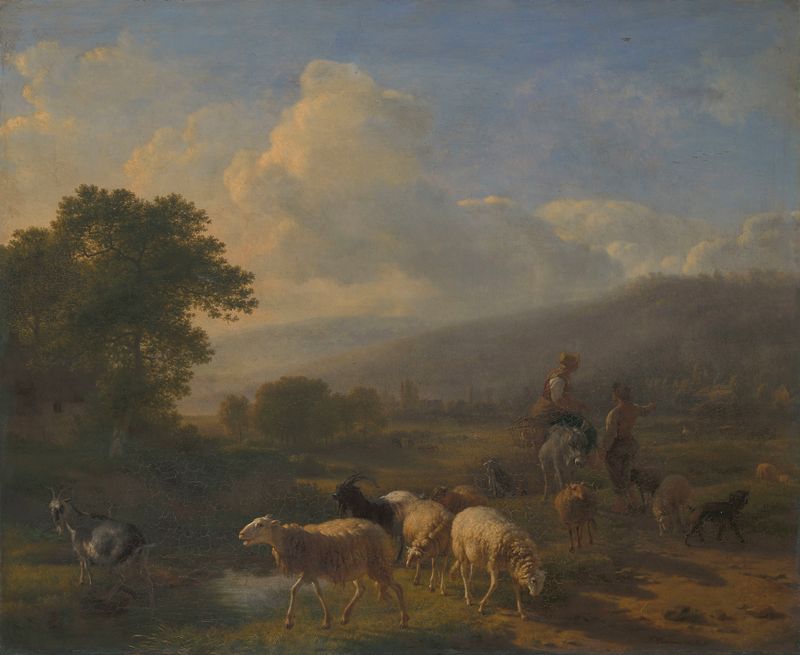
In the quiet embrace of nature, longing finds its voice through the gentle depiction of pastoral life. The lush green expanse and the serene presence of grazing cattle evoke a sense of nostalgia, inviting viewers to reflect on the fleeting moments of serenity in their own lives. Look toward the center of the canvas, where the cattle graze peacefully, their forms rendered with delicate brushwork that captures both their weight and grace. Notice how the light filters through the leaves, casting a soft glow on the animals and the grass beneath them.
The rich earthy tones contrast beautifully with the vibrant greens, creating a harmonious palette that envelops the scene in warmth and tranquility. The horizon stretches far, a promise of endless fields, guiding the eye outward and encouraging contemplation. Yet beneath the calm surface lies a subtle tension. The juxtaposition of nature’s beauty and the vulnerability of the cattle hints at a world where tranquility is perpetually threatened.
The open meadow symbolizes a freedom that is both cherished and precarious, a fleeting moment before the inevitable march of time. Each blade of grass, every shadow, tells a story of life, reminding us that even amidst serenity, there is an underlying sense of impermanence. Balthasar Paul Ommeganck created this work during an era marked by a growing interest in pastoral scenes and landscapes in the early 19th century. As he painted in the countryside of Belgium, he was part of a movement that celebrated natural beauty and rural life, reflecting a desire to connect with simpler times in an increasingly industrialized world.