Château de Buillon — History & Facts
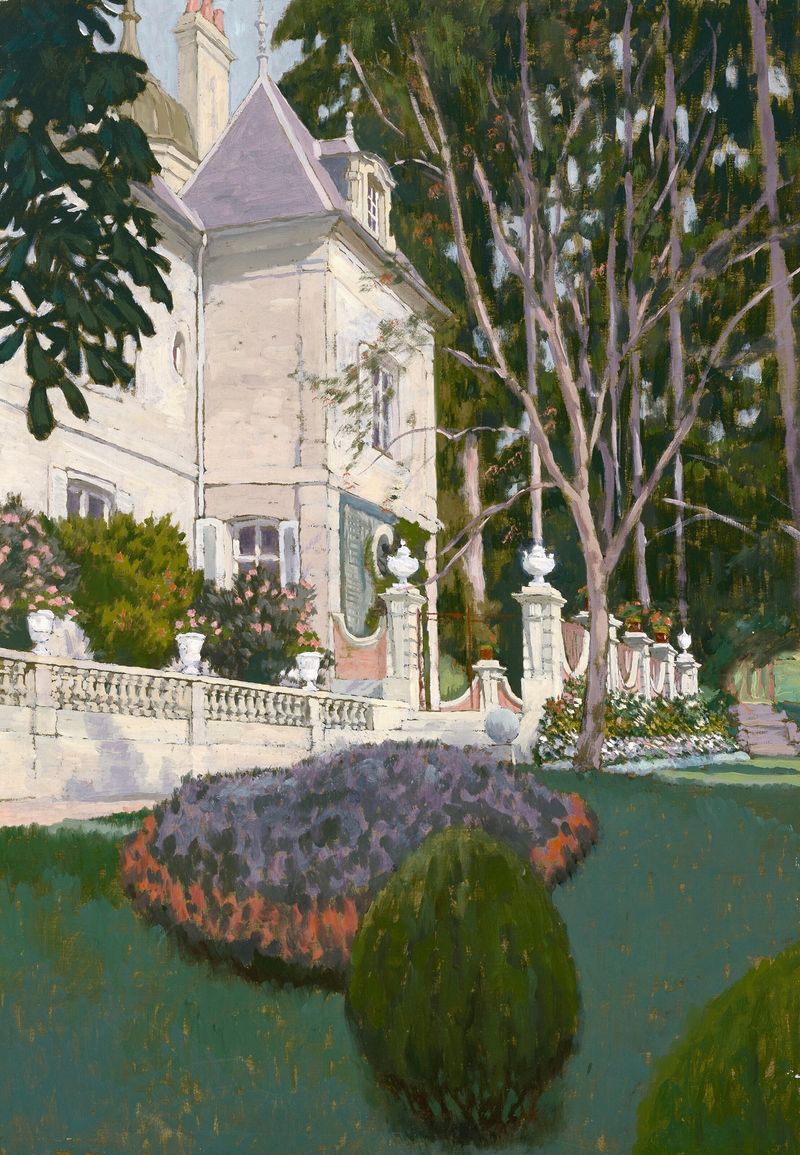
What if silence could speak through light? In the quiet of Château de Buillon, a haunting stillness envelops the viewer, evoking a profound sense of emptiness. Look to the left at the softly rendered walls of the château, their muted tones echoing a bygone grandeur. Notice how the light delicately filters through the trees, casting dappled shadows that dance across the ground. The composition draws your eye upward, inviting you to explore the intricate details of the architecture that stands both proud and desolate, a testament to time's relentless march.
The palette of earthy greens and grays enhances the somber mood, imbuing the scene with an air of nostalgia. Yet, within the serene facade lies a tension between beauty and decay. The empty windows, devoid of life, seem to whisper stories of the past, while the encroaching foliage hints at nature's reclamation. Each brushstroke reveals the artist’s meditative exploration of solitude, prompting reflections on the passage of time and the ephemeral nature of human achievement.
This contrast invites viewers to ponder the fragility of existence and the memories that linger like shadows in the periphery. Created during a period of personal turmoil, Tissot painted Château de Buillon in the late 19th century. Living in Paris, he faced the complexities of a rapidly changing art world, filled with new movements that challenged traditional forms. This work emerged amidst a search for meaning, as the artist grappled with both his artistic identity and a longing for the permanence of what once was.
The château stands timeless, a silent witness to both history and introspection.