
Château de Buillon — History & Facts
What if silence could speak through light? The echoes of whispers, the weight of time, and the shadows of decay intertwine to create a haunting narrative in this work. Look to the left, where the crumbling stone walls of the Château de Buillon stand as silent sentinels against a backdrop of muted greens and blues. Notice how the light, filtered through overcast clouds, highlights the textures of weathered rock, revealing cracks that seem to breathe history. The composition is dominated by the castle’s formidable silhouette, a poignant reminder of grandeur now surrendered to nature’s relentless march. In the details, we find emotional tensions at play.
The juxtaposition of lush vegetation clinging to the ruins speaks of resilience in decay—life thrives even within the remnants of what once was. The soft, muted palette evokes a sense of nostalgia, inviting contemplation on the passage of time and the stories etched into each stone. Each shadow carries a memory, urging us to look deeper into what remains of human ambition and the inevitable reclaiming by nature. During the late 19th century, James Tissot painted this scene amidst a period of personal turmoil and artistic exploration.
Living in France and influenced by the realism of his contemporaries, he sought to capture the essence of places steeped in history. A time when the Romantic movement was giving way to greater realism, this work reflects both a fascination with the past and a poignant acknowledgment of impermanence in art and life.
More Artworks by James Tissot
Browse all →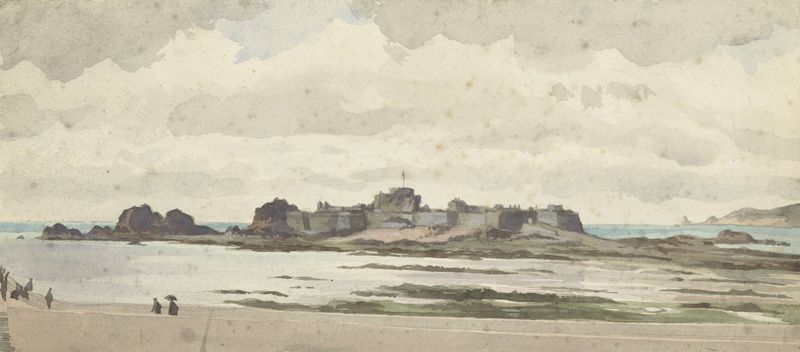
More Architecture Art
Browse all →
The statue of Liberty
Frédéric Auguste Bartholdi

View of Houses in Delft, Known as ‘The Little Street’
Johannes Vermeer

View of Houses in Delft, Known as ‘The Little Street’
Johannes Vermeer

The Cathedral in Rouen. The portal, Grey Weather
Claude Monet

The yellow house
Vincent van Gogh

The Church in Auvers-sur-Oise, View from the Chevet
Vincent van Gogh