Château de Vouzan — History & Facts
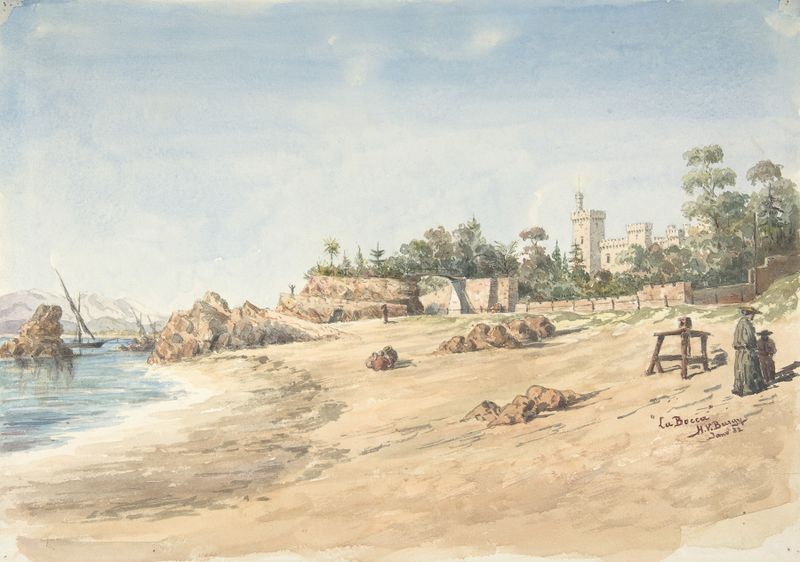
What if beauty was never meant to be finished? In Château de Vouzan, a haunting landscape emerges, holding the weight of nostalgia and unspoken loss. Look to the left at the intricately detailed stone façade of the château, where the soft light caresses its weathered surface, revealing every crack and crevice. Notice how the swirling clouds above blend into shades of gray and muted blues, echoing a sense of melancholy that permeates the scene. The artist's deliberate brushwork creates a textured atmosphere, inviting the viewer to linger in this moment of suspended time, where nature and architecture entwine in a delicate dance. Deeper insights unfold as you survey the tranquil water reflecting the structure, suggesting a duality between the grandeur of human creation and the inevitability of decay.
The trees framing the château stand as silent witnesses to the passage of time, their leaves whispering secrets of the past. This intricate interplay of light and shadow embodies both the beauty and grief of existence, hinting at a story long untold, where loss lingers beneath the surface. In 1888, Henry Victor Burgy captured Château de Vouzan during a period of personal and artistic introspection. Living in France amid an evolving art scene, he was influenced by the Impressionists and their focus on light and atmosphere.
This piece reflects his exploration of landscape, balancing natural beauty with deeper emotional currents, as he sought to portray not just a place, but the feelings it evoked in him and his audience.