Antibes — History & Facts
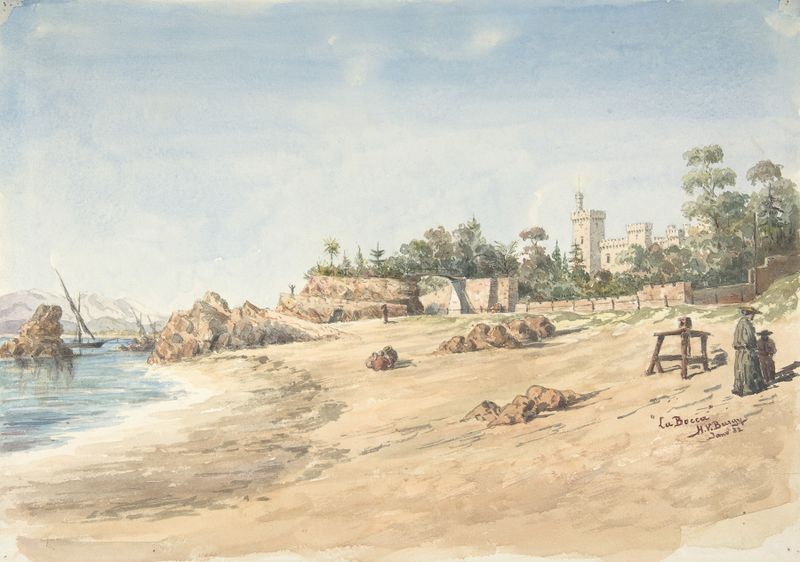
Can beauty exist without sorrow? In Henry Victor Burgy's Antibes, the canvas awakens with vibrant hues that dance between joy and melancholy, inviting contemplation of life’s dual nature. Focus first on the radiant sea, shimmering with turquoise and cerulean tones that draw the eye, reflecting the sun's warm embrace. Notice how the painter captures the play of light upon the water’s surface, creating an almost hypnotic movement. To the left, the gentle curves of the coastline cradle the scene, while distant sails punctuate the horizon, hinting at adventure and longing.
The warm ochres and soft whites of the buildings juxtapose the coolness of the sea, creating a harmonious balance that embodies both serenity and restlessness. In the mingling of colors lies a deeper narrative—an exploration of the transient beauty of life. The juxtaposition of vibrant nature against the solidity of human structures suggests a delicate interplay between freedom and confinement. The gentle waves whisper tales of nostalgia, while the distant sails may symbolize aspirations forever out of reach.
Each brushstroke evokes a sense of awakening, capturing both the allure of the moment and the inevitable passage of time. Burgy painted Antibes in 1882 during a period of artistic discovery, as he sought to blend Impressionist influences with his unique vision. Living in France, he was immersed in a vibrant artistic community, striving to capture the essence of light and color. This piece reflects his commitment to portraying beauty, even when underscored by the world's inherent complexities.