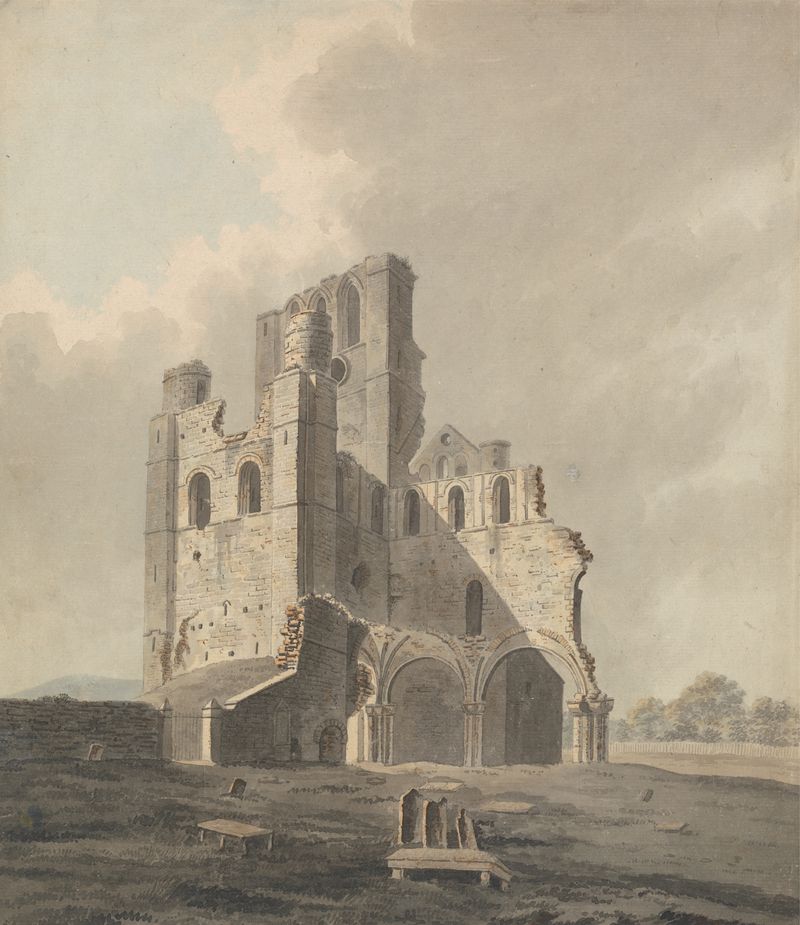
Church, Churchyard and Figures — History & Facts
What secret hides in the quiet of the canvas? A muted palette whispers stories of loss, reverence, and the passage of time, urging the observer to pause and reflect on mortality. Look to the foreground where muted earth tones evoke a somber stillness, drawing your eye toward the carefully rendered figures that seem to move like shadows between the gravestones. Notice how the soft, diffused light falls upon the weathered stones, illuminating their textured surfaces while casting long, contemplative shadows that stretch toward the church in the background. The juxtaposition of the church’s sturdy architecture against the ephemeral presence of the figures creates a poignant contrast, highlighting the tension between the permanence of faith and the transience of life. Delve deeper into the subtle details within the work, where each figure’s posture reveals their emotional state—some appear lost in thought, while others seem to engage in quiet conversation, perhaps sharing memories of those laid to rest.
This dynamic underscores a universal truth about the human experience: even in shared grief, solitude often lingers. The artist’s choice of cool blues and muted greens suggests both serenity and sorrow, drawing the viewer into a space where reflection becomes an invitation to contemplate one’s own relationship with the past. John Roe of Warwick painted this work during a period marked by profound changes in society and art, around the mid-19th century. His attention to the interplay of light and shadow, as well as his exploration of themes surrounding life and death, mirrored the sentiments of a time when Victorian sensibilities were deeply entwined with the contemplation of mortality.
In this piece, he captures not just a scene but the essence of human connection to memory, faith, and the inevitable passage of time.