Kelso Monastery, Scotland — History & Facts
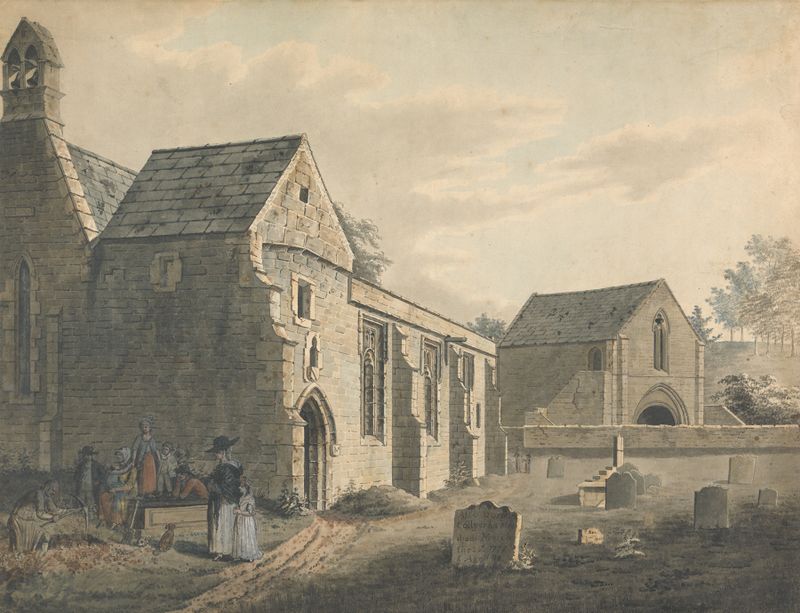
Can paint confess what words never could? In the stillness of Kelso Monastery, an obsessive spirit lingers, capturing an essence beyond mere representation. Look to the left at the intricate stonework, where each chiseled detail tells a story of both time and labor. Notice how the muted earth tones blend with hints of green, evoking the serenity of the Scottish landscape surrounding the monastery. The composition invites the viewer’s eye to wander through the arches and columns, leading to the distant horizon where sky and earth meet, suggesting both a physical and spiritual journey. Within this artwork lies a rich tapestry of contrast — the permanence of stone against the fleeting shadows cast by sunlight filtering through the ruins.
The soft interplay of light and texture reveals an underlying tension between the sacred and the decayed, as if the artist whispers secrets of faith, neglect, and the passage of time. The meticulousness of the brushwork reveals an obsession with detail that transcends the physicality of the structure, inviting reflection on the nature of devotion itself. John Roe of Warwick created this piece during a time when the Romantic movement was gaining momentum, emphasizing nature's beauty and emotional depth. Although the exact date remains unknown, Roe's work reflects a growing interest in the spiritual and historical significance of ruins, capturing the essence of a moment in the serene Scottish landscape that spoke to the heart of both artist and observer.