Church in Bad Orb — History & Facts
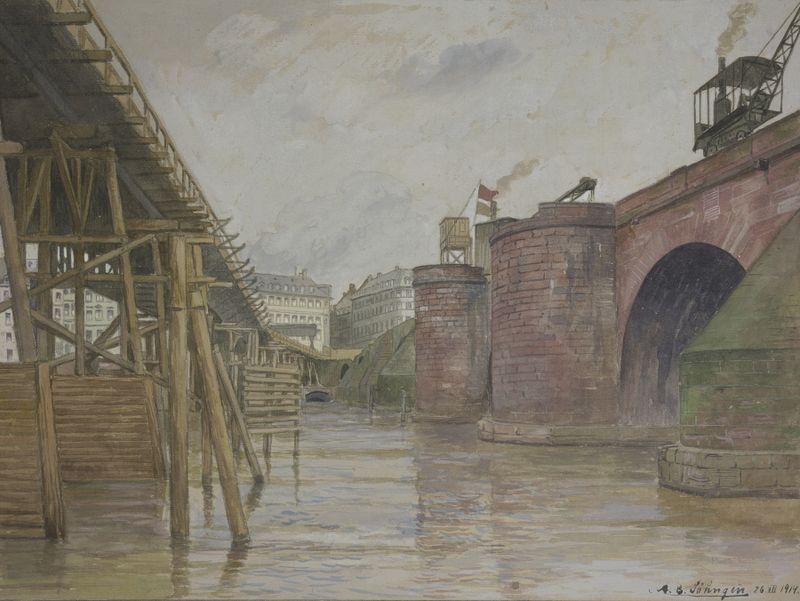
Did the painter know this moment would outlive them? The stillness within Church in Bad Orb quietly reverberates through time, capturing a reflection of both faith and tranquility that resonates beyond its canvas. Look to the left at the delicate play of light filtering through stained glass windows, casting a kaleidoscope of colors onto the worn stone floor. Notice how the muted palette of browns and greens envelops the church, giving it warmth, while the sharp lines of the architecture guide your gaze upward. The steep roof, punctuated by a simple steeple, stands in stark contrast to the softness of the surrounding landscape, inviting contemplation and a sense of peace. In this artwork, the juxtaposition of the church’s sturdy structure against the gentle fluidity of nature suggests a dialogue between the spiritual and the earthly.
Hidden beneath the surface is the tension between permanence and transience—the church, a symbol of steadfastness, surrounded by the ephemeral beauty of its setting. The brushstrokes used to depict the trees hint at movement, as if the wind whispers secrets of the past, adding layers of depth to the viewer's experience. In 1912, as Söhngen crafted this piece in Germany, Europe was on the brink of profound changes. The art world was evolving, marked by movements that embraced modernity, yet this painter chose to depict a serene, almost timeless moment.
His focus on the spiritual elements of life amidst the escalating turmoil hints at a yearning for stability, revealing the complexities of his own time while inviting future generations to seek solace in the simplicity of faith and reflection.