
Church of Notre Dame, Bruges — History & Facts
This sentiment echoes through the ornate arches and delicate spires of an architectural masterpiece that stands as a testament to both grace and suffering. Look closely at the intricate details of the facade, where gilded accents catch the light, drawing your gaze to the interplay of shadow and illumination. The artist masterfully captures the essence of the structure, inviting the viewer to navigate through layers of texture and color. Notice how the cool blues and warm golds create a visual harmony that both elevates and deepens the emotional resonance of the scene. Yet beneath the surface beauty lies a potent tension.
The towering spires reach toward the heavens, representing aspirations and faith, while their solid base anchors them in reality, suggesting the weight of history and sacrifice. Each window, with its delicate tracery, offers glimpses into the sanctity within, hinting at stories of hope and despair that have unfolded over centuries. Here, the duality of awe and melancholy converges, revealing the complex relationship between humanity and divinity. Samuel Austin painted this work during a time when the Romantic movement was blossoming, likely in the late 19th century.
As he explored themes of beauty and spirituality, he sought to capture the essence of architectural forms that transcended mere functionality. The world around him was rapidly changing, with industrialization reshaping landscapes and lives, yet art remained a sanctuary where the divine could be contemplated amidst chaos.
More Artworks by Samuel Austin
Browse all →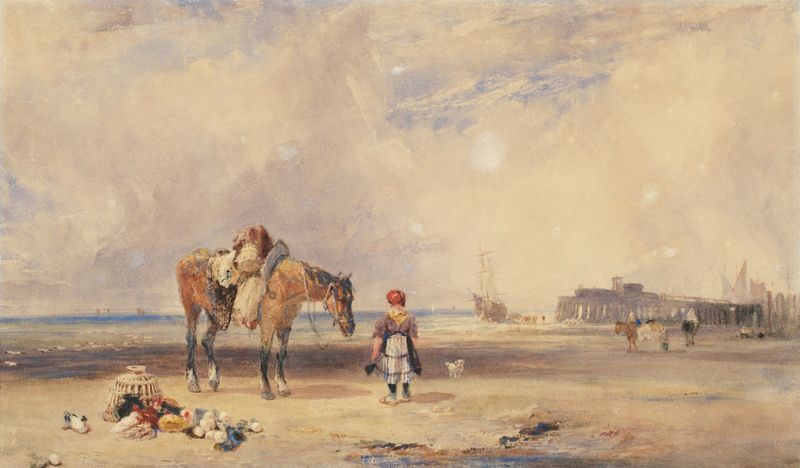

More Architecture Art
Browse all →
The statue of Liberty
Frédéric Auguste Bartholdi

View of Houses in Delft, Known as ‘The Little Street’
Johannes Vermeer

View of Houses in Delft, Known as ‘The Little Street’
Johannes Vermeer

The Cathedral in Rouen. The portal, Grey Weather
Claude Monet

The yellow house
Vincent van Gogh

The Church in Auvers-sur-Oise, View from the Chevet
Vincent van Gogh