The beach at Ostend — History & Facts
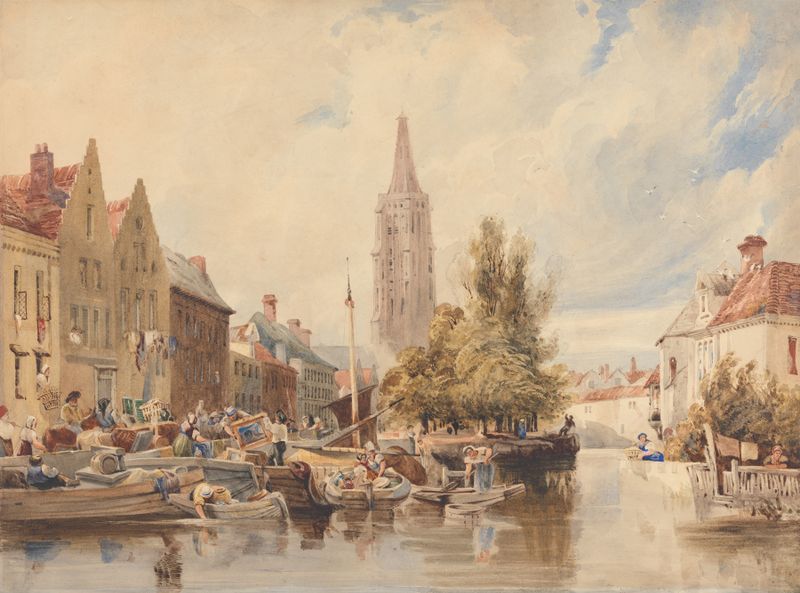
When did color learn to lie? In a world where hues dance with deceit, the sunlit shores seem both inviting and melancholic, whispering secrets through the waves. Look to the foreground, where gently rolling waves lap against the sandy shore, their cerulean blue blending with warm golden tones. Notice how the artist’s brushstrokes capture the raw movement of the sea, each wave imbued with life yet tinged with sorrow. The horizon stretches across the canvas, a delicate line where sky and water unite, inviting contemplation.
In the distance, figures meander along the shoreline, their smallness amplifying the vastness of the scene, hinting at the solitude inherent in the human experience. Yet, beyond the serene beauty lies a deeper tension. The contrast between the vibrant blues and the muted earth tones reflects the duality of joy and sadness—an intrinsic part of existence. Each footprint left in the sand speaks of transience, a reminder that moments, much like the tides, are forever shifting.
Shadows loom subtly beneath the light, suggesting that there is always more beneath the surface than what we perceive. Created in an unspecified time, the artist epitomized the transitional period of the late 19th century, when color theory began to flourish amidst the rise of modernism. As Samuel Austin explored coastal themes, he was part of a broader artistic dialogue that sought to capture more than mere representation, delving into the emotional landscapes that colors could evoke. This painting reflects not just the external beauty of Ostend but also an introspective journey into the heart of human emotion during a time of artistic awakening.